G-10 Epoxy Glass Laminate Rotary Torch Guide Tube, Turn-Milled with Deep Hole Drilling
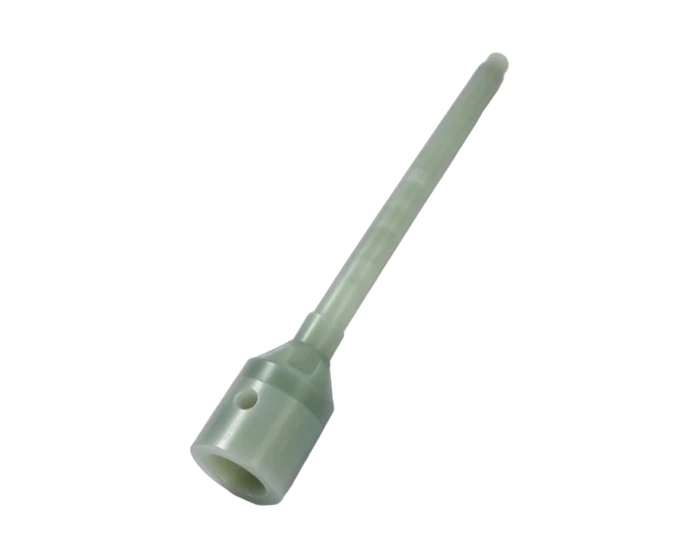
G-10 epoxy glass rotary torch guide tube, 204.82 mm long, 25.0 mm flanged head down to an 11.13 mm slender barrel, 6.48 mm through bore drilled at over 25 to 1 depth ratio, coaxiality held to 0.05 mm with steady rest support, pin gauge and 100 percent CMM checked. Quote in 24 hours.
General Industrial Components
A long, thin G-10 epoxy glass laminate guide tube for rotary welding torches: an insulating composite that holds its stiffness at temperature, machined with deep hole drilling and steady rest turning so a 2.3 mm wall stays round over 180 mm.
Or email drawings to kgl@kglmfc.com
Key Specifications
| Parameter | KGL Capability |
|---|---|
| Material | G-10 / FR4 epoxy glass laminate |
| Overall length | 204.82 mm (8.06 in) |
| Flanged head OD | 25.0 mm |
| Barrel OD | 11.13 mm |
| Center bore | 6.48 mm through, deep hole drilled |
| Mounting holes | 4x 3.28 mm through, 45 degree spaced |
| Cross holes | 2x 6.17 mm cross plus 2x 6.35 mm radial |
| Coaxiality | 0.05 mm max, bore to OD |
| Wall thickness | Approx. 2.3 mm on the slender barrel |
| Process | Bar stock cut, turn-mill OD turning with steady rest, deep hole drilling, 4-axis milling of flange holes, diamond tool deburring, ultrasonic cleaning and drying |
| Inspection | Long pin gauge on the through bore, 100 percent CMM on coaxiality, straightness and hole position, microscope check for fiber delamination |
| Tolerance | ±0.005 mm standard on metals, engineering plastics, and carbon fiber composite |
| Certifications | ISO 9001:2015, ISO 13485:2016, AS9100D |
| Capacity | 100+ CNC machines including 11 five-axis centers |
| MOQ | No MOQ; 1-piece prototypes supported |
| Quote | Within 24 hours for complete 2D/3D files |
About This Part
This tube guides a miniature rotary welding torch, and the material is the design decision. G-10 epoxy glass laminate is an electrical insulator with high dielectric strength, it resists heat, and it keeps its mechanical stiffness where unreinforced plastics would creep. The laminate structure also shows in the machining: the pale green woven texture visible on the finished part is the glass cloth, and cutting it cleanly takes diamond tooling rather than carbide.
The geometry is demanding. The part runs 204.82 mm overall, from a 25.0 mm diameter flanged head down a tapered transition to an 11.13 mm slender barrel that runs about 180 mm. The wall of that barrel is roughly 2.3 mm. A 6.48 mm bore runs through the full length, which at this aspect ratio is a deep hole drilling job: drills wander and laminates tear, so the bore is piloted, peck fed and gauge-verified over its full length with a long pin gauge.
Turning the slender barrel is the other discipline. At 2.3 mm wall the tube deflects under cutting pressure, and deflection reads directly as coaxiality error between bore and outside diameter. The tube is turned between centers with steady and follower rest support, using PCD diamond tooling at controlled speed so the glass fibers shear instead of lifting. Coaxiality of the finished tube is held within 0.05 mm and every part is verified on the CMM.
The flanged head carries a 45 degree spaced pattern of 3.28 mm through holes, two 6.17 mm cross locking holes and two 6.35 mm radial holes, all drilled and CMM checked for position. Fibrous materials leave fuzzy edges where ordinary metals leave burrs, so edges are deburred with fine diamond tooling, then the parts are ultrasonically cleaned and dried to pull machining dust out of the woven surface before inspection.
This part family supports the Industrial Parts industry. Read how KGL machines parts for that sector, then send your drawing for a quote.
Why Machine It at KGL
Five-Axis Fleet
100+ CNC machines including 11 five-axis centers run complex geometry in single setups, so tolerances do not stack up across refixturing.
Verified Accuracy
±0.005 mm standard on metals, plastics, and carbon fiber composite, verified on Hexagon and Zeiss CMMs (0.0015 mm accuracy).
Fast Prototypes
Engineering feedback with every quotation; prototype parts typically machined in 15 to 25 days.
One Supplier, End to End
Material sourcing, machining, heat treatment coordination, finishing, CMM inspection and export packaging under one roof.
Part-Specific Advantages
- Machined from G-10 / FR4 epoxy glass laminate with high dielectric strength and heat resistance
- 204.82 mm overall, 25.0 mm flanged head to 11.13 mm slender barrel, approx. 2.3 mm wall
- 6.48 mm through bore at over 25 to 1 aspect ratio, pin gauge verified full length
- Coaxiality held within 0.05 mm using steady and follower rest turning
- PCD diamond tooling and micro deburring control fiber lift and fuzzy edges
- Ultrasonic cleaning and drying remove machining dust from the woven surface
Typical Applications
- Guide tubes for miniature rotary welding torches
- Insulating spacers and slender structural tubes in welding automation
- G-10 / FR4 composite parts with deep bores and tight tube-to-bore alignment
Commercial Terms
| Commercial | Detail |
|---|---|
| MOQ | No MOQ; 1-piece prototype supported |
| Quote | Within 24 hours for complete 2D/3D files |
| Terms | EXW / FOB Shenzhen |
| Certifications | ISO 9001:2015 |
| Packaging | Individual bubble wrap, export carton or wooden case |
| Lead Time | Prototypes 7 to 15 days; production scheduled by volume |
Common Questions
Why G-10 instead of a metal guide tube?
The tube sits in the torch current path. G-10 insulates electrically, holds its stiffness at torch operating temperatures, and the glass cloth laminate resists wear without lubrication. Metal would need isolation hardware and adds weight to the moving head.
How do you keep a 2.3 mm wall round over 180 mm?
Support, not luck. The tube runs on steady and follower rests so cutting pressure cannot bow it, and PCD diamond tooling shears the glass fibers cleanly instead of pushing them. The result is verified, not assumed: every part is CMM checked for coaxiality within 0.05 mm.
Does the deep bore stay straight over 25 diameters?
The bore is piloted and peck fed, then gauged over its full length with a long pin gauge. A bore that pinched or drifted mid-length would fail the gauge, and every tube in the batch is checked this way, not sampled.
What tolerances can you hold on composite parts like this?
The drawing's own callouts govern. For new G-10 parts, send the tolerance band with the operating temperature, because laminate composites move differently from metals, and we will confirm feature by feature what can be held.
More General Industrial Components Parts
Other parts KGL machines in this industry. Every card links to its own detail page.
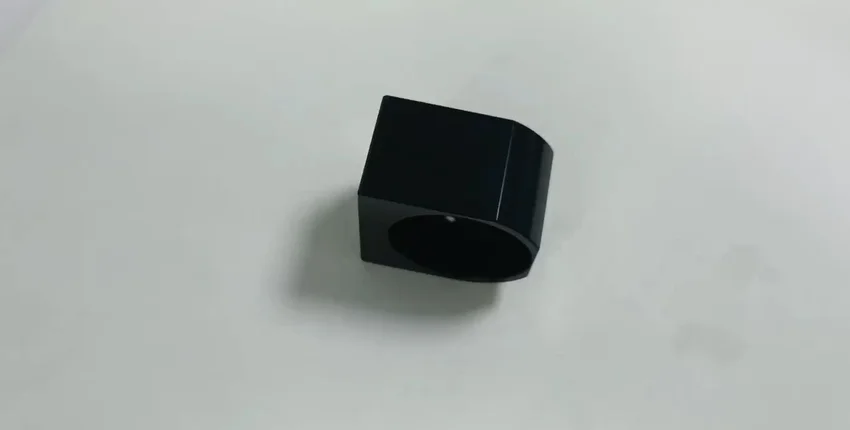
General Industrial Components
CNC Machining Chocolate Equipment Anodized Aluminum Slide Cover
View product →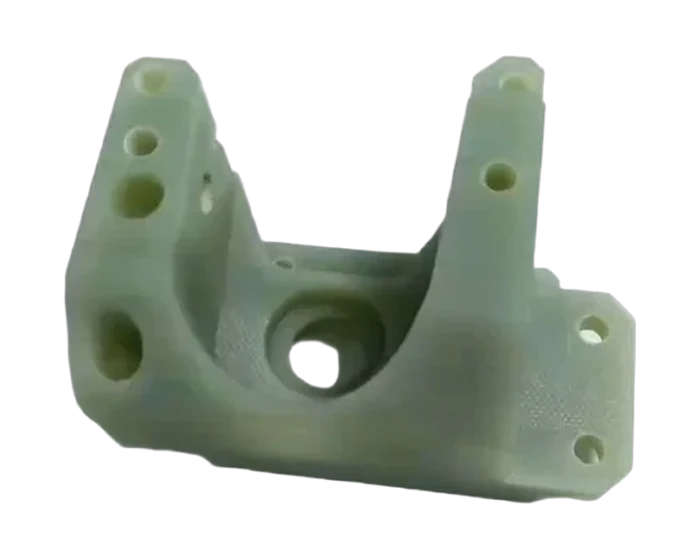
General Industrial Components
CNC Milling Industrial Equipment Filter Nozzle Mounting Base
View product →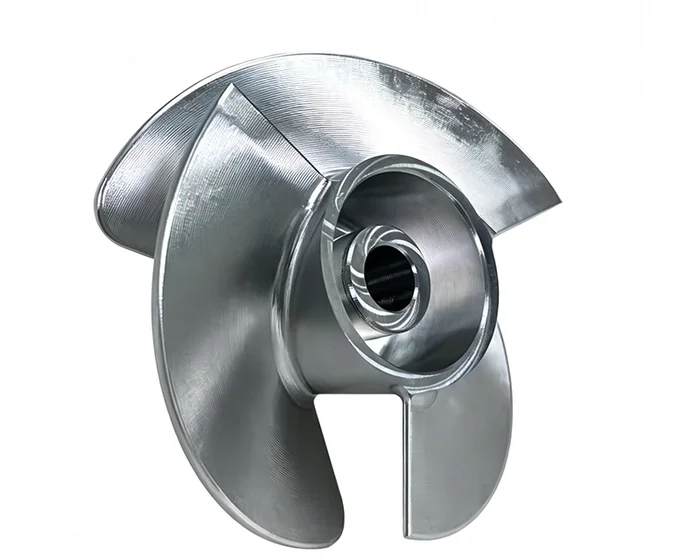
General Industrial Components
For Water SystemsCustom Milling Machining Impeller
View product →Ready to Machine This Part?
Send your 2D/3D drawings and get a quote within 24 hours. No MOQ for prototypes and small lots.
Request a Quote