Six-Axis Force Torque Sensor Body for Robot Force Control
CNC machined six-axis force torque sensor bodies for robot force control: one-piece machining, ±0.005 mm standard tolerance, CMM verification and full first-article reporting. DFM feedback and a quotation within 24 hours.
Robotics & Humanoid Robots
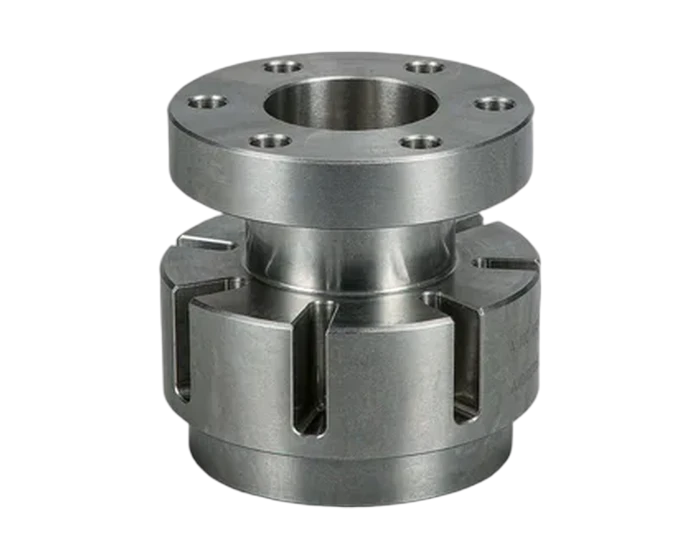
Six-axis force torque sensor bodies machined from one piece of metal for robot wrist force control. Mill-turn and multi-axis CNC machining in a single setup, ±0.005 mm standard tolerance, CMM verified with a full first-article report.
Or email drawings to kgl@kglmfc.com
Key Specifications
| Parameter | KGL Capability |
|---|---|
| Material | Per drawing; aluminum alloys typical for low-inertia robot bodies |
| Process | Mill-turn and multi-axis CNC machining in one clamping; internal elastic features per DFM-agreed process |
| Surface Treatment | Per drawing; anodize options available for aluminum |
| Standard Tolerance | ±0.005 mm on machined features |
| Inspection | Hexagon / Zeiss CMM, full first-article inspection report |
| MOQ | No MOQ; 1-piece prototypes supported |
| Lead Time | Prototype 15 to 25 days after drawing approval |
| Tolerance | ±0.005 mm standard on metals, engineering plastics, and carbon fiber composite |
| Certifications | ISO 9001:2015, ISO 13485:2016, AS9100D |
| Capacity | 100+ CNC machines including 11 five-axis centers |
| Quote | Within 24 hours for complete 2D/3D files |
About This Part
The body of a six-axis force torque sensor carries the elastic structure that turns applied forces and torques into measurable signals between the robot flange and the tool. KGL machines each body from one piece of metal, so the force path runs through a continuous structure with no joints to drift under load.
Rotary and milled features such as flange seats, the center bore, and hole positions are completed in one clamping on our mill-turn and multi-axis machining centers, so their alignment does not depend on refixturing. Internal elastic details that rotating tools cannot reach are produced on the process agreed in DFM; where the drawing calls for it, wire EDM removes material without cutting force so thin walls and narrow slots keep their geometry.
The material and surface treatment follow the drawing. Aluminum alloys are a common choice for robot bodies because of their low inertia, and anodize options are available where specified. Every feature is verified on Hexagon or Zeiss CMMs, and a full first-article inspection report travels with each order.
This part family supports the Robotics Parts industry. Read how KGL machines parts for that sector, then send your drawing for a quote.
Why Machine It at KGL
Five-Axis Fleet
100+ CNC machines including 11 five-axis centers run complex geometry in single setups, so tolerances do not stack up across refixturing.
Verified Accuracy
±0.005 mm standard on metals, plastics, and carbon fiber composite, verified on Hexagon and Zeiss CMMs (0.0015 mm accuracy).
Fast Prototypes
Engineering feedback with every quotation; prototype parts typically machined in 15 to 25 days.
One Supplier, End to End
Material sourcing, machining, heat treatment coordination, finishing, CMM inspection and export packaging under one roof.
Part-Specific Advantages
- Machined from one piece of metal, so the force path has no bonded joints to drift under load.
- Flange seats, center bore, and hole positions completed in one clamping on mill-turn and multi-axis centers.
- Internal elastic details produced on a DFM-agreed route, with wire EDM available for thin walls and narrow slots.
- Surface treatment per drawing, with anodize options for aluminum bodies.
- CMM verified at ±0.005 mm standard tolerance, with a full first-article report in every shipment.
Typical Applications
- Wrist force control modules for collaborative robot arms
- Force feedback bodies for humanoid robot hands and end effectors
- Mounting structures for robot grinding and polishing force control
- Force measurement fixtures for robotics research and test benches
Commercial Terms
| Commercial | Detail |
|---|---|
| MOQ | No MOQ; 1-piece prototype supported |
| Quote | Within 24 hours for complete 2D/3D files |
| Terms | EXW / FOB Shenzhen |
| Certifications | ISO 9001:2015, ISO 13485:2016, AS9100D |
| Packaging | Individual bubble wrap, export wooden case |
| Confidentiality | NDA signed on request; parts coded per program |
Common Questions
What materials are typical for a six-axis sensor body?
Aluminum alloys are the common choice because the body sits between the robot flange and the tool and must not add inertia. The exact grade and temper follow your drawing; we give material and machinability feedback in DFM when a drawing is supplied.
How are the internal elastic features machined?
The route is agreed in DFM from the drawing. Rotary and milled features run on our mill-turn and multi-axis centers in one clamping; where internal thin walls or narrow slots cannot be reached by a rotating tool, wire EDM removes material with no cutting force.
Can you hold ±0.005 mm on the sensor geometry?
±0.005 mm is our standard tolerance on metal parts, verified on Hexagon and Zeiss CMMs with 0.0015 mm machine accuracy. Tighter tolerances on critical features are reviewed in DFM before quoting.
How do you protect our sensor design?
We sign customer NDAs routinely. Drawings and programs are filed under your part number in an access-controlled system, and parts are packed under project codes before shipping.
What files do you need for a quote?
A 2D drawing with critical dimensions and a 3D model in STEP or IGES. You get engineering feedback with the quotation, within 24 hours.
More Robotics & Humanoid Robots Parts
Other parts KGL machines in this industry. Every card links to its own detail page.
Ready to Machine This Part?
Send your 2D/3D drawings and get a quote within 24 hours. No MOQ for prototypes and small lots.
Request a Quote