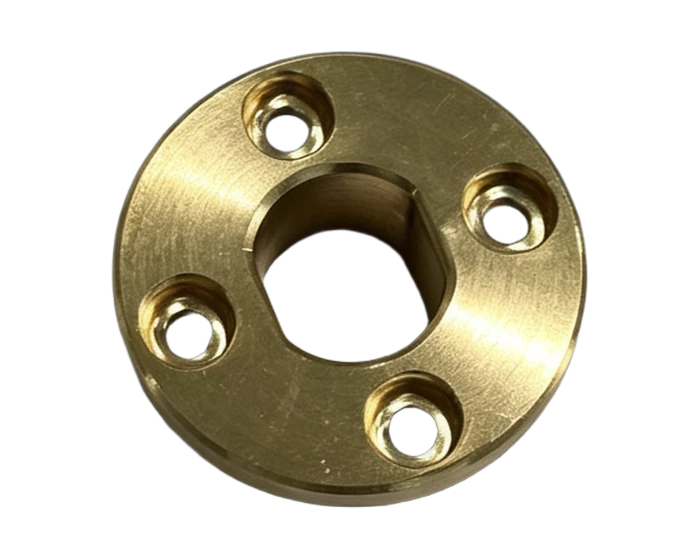
Promax Brass Actuator Bushing, CNC Milled from Plate
Brass actuator bushing milled from 125 x 38 x 16 plate, 3 up nesting with shared fixture machining, C0.2 chamfers, anti rust oil finish, GB/T 1804-m. Quote in 24 hours, no MOQ.
Semiconductor & Optics
A push rod bushing machined from brass plate in a 3 up nested layout with three parts sharing one fixture: front and back milled to size in two operations, C0.2 chamfers, oiled for oxidation protection, checked on dimensions and appearance.
Or email drawings to kgl@kglmfc.com
Key Specifications
| Parameter | KGL Capability |
|---|---|
| Material | Brass plate, blank 125 x 38 x 16 mm, 3 parts per plate |
| Process | CNC milling reverse faces, form fixture 3 up machining of front faces, chamfering, hand deburring, anti rust oil |
| Chamfers | C0.2 default, recess chamfers 0.2 mm or less |
| Tolerance class | GB/T 1804-m dimensions, GB/T 1184-K form |
| Surface | Anti rust oil, no plating |
| Inspection | Dimensional and appearance check on finished pieces |
| Tolerance | ±0.005 mm standard on metals, engineering plastics, and carbon fiber composite |
| Certifications | ISO 9001:2015, ISO 13485:2016, AS9100D |
| Capacity | 100+ CNC machines including 11 five-axis centers |
| MOQ | No MOQ; 1-piece prototypes supported |
| Quote | Within 24 hours for complete 2D/3D files |
About This Part
Brass bushings are about clean geometry and cost discipline. This PROMAX push rod bushing is milled from 125 x 38 x 16 brass plate in a 3 up nesting layout, three blanks cut from each plate and machined together on a form fixture. The reverse faces are milled to size first, then the front faces in a second op on the same shared fixture, so all three parts see identical datum conditions.
Brass machines fast and predictably, which is what makes the 3 up layout pay off in volume. Edges carry C0.2 chamfers with recess chamfers under 0.2, and the tolerance defaults follow GB/T 1804-m for dimensions and GB/T 1184-K for form. After machining, every piece is hand deburred, inspected, and wiped with anti rust oil, because bare brass will tarnish in humid storage within weeks.
The bushing slides in push rod assemblies where low friction and wear resistance matter, and plain brass delivers both at a fraction of bearing bronze cost. For lubricated indoor duty it is the economical first choice.
This part family supports the Semiconductor Parts industry. Read how KGL machines parts for that sector, then send your drawing for a quote.
Why Machine It at KGL
Five-Axis Fleet
100+ CNC machines including 11 five-axis centers run complex geometry in single setups, so tolerances do not stack up across refixturing.
Verified Accuracy
±0.005 mm standard on metals, plastics, and carbon fiber composite, verified on Hexagon and Zeiss CMMs (0.0015 mm accuracy).
Fast Prototypes
Engineering feedback with every quotation; prototype parts typically machined in 15 to 25 days.
One Supplier, End to End
Material sourcing, machining, heat treatment coordination, finishing, CMM inspection and export packaging under one roof.
Part-Specific Advantages
- 3 up plate nesting with shared fixture for repeatable volume production
- Front and back milled to size in two referenced operations
- C0.2 chamfers, recess chamfers under 0.2 mm
- Brass cutting performance keeps cycle times and cost down
- Anti rust oil finish against oxidation and tarnish
- GB/T 1804-m and 1184-K tolerance defaults
Typical Applications
- Push rod and actuator guide bushings
- Sliding bearing and directional sleeves in precision assemblies
- Low friction wear parts in semiconductor handling mechanisms
Commercial Terms
| Commercial | Detail |
|---|---|
| MOQ | No MOQ; 1-piece prototype supported |
| Quote | Within 24 hours for complete 2D/3D files |
| Terms | EXW / FOB Shenzhen |
| Certifications | ISO 9001:2015 |
| Packaging | Individual bubble wrap, export carton or wooden case |
Common Questions
Why plate nesting instead of bar turning?
The bushing is block shaped, not round. Plate nesting three at a time uses the material fully and keeps all three parts on one datum, which is cheaper and more consistent than machining singles.
Will the brass tarnish in storage?
Bare brass will tarnish in humid air over weeks. The anti rust oil film we apply before packing covers normal storage and transit; for long shelf life we can add sealing or lacquer on request.
Can you run this in bearing bronze instead?
Yes, same fixture and route. Bronze raises material cost but adds load capacity; for light to medium push rod duty, plain brass usually wins on total cost.
More Semiconductor & Optics Parts
Other parts KGL machines in this industry. Every card links to its own detail page.
Semiconductor & Optics
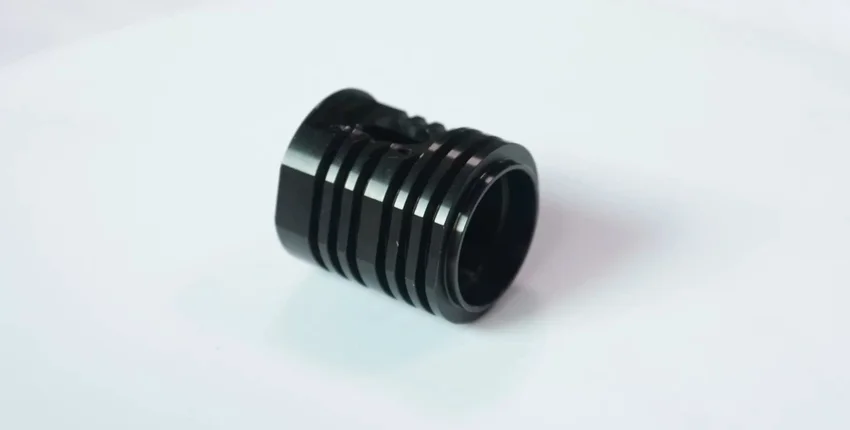
Custom CNC Precision Machining Semiconductors Packaging Inspection Equipment and Automation Parts
View product →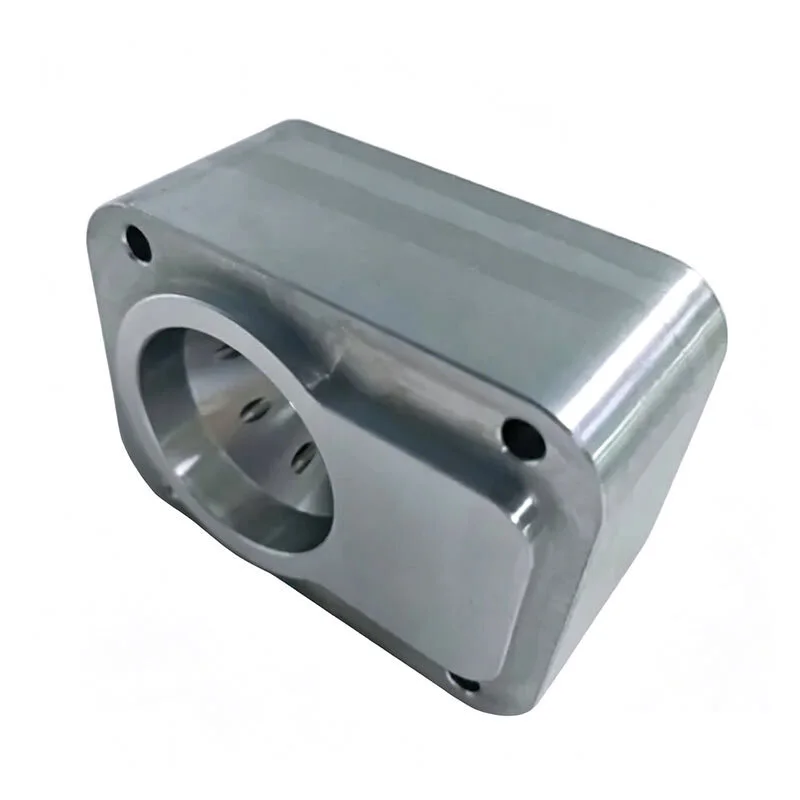
Semiconductor & Optics
Microscope Quad Lens Seals for Medical and Laboratory Use
View product →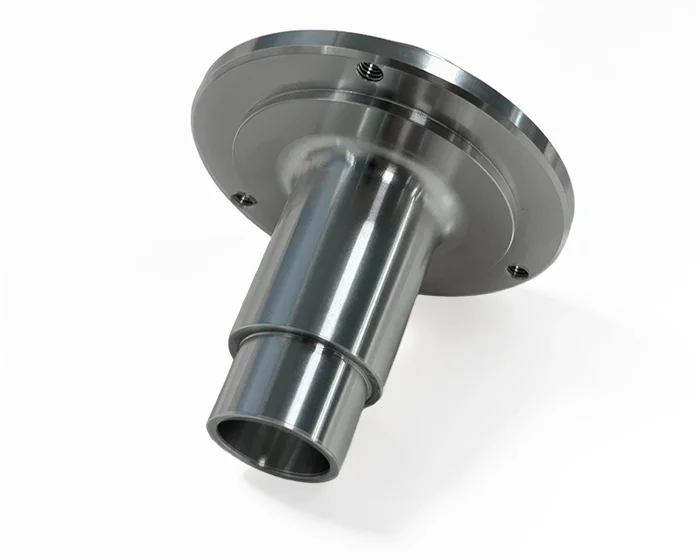
Semiconductor & Optics
OEM Custom CNC Precision Machining Semiconductors and Automation Part
View product →Ready to Machine This Part?
Send your 2D/3D drawings and get a quote within 24 hours. No MOQ for prototypes and small lots.
Request a Quote