XY Pusher Bar Assembly in Black Delrin, CNC Milled with Press-Fit Dowel Pins
Black Delrin (POM) XY pusher bar assembly, 34 mm long, two 1.5 x 6 mm press-fit 18-8 stainless dowel pins with 5 N minimum retention, 3.5 mm counterbores, laser traceability, RoHS compliant. Quote in 24 hours.
Semiconductor & Optics
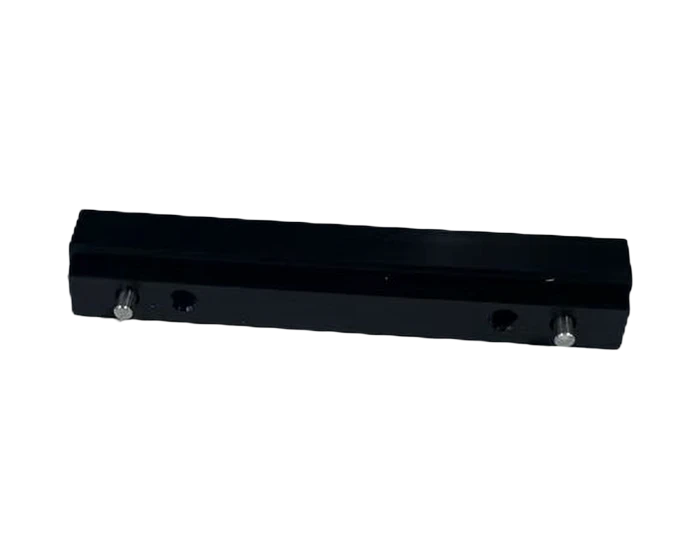
A slender black Delrin pusher bar for optical and semiconductor test automation: a self-lubricating POM body that will not mark the parts it touches, two press-fit stainless dowel pins for repeatable location, counterbored mounting holes and laser traceability.
Or email drawings to kgl@kglmfc.com
Key Specifications
| Parameter | KGL Capability |
|---|---|
| Material | Delrin (POM), black, matte finish |
| Overall length | 34 mm (reference) |
| Dowel pins | 2x 1.5 x 6 mm, 18-8 stainless steel (304), passivated |
| Pin retention | Minimum 5 N axial push-out force, tested |
| Mounting holes | 2x 3.5 mm counterbores |
| Hole position | 0.05 to datums A/B |
| Edge break | 0.3 x 45 degree chamfer |
| Marking | Laser marked for revision traceability |
| Compliance | RoHS 2011/65/EU |
| Process | CNC milling from black Delrin rod, pin press-in with force check, laser marking, deburr and clean |
| Inspection | Caliper and micrometer on key dimensions, pin push-out force test, laser mark verification, appearance and cleanliness check |
| Tolerance | ±0.005 mm standard on metals, engineering plastics, and carbon fiber composite |
| Certifications | ISO 9001:2015, ISO 13485:2016, AS9100D |
| Capacity | 100+ CNC machines including 11 five-axis centers |
| MOQ | No MOQ; 1-piece prototypes supported |
| Quote | Within 24 hours for complete 2D/3D files |
About This Part
This pusher bar is the contact element of an XY handling stage for optical module and photonic device test automation. The bar slides against and positions delicate parts all day, so the material choice is the design: Delrin (POM) is self-lubricating and low friction, it will not scratch aluminum or plated surfaces, and it does not shed the fine debris that softer plastics can. The matte black finish keeps reflectivity down around optical test stations. All of this comes from drawing-specified material, not substitution: the bar is milled from black Delrin rod stock, nothing plated or coated after the fact.
The bar is 34 mm long overall (reference dimension), with a rectangular section that carries two pressed-in dowel pins and two 3.5 mm counterbores for mounting screws. The pins are 1.5 mm diameter by 6 mm long, 18-8 stainless steel (passivated), pressed into reamed holes with a specified minimum axial push-out force of 5 N. That number is not cosmetic: a pin that walks under push loads shifts the location the whole assembly depends on, so retention is verified with a push-out force test rather than assumed from the press fit. Hole position is held to 0.05 against datums A and B, and every edge is broken at 0.3 x 45 degree as drawn.
The route is short and controlled: CNC milling of the outline, slot and counterbores from Delrin rod, pin insertion with force verification, laser marking for revision traceability, then deburring, cleaning and packaging. Plastic machining is its own discipline. Delrin mills cleanly but likes sharp tools and light cuts; dwell or dull edges leave melted smears instead of chips, so tools are changed on a schedule rather than on failure.
Delrin stock is the supply chain story here too. Rod is available in consistent grades, which matters when a pusher family runs year after year: the replacement bar mills the same as the first one. The assembly ships RoHS compliant per 2011/65/EU, with the passivated stainless pins and the unfilled black POM body both inside the scope.
Inspection covers the three things that decide whether the pusher works in its stage: caliper and micrometer checks on the key dimensions, the pin push-out force test at 5 N minimum, and a visual and cleanliness check that includes confirming the laser mark. Dimensional reports are available on request, and replacement bars are matched to the first article so mixed batches stay interchangeable.
This part family supports the Optical / Semiconductor Parts industry. Read how KGL machines parts for that sector, then send your drawing for a quote.
Why Machine It at KGL
Five-Axis Fleet
100+ CNC machines including 11 five-axis centers run complex geometry in single setups, so tolerances do not stack up across refixturing.
Verified Accuracy
±0.005 mm standard on metals, plastics, and carbon fiber composite, verified on Hexagon and Zeiss CMMs (0.0015 mm accuracy).
Fast Prototypes
Engineering feedback with every quotation; prototype parts typically machined in 15 to 25 days.
One Supplier, End to End
Material sourcing, machining, heat treatment coordination, finishing, CMM inspection and export packaging under one roof.
Part-Specific Advantages
- Self-lubricating black Delrin (POM) body that will not mark or scratch handled parts
- Two 1.5 x 6 mm press-fit 18-8 stainless dowel pins, passivated
- Pin retention verified at 5 N minimum axial push-out force, not assumed from press fit
- Hole position held to 0.05 against datums A/B, edges broken 0.3 x 45 degree
- Laser marked for revision traceability, RoHS 2011/65/EU compliant
- Milled from consistent black Delrin rod stock, replacements match the first article
Typical Applications
- XY pusher bars for optical module and photonic device test automation
- Push and locate elements in test fixtures for small electronic assemblies
- Handling and transfer components on semiconductor equipment platforms
Commercial Terms
| Commercial | Detail |
|---|---|
| MOQ | No MOQ; 1-piece prototype supported |
| Quote | Within 24 hours for complete 2D/3D files |
| Terms | EXW / FOB Shenzhen |
| Certifications | ISO 9001:2015 |
| Packaging | Individual bubble wrap, export carton or wooden case |
| Lead Time | Prototypes 7 to 15 days; production scheduled by volume |
Common Questions
Why Delrin instead of a metal pusher?
Because the bar touches product. A stainless pusher can mark or nick plated and polished surfaces, and metal on metal adds wear particles to the stage. Delrin slides with low friction, will not scratch the parts it positions, and its self-lubricating surface keeps running without grease that could migrate onto optics.
How do you make sure the pins never work loose?
Retention is tested, not assumed. Pins are pressed into prepared holes and checked with a push-out force gauge to confirm at least 5 N of axial retention. If a batch measured below that, the press fit would be corrected before the parts shipped.
What tolerances can you hold on parts like this?
The drawing's own callouts govern and we work to them. For new pushers, send the tolerance band together with the operating temperature, because POM expands more than metals, and we will confirm feature by feature what can be held across that range.
Can you supply replacement bars years later?
Yes. Delrin rod is a stable, consistent stock, so a replacement bar mills to the same dimensions as the first article. Laser traceability on each bar keeps revision levels distinguishable when older and newer generations share a production floor.
More Semiconductor & Optics Parts
Other parts KGL machines in this industry. Every card links to its own detail page.
Semiconductor & Optics
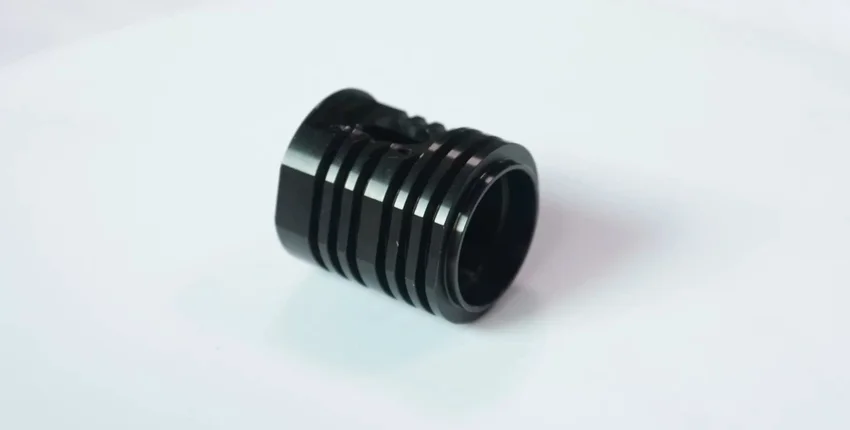
Custom CNC Precision Machining Semiconductors Packaging Inspection Equipment and Automation Parts
View product →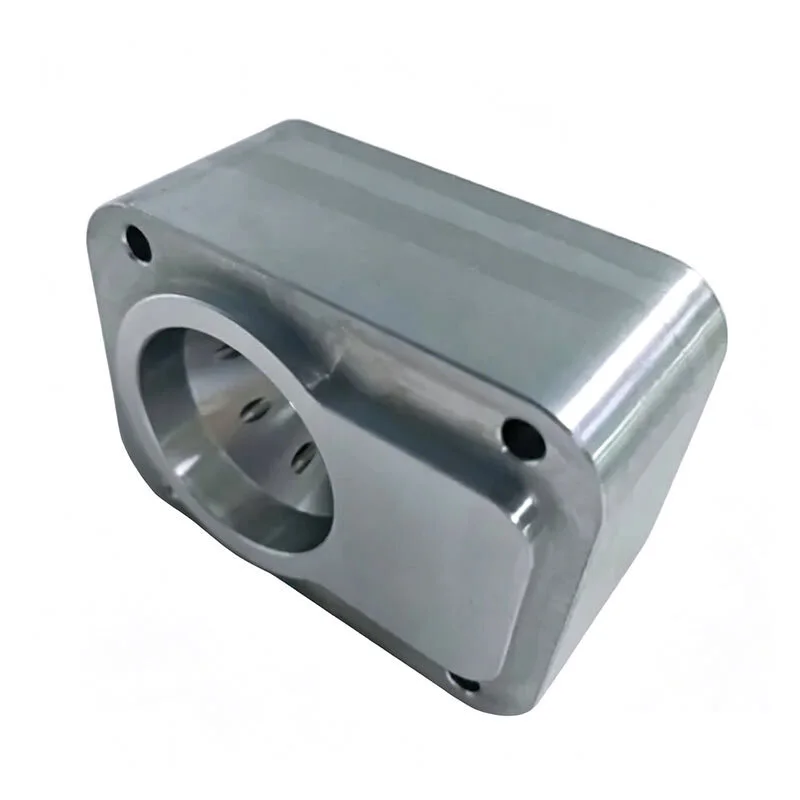
Semiconductor & Optics
Microscope Quad Lens Seals for Medical and Laboratory Use
View product →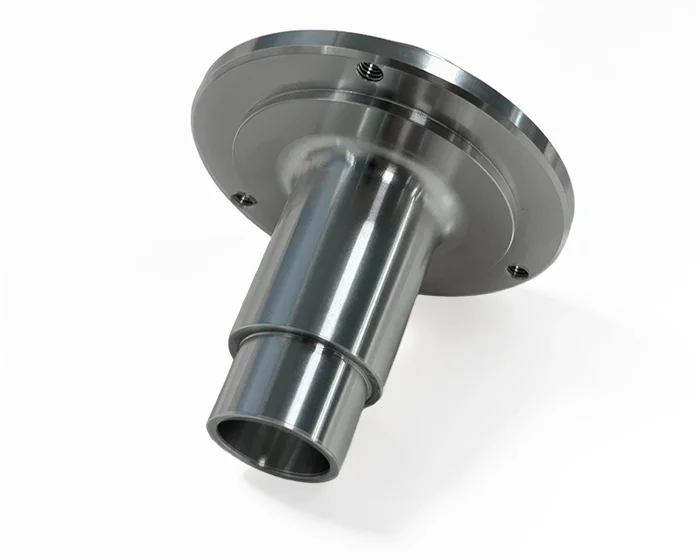
Semiconductor & Optics
OEM Custom CNC Precision Machining Semiconductors and Automation Part
View product →Ready to Machine This Part?
Send your 2D/3D drawings and get a quote within 24 hours. No MOQ for prototypes and small lots.
Request a Quote