PEI Aerospace Parts: Why CNC Beats 3D Printing for Aircraft Systems
Machined PEI aerospace wastewater parts from KGL. Accuracy improved from ±0.1 mm to ±0.02 mm, surface finish from Ra 3.2 to Ra 0.8.
High-performance polymers like PEI are attractive for aerospace fluid systems because they resist chemicals, heat, and flame. The problem is getting them to precision. 3D printed PEI parts show layer lines and weak joints. Injection molding needs expensive tooling and can warp. CNC machining offers a middle path: no mold cost, no layer bonding, and tolerances in the hundredths of a millimeter. This article describes how KGL machined PEI wastewater treatment parts for a top-tier European aerospace and defense group.
Why PEI is hard to machine
PEI expands and creeps under cutting heat. Cut too fast and the surface melts. Cut too slow and the material tears. Tool rake angle, edge radius, and coolant strategy all visibly change the finish. The material also builds up static charge, which can attract chips and leave surface defects.
The three process options compared
| Process | Accuracy | Finish | Tooling cost | Best for |
|---|---|---|---|---|
| 3D printing | ±0.1 mm | Ra 3.2 μm | Low | Prototypes, non-critical shapes |
| Injection molding | ±0.05 mm | Ra 0.8 μm | High mold cost | Very high volume |
| CNC machining | ±0.02 mm | Ra 0.8 μm | Medium | Low to medium volume, sealing faces |
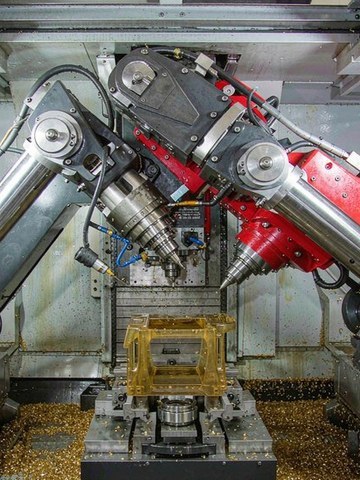
How KGL controlled the cut
We used diamond-coated tooling with low-speed, light-cut parameters and compressed cold air cooling. The goal was to keep the cutting zone below the glass transition temperature and avoid thermal damage. A conformal flexible fixture distributed pressure evenly to stop local creep and stress concentration.
Roughing was followed by 24 hours of natural aging to release residual stress before finishing. PEI stock was sourced directly from Röchling in Germany, which cut material cost 20 to 30 percent versus broker sourcing and gave full traceability.
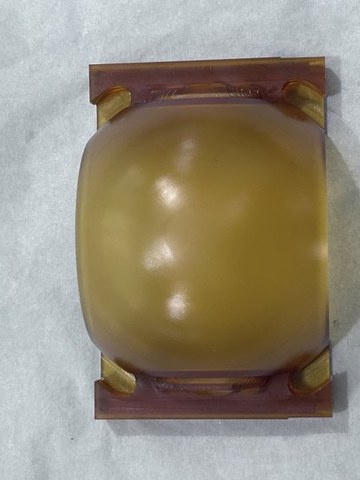
Measured improvement
| Metric | Before (3D printed) | After (KGL machined) |
|---|---|---|
| Dimensional accuracy | ±0.1 mm | ±0.02 mm |
| Surface finish | Ra 3.2 μm | Ra 0.8 μm |
| Leakage risk | Layer-bond path | Solid, no layer bonds |
| Material traceability | Mixed sources | Röchling, direct |
The full case study covers the fixture and tooling decisions behind these numbers, including why the customer moved away from both incumbent processes.
Frequently asked questions
Is machined PEI stronger than printed PEI?
Printed PEI parts carry layer-bond interfaces that behave as leak and crack paths under pressure. Machined parts are cut from solid stock, so there are no layer interfaces at all. On this program the leak risk was removed by design.
Do you provide material certificates for polymer parts?
Yes. PEI stock is sourced directly from Röchling in Germany with full traceability, which also cuts material cost 20 to 30 percent versus broker sourcing.
What other polymers do you machine?
PEEK, PSU, PPSU, PTFE, and PVDF for fluid systems, plus POM and Delrin for wear components. Each needs its own thermal control strategy.
Send your polymer part
If you have a PEI, PEEK, PSU, or PPSU part that needs better accuracy than printing can deliver, send your drawing to kgl@kglmfc.com. We will review the geometry and return a quote within 24 hours.
Have a project in mind?
Send drawings to kgl@kglmfc.com or request a quote. We respond within 24 hours.
Request a Quote