PEI Aerospace Wastewater Treatment Part That Replaced 3D Printing
A PEI aircraft wastewater component machined to ±0.02 mm with Ra 0.8, replacing both 3D printing and injection molding for a top-tier European aerospace and defense group.
The Challenge
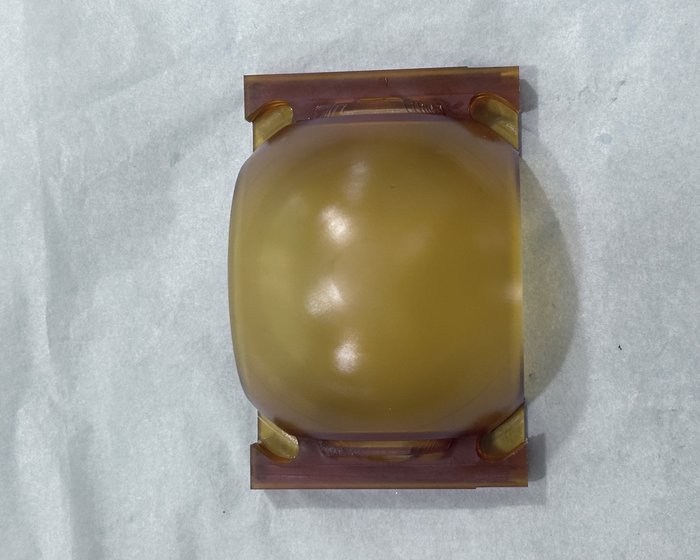
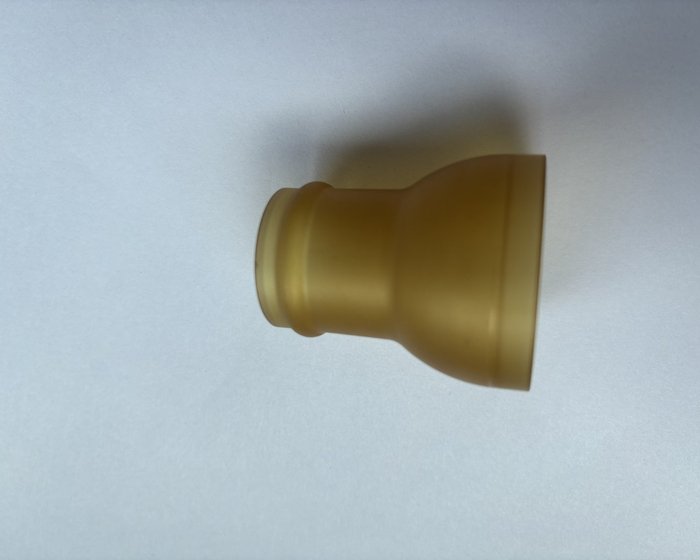
The part is a wastewater treatment component for an aircraft system, machined from PEI instead of being 3D printed or injection molded. The customer is a top-tier European aerospace and defense group that supplies aircraft engines and equipment to major aircraft programs worldwide. The machined part had to beat both incumbent processes on accuracy, sealing, and finish, because the printed version leaked at layer bonds and the molded version warped on cooling.
The Numbers
- Dimensional accuracy ±0.02 mm, against ±0.1 mm on the printed version.
- Surface finish Ra 0.8 μm, against Ra 3.2 μm printed.
- 24 hours of natural aging between roughing and finishing releases residual stress before the final cut.
- 20 to 30 percent material cost saving from direct Röchling (Germany) stock sourcing, with full traceability.
- Two incumbent processes (3D printing and injection molding) replaced by machining on this program.
- Parameters keep the cutting zone below the PEI glass transition temperature of 217 C.
The full drawing-level specification list is in the Key Specifications table below.
How We Machined It
- Custom diamond-coated tooling geometry with low-speed, light-cut parameters and compressed cold air cooling, keeping the cutting zone below the glass transition temperature.
- A conformal flexible fixture with multi-point even pressure, which stops local stress concentration and creep.
- Roughing, 24 hours of natural aging to release residual stress, then finishing. The polymer handling rules follow our Ultem 1000 machining guide.
- PEI stock sourced directly from Röchling in Germany, which cuts material cost 20 to 30 percent versus broker sourcing and gives full traceability.
The Result
Dimensional accuracy improved from ±0.1 mm (printed) to ±0.02 mm. The layer-bond leakage risk is gone by design. Surface finish improved from Ra 3.2 to below Ra 0.8. The project extended our capability from metals into high-performance polymers for aerospace. The full decision story is in PEI aerospace parts: CNC machining vs 3D printing, and grade-by-grade material data is on the PEI (Ultem) machining page.
Key Specifications
| Attribute | Value |
|---|---|
| Material | PEI / polyetherimide |
| Previous process | 3D printing and injection molding |
| Dimensional accuracy | ±0.02 mm (vs ±0.1 mm printed) |
| Surface finish | Ra 0.8 (vs Ra 3.2 printed) |
| Stock source | Röchling, Germany |
| Material cost saving | 20 to 30 percent versus broker sourcing |
Materials and Applications
Materials
- PEI / polyetherimide
Applications
- Aircraft wastewater systems
- Aerospace fluid handling
- Chemical-resistant housings
Ready to Machine This Part?
Send your 2D/3D drawings and get a quote within 24 hours. No MOQ for prototypes and small lots.
Request a Quote