Titanium Alloy CNC Machining: Heat, Tool Wear, and How KGL Controls Both
Practical guide to machining Ti-6Al-4V Grade 5 and Grade 2 titanium. Cutting parameters, tool coatings, coolant strategy, and cost comparison for aerospace and medical parts.
Titanium alloys sit at the top of the hardness-to-machine list, even for an experienced shop. The same properties that make them attractive, high strength-to-weight ratio, corrosion resistance, and biocompatibility, also make them punishing on cutters. At KGL we machine Ti-6Al-4V Grade 5 and commercially pure Grade 2 for aerospace brackets, turbine hardware, and medical implants. This guide explains what we have learned about controlling heat, choosing tools, and quoting these jobs honestly. Grade-by-grade stock and heat-treatment notes live in our titanium machining guide.
Why titanium fights the cutter
Three material properties drive most of the problems.
Low thermal conductivity. Ti-6Al-4V conducts only about 6.7 W/(m.K). Carbon steel is roughly seven times higher, and aluminum alloys are thirty times higher. During cutting, over 80 percent of the heat stays at the tool tip instead of leaving with the chip. The edge softens quickly and the coating peels.
Low elastic modulus. Titanium flexes under cutting pressure, then springs back. The tool rubs against the recovered surface, which creates chatter, poor finish, and unpredictable dimensions.
High chemical reactivity. At high temperatures titanium welds to the constituents of ordinary carbide tools. Built-up edge forms, then chips off, taking part of the tool with it. The result is short tool life and sudden failure.
Without a plan, titanium jobs burn through tooling and miss tolerance. We avoid trial-and-error by locking down the process before the first chip forms. That plan is also what our aerospace machining customers audit, under the AS9100D quality system.
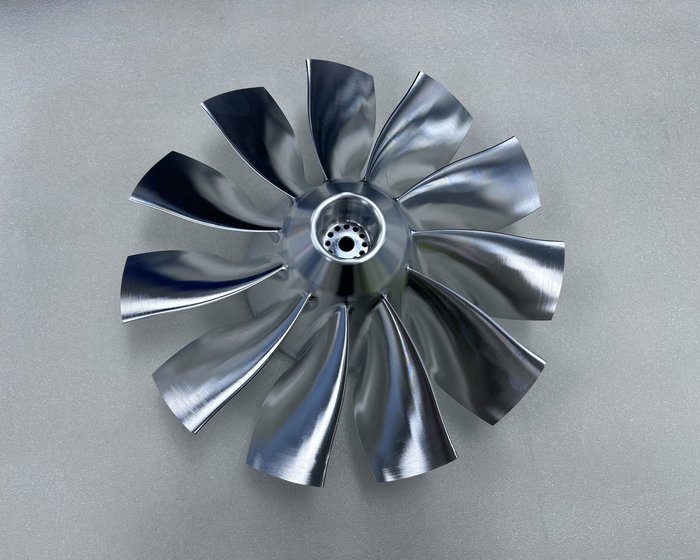
Tooling and parameters that work at KGL
We standardize on high-cobalt, ultra-fine-grain carbide substrates with AlCrN or TiAlN coatings. These coatings form a dense thermal barrier at temperature, slowing heat transfer into the tool body. Geometry is equally important: small rake angles, large clearance angles, and a sharp edge reduce rubbing and the elastic deflection that causes chatter.
For roughing Ti-6Al-4V we keep cutting speed between 45 and 65 m/min. Feed per tooth stays above 0.05 mm so the cutter bites into unhardened base material rather than pushing across the work-hardened layer. Through-spindle coolant at 70 bar is not optional on deep features. It cools the cutting zone, breaks chips, and flushes them away before they can be recut.
Programming also matters. Trochoidal tool paths and optimized step-overs keep tool engagement steady. Thin walls are roughed, aged naturally, then finished after stress has left the part. Skipping the stress-relief step is a common reason titanium parts drift between setup and final inspection.
Cost comparison: titanium against aluminum and stainless steel
Procurement teams often ask why a titanium part costs several times more than the same geometry in aluminum. The table below uses 7075-T6 as a baseline of 1.0. The numbers are based on KGL shop data for a complex multi-hole structural part machined on the same 5-axis platform.
| Material | Relative cutting efficiency | Tool life factor | Composite machining cost index |
|---|---|---|---|
| 7075-T6 aluminum | 100% | 1.0x | 1.0 |
| SUS304 stainless steel | 45% | 2.5x | 2.2 - 2.6 |
| SUS316L stainless steel | 35% | 3.5x | 2.8 - 3.3 |
| Ti-6Al-4V Grade 5 | 22% | 6.0x | 4.5 - 5.5 |
| Commercially pure titanium Grade 2 | 30% | 4.5x | 3.5 - 4.0 |
The message is clear. Unless the design truly needs titanium's strength-to-weight ratio, corrosion resistance, or biocompatibility, specifying it indiscriminately adds cost. For parts that need corrosion resistance but not the full mechanical performance of Grade 5, Grade 2 can cut machining cost by roughly 20 percent.
Surface treatment options
Aerospace and medical titanium parts rarely leave the shop as-machined.
Anodizing Type II / Type III. Type II builds a 5 to 15 μm oxide layer that improves wear and reduces galling. Type III produces a thicker, harder layer and can add color through optical interference. We see this on bone plates and aerospace brackets.
Pickling and passivation. A nitric and hydrofluoric acid mixture removes the alpha-case layer created during machining and restores corrosion resistance. Semiconductor fluid-handling parts and chemical valves often require this.
Shot peening. Controlled media bombardment induces compressive stress, which multiplies fatigue life on rotating and high-load parts.
Treatments change final dimensions. Hard anodizing adds roughly half its total thickness to each surface. When holes or shafts must hold ±0.005 mm, we machine to a coating allowance and ream or grind after surface treatment.
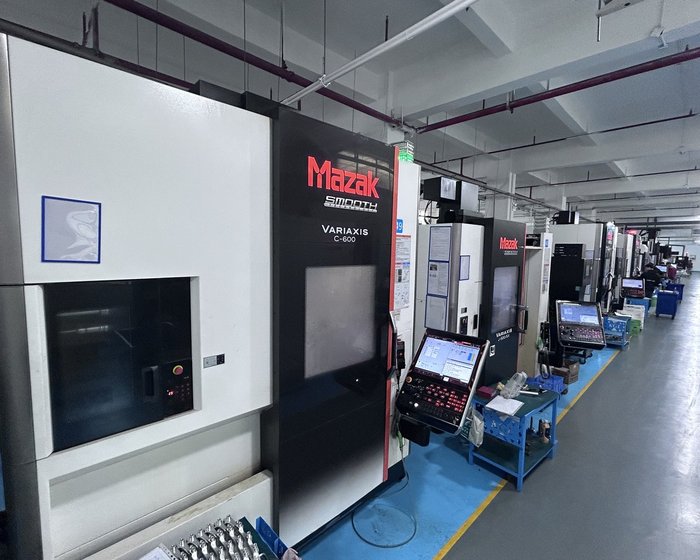
A real example from our floor
We recently machined a batch of Ti-6Al-4V brackets for an aerospace customer. The part had 0.3 mm wall sections, multiple intersecting holes, and a true-position requirement of 0.01 mm. The first attempt used conventional clamping and distorted beyond tolerance. We moved to a vacuum-assisted conformal fixture, reduced cutting speed to 55 m/min, added 24 hours of natural aging between roughing and finishing, and used 70-bar coolant. The final parts passed CMM inspection on a Hexagon machine, and the process is now repeatable for repeat orders.
The lesson: titanium rewards patience. Speeding up the cut to save time usually costs more in scrap and tool replacement than it saves.
Send us the part
If you have a titanium part that needs reliable tolerances, send your STEP/IGES models and 2D drawings to kgl@kglmfc.com. We will review the geometry, material grade, and surface treatment requirements and return a process assessment and quote within 24 hours.
Have a project in mind?
Send drawings to kgl@kglmfc.com or request a quote. We respond within 24 hours.
Request a Quote