Precision Seal Joints for Aircraft Wastewater Treatment Systems
Precision seal joints for aircraft wastewater treatment systems in AISI 304 stainless steel: NC roughing, aging treatment, mill-turn finish machining, passivation, and 100 percent seal testing.
Aerospace
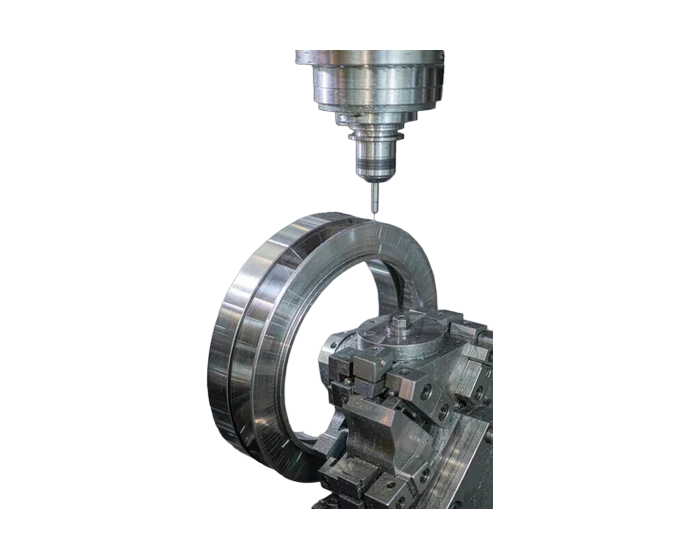
Core seal joints for civil aircraft wastewater treatment systems, machined from AISI 304 stainless steel: NC roughing, aging treatment, mill-turn finish machining in one setup, passivation, and 100 percent seal testing before shipment.
Or email drawings to kgl@kglmfc.com
Key Specifications
| Parameter | KGL Capability |
|---|---|
| Material | Stainless steel AISI 304 |
| Surface Treatment | Passivation (ASTM A967) |
| Process | NC roughing; aging treatment; mill-turn finish machining of sealing face, bore and holes |
| Seal Test | 100 percent leak test at the pressure specified on the drawing |
| Standard Tolerance | ±0.005 mm on machined features |
| Inspection | Hexagon / Zeiss CMM, full first-article inspection report |
| MOQ | No MOQ; 1-piece prototypes supported |
| Tolerance | ±0.005 mm standard on metals, engineering plastics, and carbon fiber composite |
| Certifications | ISO 9001:2015, ISO 13485:2016, AS9100D |
| Capacity | 100+ CNC machines including 11 five-axis centers |
| Quote | Within 24 hours for complete 2D/3D files |
About This Part
The seal joint joins the flanged sections of an aircraft wastewater treatment loop, where a leaking joint means service disruption and contamination risk. KGL machines each joint from solid bar of AISI 304 stainless steel, a chromium-nickel grade chosen for corrosion resistance in a wet, chemically active environment and for surfaces that clean up easily during maintenance.
The process runs in a fixed order. NC roughing removes most of the stock and leaves a uniform allowance. An aging treatment then releases machining stress and stabilizes the structure, so the finished geometry does not drift after the part leaves the machine. Mill-turn finish machining completes the sealing face, the bore, and every hole position in a single clamping, keeping the sealing face square to the bore. After machining, passivation restores the chromium-rich oxide film that machining can disturb, and it leaves no dimensional buildup on the sealing face.
Every seal joint is leak tested at the pressure specified on the drawing before packing, and critical dimensions are verified on Hexagon and Zeiss CMMs. Material certificates and a full first-article report travel with each order. Send your drawing for DFM feedback and a quotation within 24 hours.
Why Machine It at KGL
Five-Axis Fleet
100+ CNC machines including 11 five-axis centers run complex geometry in single setups, so tolerances do not stack up across refixturing.
Verified Accuracy
±0.005 mm standard on metals, plastics, and carbon fiber composite, verified on Hexagon and Zeiss CMMs (0.0015 mm accuracy).
Fast Prototypes
Engineering feedback with every quotation; prototype parts typically machined in 15 to 25 days.
One Supplier, End to End
Material sourcing, machining, heat treatment coordination, finishing, CMM inspection and export packaging under one roof.
Part-Specific Advantages
- Machined from solid AISI 304 stainless steel bar: corrosion resistant and easy to clean in a wet service environment.
- NC roughing followed by aging treatment releases machining stress, so the final geometry stays stable.
- Mill-turn finish machining completes the sealing face, bore, and hole positions in one clamping.
- Passivation restores the protective oxide film without adding dimensional buildup on the sealing face.
- Every joint passes a 100 percent leak test at drawing pressure, with CMM-verified critical dimensions.
Typical Applications
- Flanged seal joints in civil aircraft wastewater treatment and storage loops
- Lavatory service panel and waste line connections
- Seal joints for ground test rigs of aircraft wastewater systems
- MRO replacement seals for aircraft water and waste systems
Commercial Terms
| Commercial | Detail |
|---|---|
| MOQ | No MOQ; 1-piece prototype supported |
| Quote | Within 24 hours for complete 2D/3D files |
| Terms | EXW / FOB Shenzhen |
| Certifications | ISO 9001:2015, AS9100D |
| Packaging | Individual bubble wrap, export wooden case |
Common Questions
Why is AISI 304 specified for wastewater system seal joints?
304 is a chromium-nickel stainless steel that resists the corrosion from standing wastewater and cleaning chemicals, and its surface stays smooth and easy to sanitize. It also machines cleanly, which helps hold the flat sealing face the joint depends on.
Why age the part between roughing and finish machining?
Roughing leaves stress in the material. The aging treatment releases that stress before the finishing cuts, so the sealing face and bore stay flat and round after the part is unloaded instead of moving in service.
What does passivation add for this part?
Passivation removes free iron left by machining and restores the chromium-rich oxide film that gives stainless steel its corrosion resistance. It adds no measurable buildup, so the finished sealing face dimensions are unchanged.
How do you verify the joint does not leak?
Every joint is leak tested at the pressure stated on the drawing before packing, and critical dimensions are verified on Hexagon or Zeiss CMMs with a full first-article report for new programs.
What files do you need for a quote?
A 2D drawing with the sealing face details and test pressure, plus a 3D model in STEP or IGES. You get engineering feedback with the quotation, within 24 hours.
More Aerospace Parts
Other parts KGL machines in this industry. Every card links to its own detail page.
Ready to Machine This Part?
Send your 2D/3D drawings and get a quote within 24 hours. No MOQ for prototypes and small lots.
Request a Quote