ADC12 Die Cast Triangle Connector with Precision Milled Bores
ADC12 die cast triangle connector: casting to GB/T 6414 DCTG6, three Ø10 and three Ø12 CNC milled precision bores, matte black textured powder coat, RoHS 2.0. Quote in 24 hours.
Robotics & Humanoid Robots
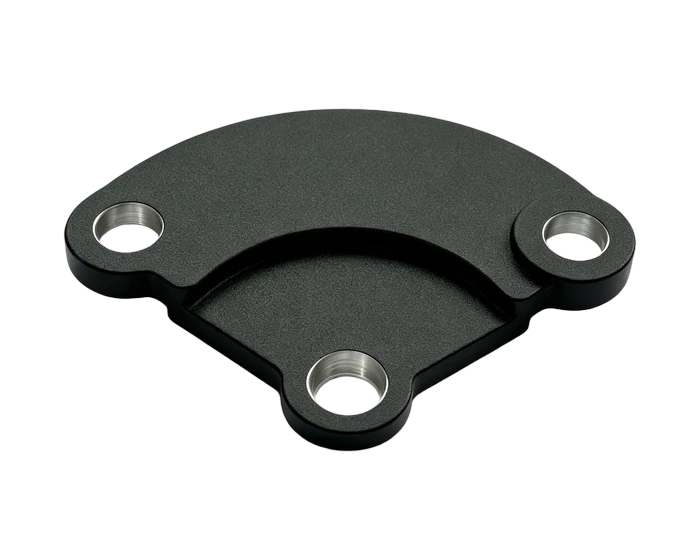
A die cast ADC12 triangle connector that combines near net shape casting with six CNC milled precision bores (three Ø10, three Ø12), a matte black textured powder coat, and full defect control from casting to final inspection.
Or email drawings to kgl@kglmfc.com
Key Specifications
| Parameter | KGL Capability |
|---|---|
| Material | ADC12 die cast aluminum alloy, as-cast condition |
| Process | Die casting; casting defect inspection; hole masking; matte black textured powder coating; CNC milling of 3×Ø10 and 3×Ø12 precision bores; final full dimension and appearance inspection |
| Casting tolerance | GB/T 6414-2017 DCTG6: ≤6 mm ±0.1; (6,30] mm ±0.2; (30,120] mm ±0.3; >120 mm ±0.5 |
| Machined bores | 3×Ø10 mm, 3×Ø12 mm precision holes |
| Draft angle | ≤1.5 degrees; unmachined edges C0.5 |
| Surface | Matte black sand texture powder coat |
| Integrity | No cracks or shrinkage defects; weld repair not permitted; bores chip free |
| Compliance | RoHS 2.0 |
| Tolerance | ±0.005 mm standard on metals, engineering plastics, and carbon fiber composite |
| Inspection | Hexagon / Zeiss CMM with 0.0015 mm accuracy, full first-article reports |
| Certifications | ISO 9001:2015, ISO 13485:2016, AS9100D |
| Capacity | 100+ CNC machines including 11 five-axis centers |
| MOQ | No MOQ; 1-piece prototypes supported |
| Quote | Within 24 hours for complete 2D/3D files |
About This Part
For a structural triangle link produced in quantity, casting beats machining from billet on cost and lead time, and modern die casting holds enough geometry that only the locating features need machining. This connector is die cast in ADC12, inspected for casting defects, powder coated, and only then milled, so the six precision bores are cut into a finished, dimensionally settled part rather than a casting that may still move.
Casting geometry follows GB/T 6414-2017 DCTG6: linear features ±0.1 mm up to 6 mm, ±0.2 mm to 30 mm, ±0.3 mm to 120 mm, and ±0.5 mm above. Draft is kept within 1.5 degrees, unmachined edges carry C0.5, and weld repair is not allowed, so any casting with porosity or shrinkage is scrapped, not patched.
After a matte black textured powder coat, the three Ø10 holes and three Ø12 precision bores are CNC milled clean, with no chips left in any bore. Final inspection covers full dimensions and appearance against the drawing.
This part family supports the Robotics Parts industry. Read how KGL machines parts for that sector, then send your drawing for a quote.
Why Machine It at KGL
Five-Axis Fleet
100+ CNC machines including 11 five-axis centers run complex geometry in single setups, so tolerances do not stack up across refixturing.
Verified Accuracy
±0.005 mm standard on metals, plastics, and carbon fiber composite, verified on Hexagon and Zeiss CMMs (0.0015 mm accuracy).
Fast Prototypes
Engineering feedback with every quotation; prototype parts typically machined in 15 to 25 days.
One Supplier, End to End
Material sourcing, machining, heat treatment coordination, finishing, CMM inspection and export packaging under one roof.
Part-Specific Advantages
- ADC12 die casting for strong, repeatable complex geometry at volume pricing
- Six precision bores (three Ø10, three Ø12) CNC milled after coating
- Casting tolerances to GB/T 6414-2017 DCTG6, draft within 1.5 degrees
- Matte black textured powder coat for corrosion resistance and a clean robot arm look
- Weld repair prohibited; defect castings scrapped to protect structural integrity
- RoHS 2.0 compliant finish
Typical Applications
- Structural link and connector castings for robot arms and frames
- Multi point mounting interfaces on automation equipment
- Brackets and covers where cast strength meets machined locating accuracy
Commercial Terms
| Commercial | Detail |
|---|---|
| MOQ | No MOQ; 1-piece prototype supported |
| Quote | Within 24 hours for complete 2D/3D files |
| Terms | EXW / FOB Shenzhen |
| Certifications | ISO 9001:2015 |
| Packaging | Individual bubble wrap, export carton or wooden case |
Common Questions
Why machine the bores after powder coating?
Coating first and milling second means the precision bores stay clean, uncoated, and at exact size, with no mask-and-spray variation on the features that matter. The coating also seals the casting before the final cut, so no overspray reaches the bores.
Is die casting strong enough for a robot structural link?
ADC12 is a proven casting alloy for housings and links with balanced strength and flow. Where the drawing calls for machined accuracy, we add it on the casting, and defect control is strict: no repaired castings leave the line.
What tolerances should I expect on cast surfaces?
GB/T 6414 DCTG6 as listed. If your design needs tighter than casting tolerance anywhere, tell us in the RFQ and we will plan a machining operation for that feature.
More Robotics & Humanoid Robots Parts
Other parts KGL machines in this industry. Every card links to its own detail page.
Ready to Machine This Part?
Send your 2D/3D drawings and get a quote within 24 hours. No MOQ for prototypes and small lots.
Request a Quote