Robot Joint Housing Bodies
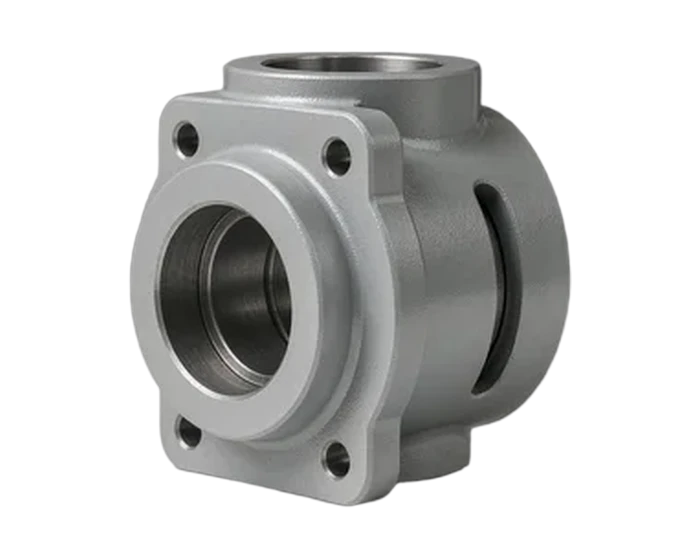
Robot joint housing bodies in 7075-T6 aluminum: three-axis roughing, aging treatment, and five-axis finish machining holding coaxiality and position accuracy at 0.01 mm, with natural-color powder coating.
Robotics & Humanoid Robots
Robot joint housing bodies machined from 7075-T6 aluminum: three-axis roughing with aging treatment followed by five-axis finish machining, holding coaxiality and position accuracy at 0.01 mm, finished with a natural-color powder coating.
Or email drawings to kgl@kglmfc.com
Key Specifications
| Parameter | KGL Capability |
|---|---|
| Material | Aluminum 7075-T6 |
| Surface Treatment | Powder coating, natural color |
| Process | Three-axis roughing; aging treatment; five-axis finish machining in one clamping |
| Coaxiality & Position | 0.01 mm on bearing seats and critical features |
| Standard Tolerance | ±0.005 mm on machined features |
| Inspection | Hexagon / Zeiss CMM, first-article report before batch production |
| Quality System | ISO 9001:2015 |
| MOQ | No MOQ; 1-piece prototypes supported |
| Tolerance | ±0.005 mm standard on metals, engineering plastics, and carbon fiber composite |
| Certifications | ISO 9001:2015, ISO 13485:2016, AS9100D |
| Capacity | 100+ CNC machines including 11 five-axis centers |
| Quote | Within 24 hours for complete 2D/3D files |
About This Part
The joint housing body closes over the drive components of a robot joint and carries the bearing seats, the encoder reference, and the cable routing. Any offset between the bearing seats shows up later as gear noise and uneven wear, so the seats must stay true to each other and to the mounting face. KGL machines each housing from 7075-T6 aluminum, a high-strength grade that keeps its dimensions through the thermal cycles a joint sees in daily service.
The process is set up to hold accuracy without padding the price. Roughing runs on three-axis machining centers, which remove most of the stock quickly and at a lower hourly rate. An aging treatment then releases the machining stress and stabilizes the structure. Five-axis finish machining completes the bearing seats, the mounting faces, and every bore in one clamping, so the finished housing holds coaxiality and position accuracy of 0.01 mm. The route gives the customer the accuracy of five-axis machining while keeping the overall cost and lead time down.
After machining, the housings are finished with a natural-color powder coating that resists scratches and workshop chemicals and wipes clean during maintenance. Critical dimensions are verified on Hexagon and Zeiss CMMs, and a first-article report is issued before batch production under our ISO 9001 quality system. Send your drawing for DFM feedback and a quotation within 24 hours.
Why Machine It at KGL
Five-Axis Fleet
100+ CNC machines including 11 five-axis centers run complex geometry in single setups, so tolerances do not stack up across refixturing.
Verified Accuracy
±0.005 mm standard on metals, plastics, and carbon fiber composite, verified on Hexagon and Zeiss CMMs (0.0015 mm accuracy).
Fast Prototypes
Engineering feedback with every quotation; prototype parts typically machined in 15 to 25 days.
One Supplier, End to End
Material sourcing, machining, heat treatment coordination, finishing, CMM inspection and export packaging under one roof.
Part-Specific Advantages
- Machined from 7075-T6 aluminum for high strength and dimensional stability in daily joint duty cycles.
- Three-axis roughing followed by aging treatment removes stress before the finishing cuts, so the geometry does not drift after unloading.
- Five-axis finish machining completes bearing seats, bores, and mounting faces in one clamping, holding coaxiality and position accuracy of 0.01 mm.
- The three-axis-plus-five-axis route keeps cost and lead time down while preserving joint-critical accuracy.
- Natural-color powder coating resists wear and chemicals and is easy to clean during maintenance.
Typical Applications
- Housing bodies for rotary joints of industrial robot arms
- Joint housings for collaborative robots and service robots
- Housing bodies for robot joint units and integrated drive modules
- Replacement and upgrade housings for robot maintenance programs
Commercial Terms
| Commercial | Detail |
|---|---|
| MOQ | No MOQ; 1-piece prototype supported |
| Quote | Within 24 hours for complete 2D/3D files |
| Terms | EXW / FOB Shenzhen |
| Certifications | ISO 9001:2015, ISO 13485:2016 |
| Packaging | Individual bubble wrap, export wooden case |
Common Questions
Why use 7075-T6 aluminum for a robot joint housing?
7075-T6 is one of the highest-strength aluminum grades available, so the housing walls can stay thin without giving up rigidity. The T6 temper also keeps its dimensions through the temperature changes a working joint sees every day.
Why rough on three-axis machines before five-axis finishing?
Three-axis machining centers remove the bulk of the stock at a lower hourly cost and are widely available. Moving roughing off the five-axis machine frees it for the accuracy-critical cuts, which shortens the queue for finish machining and lowers the price per part.
What does the aging treatment between roughing and finishing do?
Roughing leaves stress locked in the material. Aging releases that stress before the finishing cuts, so the bearing seats and bores stay round and in position after the part is unloaded instead of moving once it is assembled into the joint.
How do you hold 0.01 mm coaxiality and position accuracy?
All accuracy-critical features are finished in a single five-axis clamping, so every bore and seat is cut in one coordinate system. Each housing is then measured on Hexagon or Zeiss CMMs, and a first-article report is issued before batch production.
What files do you need for a quote?
A 2D drawing with the bearing seat tolerances and coaxiality requirements, plus a 3D model in STEP or IGES. You get engineering feedback with the quotation, within 24 hours.
More Robotics & Humanoid Robots Parts
Other parts KGL machines in this industry. Every card links to its own detail page.
Ready to Machine This Part?
Send your 2D/3D drawings and get a quote within 24 hours. No MOQ for prototypes and small lots.
Request a Quote