3-Axis, 4-Axis, and 5-Axis CNC Milling: What Changes and What It Costs
Compare 3-axis, 4-axis, and 5-axis CNC milling. When each makes sense, how setup count affects accuracy, and how KGL uses Mazak 5-axis centers for complex parts.
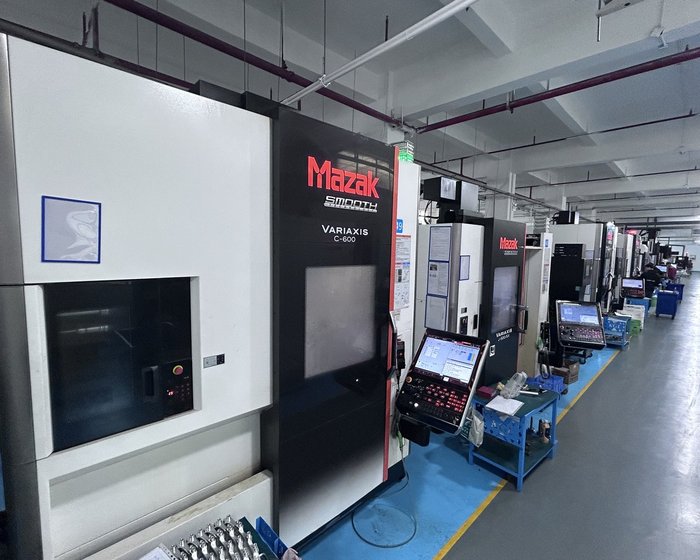
The number of axes on a milling center is one of the most misunderstood topics in precision machining. More axes does not always mean better. It means fewer setups, different access angles, and different programming complexity. At KGL we run 3-axis, 4-axis, and 5-axis machines, including Mazak 5-axis simultaneous centers. This article explains when each level is the right choice.
The quick difference
3-axis machines move the cutter in X, Y, and Z. 4-axis adds one rotary axis, usually A, which rotates the workpiece around X. 5-axis adds two rotary axes, typically A and B, allowing the tool to reach the part from almost any direction while all axes move together.
| Type | Rotary axes | Typical setup count | Best for |
|---|---|---|---|
| 3-axis | None | 2-4 setups per part | Prismatic parts, pockets, flat faces, high volume |
| 4-axis | 1 (usually A) | 1-2 setups | Cylindrical parts, splines, helical grooves, gear-like features |
| 5-axis | 2 (A and B typical) | 1 setup for many parts | Impellers, turbine blades, complex medical joints, robot arms |
Setup count is the hidden cost
Every time a part is unclamped and reclamped, a small error enters the stack. Fixture repeatability, operator loading, and chip between the part and locator all add up. A part that needs four 3-axis setups can easily accumulate 0.02 to 0.05 mm of positional error, even if each individual setup is good. A single 5-axis setup removes most of that stack.
The trade-off is upfront work. 5-axis programming takes longer, fixtures often cost more, and the machine hourly rate is higher. The savings appear in fewer setups, less scrap, and faster total cycle time on complex parts.
When 3-axis is enough
Simple boxes, plates, and brackets are faster and cheaper on 3-axis machines. If every feature is reachable from the top or from two perpendicular sides, paying for 4-axis or 5-axis motion is unnecessary. High-volume aluminum plates, enclosure panels, and simple jigs belong here. When a geometry does justify the extra axes, our 5-axis CNC machining page shows the part families where it earns its rate.
At KGL we use 3-axis vertical machining centers for these jobs because the programming is simple, tooling is standard, and cycle time is low. The key is honest design review. We sometimes see customers specify 5-axis for geometries that a good 3-axis programmer can complete in two setups. We quote what the part actually needs.
When 4-axis pays off
4-axis is the sweet spot for rotationally symmetric parts that need side features. Shafts with radial holes, cam-like profiles, helical flutes, and simple impellers are good examples. The part spins to the required angle, the machine locks the rotary axis, and the cut proceeds in 3-axis mode. This is called 4-axis indexing.
Continuous 4-axis work keeps the rotary axis moving with X, Y, and Z at the same time. This is useful for cylindrical cams, worm profiles, and some screw geometries. It costs more than indexing but less than full 5-axis.
When 5-axis becomes necessary
5-axis simultaneous machining is the right choice when the part has features that cannot be reached in fewer setups, or when the relationship between multiple faces controls function. Examples from our floor include:
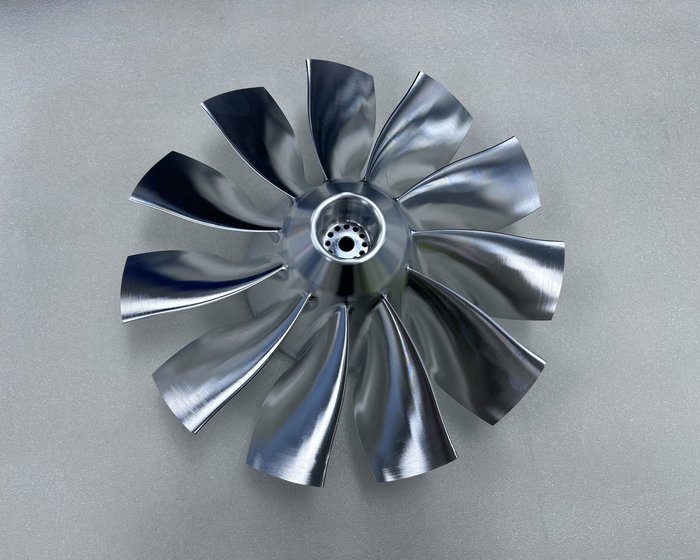
- Impellers and turbine wheels where blade twist requires continuous tool-axis adjustment
- Robot joint parts where bore-to-bore coaxiality must hold 0.01 mm across several angled faces
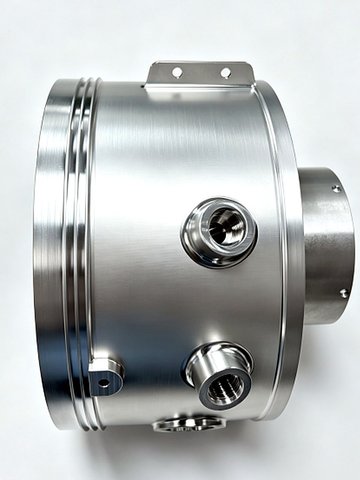
- Medical endoscope housings with compound angles and thin wall sections
- Aerospace brackets that combine deep pockets, thin walls, and tight positional tolerances
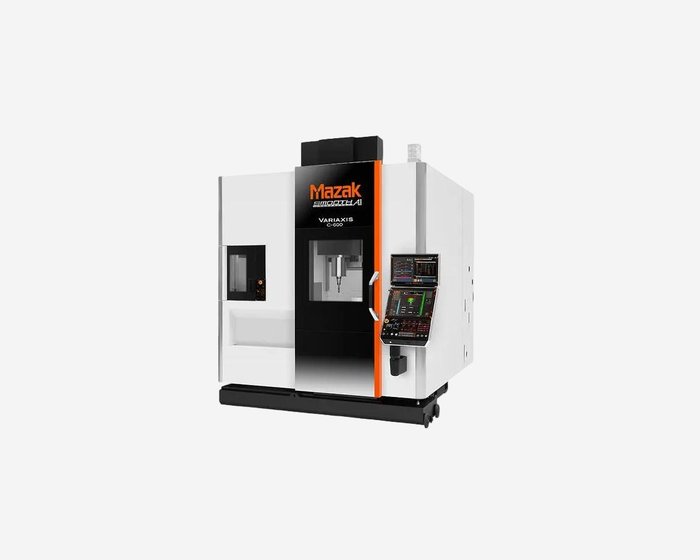
Our Mazak VARIAXIS series runs these parts with through-spindle coolant, spindle thermal compensation, and probing between operations. The probe checks critical dimensions and updates tool wear offsets before the final pass.
Programming and fixture reality
A 5-axis program can take two to four times longer to prepare than a 3-axis program. Fixture design also takes longer because the tool and table must rotate without collision. The payback is on parts where the alternative is multiple setups, custom soft jaws, and a higher scrap rate.
For one recent robot joint program, the customer initially quoted the part as three setups on a 3-axis machine. Our 5-axis route used one fixture and one program. The total machining time was shorter, and positional tolerance improved from a borderline 0.03 mm to a stable 0.008 mm.
Ask before you specify
If you are not sure whether your part needs 3, 4, or 5-axis machining, send the drawing to kgl@kglmfc.com. We will review the geometry and quote the most economical route that still hits the tolerance.
Related Articles
More from the 5-Axis CNC Machining series.
Have a project in mind?
Send drawings to kgl@kglmfc.com or request a quote. We respond within 24 hours.
Request a Quote