5-Axis CNC Machining Impellers: Tolerance Path from Blisk to Production
How KGL machines impellers and bladed rotors with 5-axis CNC machining. Airfoil profiles, dynamic balance, and the tolerance path from prototype to production.
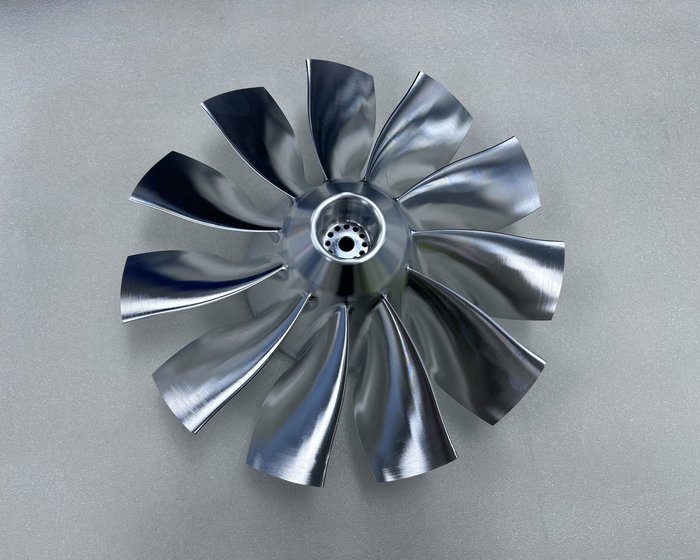
Impellers, blisks, and bladed rotors move fluid or gas under high speed and load. Their airfoil blades are thin, twisted, and crowded, which makes them some of the most demanding parts to machine. Standard 3-axis equipment cannot reach between overlapping blades without collision. At KGL we machine these parts on simultaneous 5-axis centers. This article explains the tolerance path from the first prototype to a repeatable production process.
Why impellers punish conventional machining
Three features drive the difficulty. First, the blades are free-form surfaces with tight profile tolerances. Second, the channels between blades are narrow and deep, so tool access is limited. Third, every blade must be geometrically consistent, or the rotor becomes unbalanced at high RPM. Re-fixturing between setups adds runout and positional error that is hard to remove later.
Simultaneous 5-axis is the practical answer
Simultaneous 5-axis machining coordinates X, Y, Z, A, and C at the same time. The tool tilts and rotates around the part, reaching deep channels and twisted surfaces in one clamping. This removes the setup stack that would otherwise accumulate on a 3-axis machine.
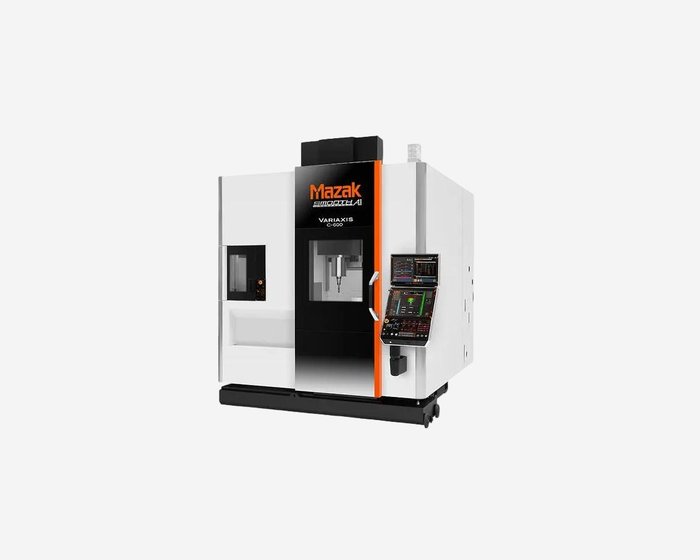
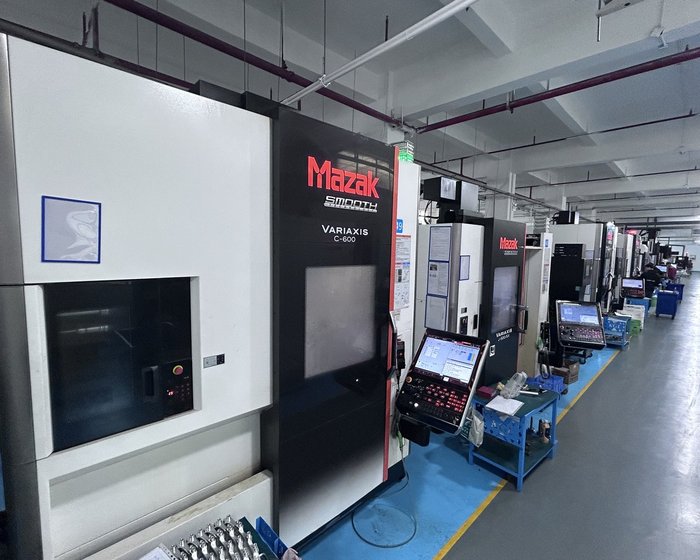
At KGL we use Mazak VARIAXIS C-600 and j-500 centers for impeller work. Through-spindle coolant, spindle thermal compensation, and in-process probing are standard. The probe checks critical dimensions between operations and updates tool wear offsets before the final pass.
Tolerance and balance grades we work to
| Attribute | Industry grade | KGL standard | KGL limit |
|---|---|---|---|
| Profile tolerance (3D airfoil curves) | ±0.08 mm | ±0.02 mm | ±0.008 mm |
| Bore diameter and concentricity | ±0.025 mm | ±0.008 mm | ±0.005 mm |
| Blade pitch and angular positioning | ±0.05 mm | ±0.015 mm | ±0.005 mm |
| Dynamic balance quality grade | ISO G6.3 | ISO G2.5 | ISO G1.0 |
| Surface roughness (Ra) | 1.6 μm | 0.8 μm | 0.2 μm |
Materials and applications
We machine impellers and bladed rotors from aluminum 7075-T6 and 6061-T6 for lightweight applications, Ti-6Al-4V Grade 5 for high-strength aerospace and marine parts, stainless steel 17-4PH and 316L for corrosion resistance, and Inconel for high-temperature turbocharger wheels.
Common applications include jet engine compressor fans, turbocharger wheels, marine waterjet impellers, HVAC blowers, and energy expanders. The full capability write-up, including the tolerance ladder and the balance verification method, is in our impeller and bladed rotor case study.
Frequently asked questions
Can you machine impellers from solid billet instead of welded assemblies?
Yes. Solid-billet machining removes porosity, internal voids, and weld joints that limit fatigue resistance. We machine from forged stock on simultaneous 5-axis centers, and the hub, bore, and blades are finished in one clamping.
What dynamic balance grade can you guarantee?
ISO 1940 G2.5 is our standard grade for rotating components. G1.0 is available for high-RPM applications. Balance is verified by two-plane dynamic balancing after CMM profile inspection.
How do you verify airfoil geometry?
CMM scanning against the customer CAD model. Every production lot receives a dimensional report, and first articles get full FAI documentation.
Send the drawing
If you have an impeller, blisk, or bladed rotor that needs reliable tolerances, send your STEP/IGES models and 2D drawings to kgl@kglmfc.com. We will review the geometry and return a process assessment and quote within 24 hours.
Related Articles
More from the 5-Axis CNC Machining series.
Have a project in mind?
Send drawings to kgl@kglmfc.com or request a quote. We respond within 24 hours.
Request a Quote