CNC Machining for Robotics: Joint Housings, Wrist Shells, and Gear Transmissions
CNC machining for robots and cobots: joint housings, wrist shells and gear housings with 0.01 mm coaxiality, expedited sampling and thin-wall 5-axis milling.
A robot is an assembly of machined parts wearing sensors and motors. Joint housings carry the bearings. Wrist shells protect the actuators at the end of the arm. Gear housings locate the strain-wave or harmonic drives that multiply torque. The accuracy of those machined interfaces decides how repeatably the robot moves. KGL machines all of them for robotics programs, from cobots to humanoid platforms, and this article maps the part types and the tolerances behind them.
The machined anatomy of a robot
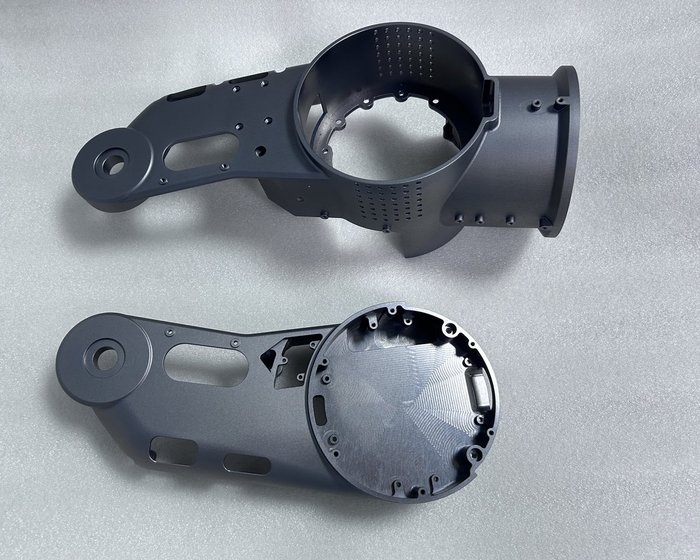
Start at the wrist. A wrist housing sits between the forearm and the end effector. It must be rigid enough to hold bearings and gearboxes, light enough to keep dynamic loads low, and precise enough that force-torque sensors read true position. We machine these housings from 6061-T6 and 7075-T6 aluminum, AZ91D magnesium for the lightest builds, and PEEK where the housing carries an insulated sensor cover.
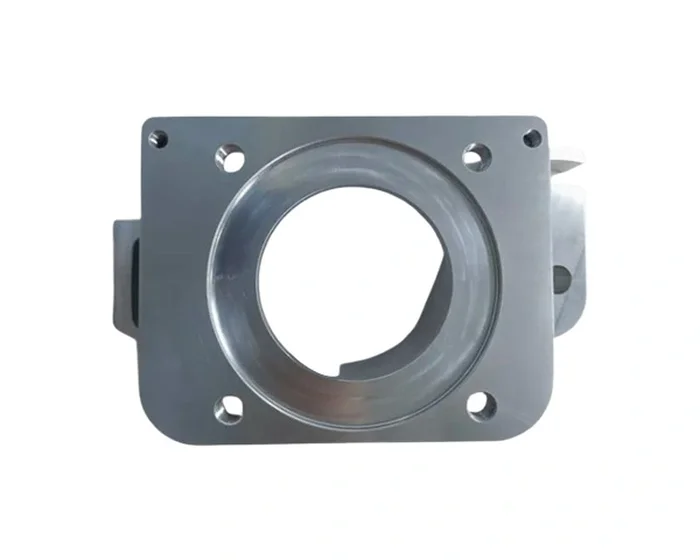
Move up the arm and the same logic repeats in joint housings, with bearing bores that must share one axis. Move down to the legs of a quadruped and you find links and drive housings with the same coaxiality demand. Gear transmission housings add the locating bores for strain-wave and harmonic drives, where runout at the mount shows up directly as torque ripple.
Thin-wall 5-axis milling
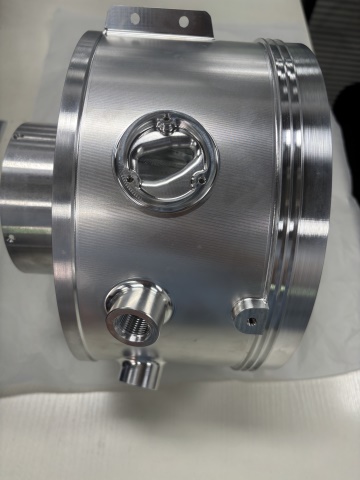
Robot housings combine deep pockets, sealing grooves, angled bosses, and thin walls. Re-fixturing between these features would stack error onto the bearing bores, so we machine them on 5-axis centers in one setup. Deep pockets and sealing faces are completed without the part leaving the fixture, and the 11 five-axis machines in the shop mean prototype and production work do not fight for the same spindle.
Thin-wall sections get a rough, stress-relief, finish route so dimensions stay stable after the part leaves the machine. Typical walls run from 1.0 mm to 3.0 mm, and sealing faces are milled flat within 0.01 mm. Critical bearing bores hold ±0.005 mm on a ±0.005 mm standard tolerance.
Accuracy and speed together
| Metric | Value |
|---|---|
| Multi-axis coaxiality on joint parts | within 0.01 mm |
| Stable machining tolerance | ±0.005 mm |
| Critical bearing bore tolerance | ±0.005 mm |
| Sealing face flatness | 0.01 mm |
| First-pass yield | 99.5% |
| Sampling / small-lot lead time | Per program / 7 days |
Those delivery numbers exist because robot programs iterate fast. We hold multi-axis coaxiality within 0.01 mm for a head-tier supplier program run by one of the world's largest collaborative robot manufacturers, described in the robot joint case study. Quadruped legs and drive housings follow the same rules, covered in the quadruped robot case study. For housings specifically, the wrist and arm housing product page lists material and finish options.
Materials by role
| Part role | Preferred material | Why |
|---|---|---|
| Lightweight wrist shell | AZ91D magnesium / 7075-T6 | Lowest inertia, or impact resistance |
| Structural links and frames | 7075-T6, Ti-6Al-4V | Strength-to-weight under cyclic load |
| Joint housings | 6061-T6, 7075-T6 | Machinability, anodized wear surfaces |
| Insulated sensor covers | PEEK | Dielectric and thermal isolation |
Frequently asked questions
How fast can I get a robot housing prototype?
expedited sampling is possible for aluminum housings with standard tolerances and no special surface treatment. Send a STEP file and we will confirm feasibility on the same day.
What is the best material for a light robot wrist?
Magnesium AZ91D saves the most weight. 7075-T6 is chosen when impact resistance matters more, and PEEK works for insulated sensor covers. The choice depends on the load case.
Can you machine strain-wave gear housings?
Yes. Gear transmission housings and harmonic drive flexspline mounts are machined with the bearing seats and locating bores finished in one setup, which is what keeps the drive running true.
Robot parts inquiry
If you are building a cobot, humanoid, or quadruped and need joint housings, wrist shells, or gear housings, send your STEP/IGES files to kgl@kglmfc.com. We will review the geometry and return a DFM assessment and quote within 24 hours.
Have a project in mind?
Send drawings to kgl@kglmfc.com or request a quote. We respond within 24 hours.
Request a Quote