Humanoid Robot Joint Parts: Coaxiality and 48-Hour Sampling
KGL supplies joint arms and housings for a leading collaborative robot manufacturer. 0.01 mm coaxiality, 99.5% first-pass yield, expedited first articles.
Humanoid and collaborative robots need joints that repeat motion thousands of times without binding or wearing. The machined interfaces that hold bearings and actuators must be coaxial within tight limits, or the joint will chatter and fail. At KGL we supply joint arms and housings for one of the world's largest collaborative robot manufacturers. This article explains how we hold coaxiality and keep up with fast design iterations across our robotics programs.
Why robot joints need tight coaxiality
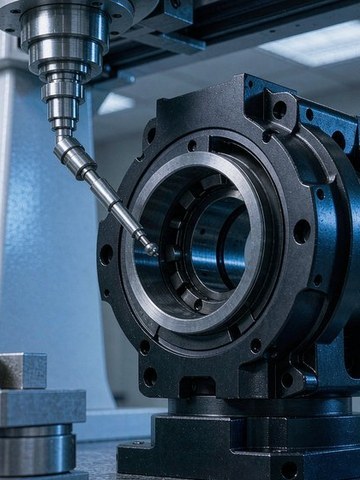
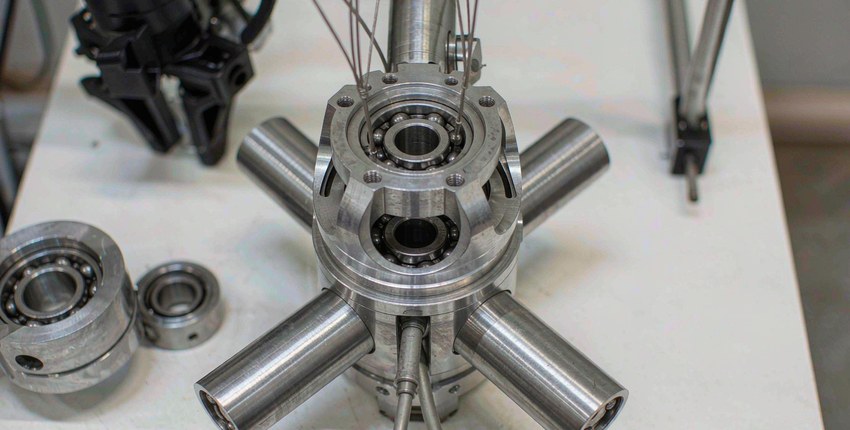
A robot joint typically has two or more bearing bores that must share a common axis. If the bores are offset or tilted, the bearings run eccentrically. The joint heats up, wears faster, and loses positional accuracy. On collaborative robots that work near people, this directly affects safety and reliability.
How we machine them
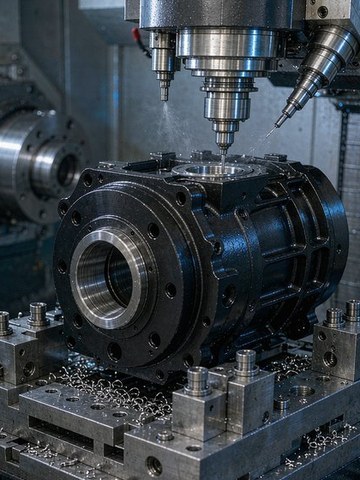
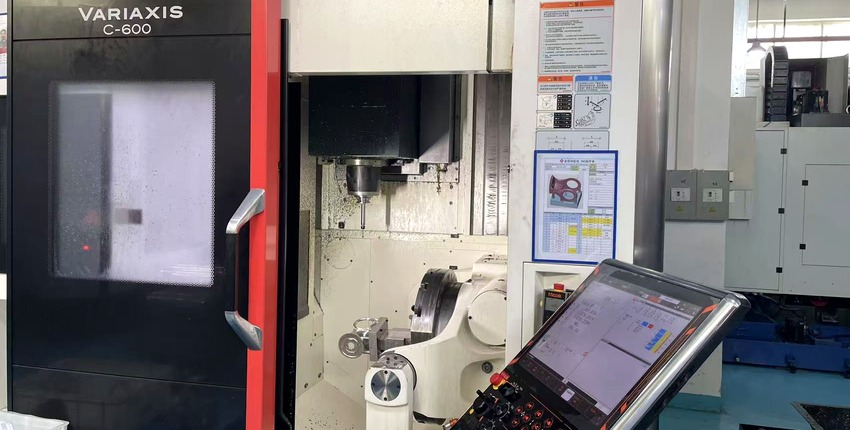
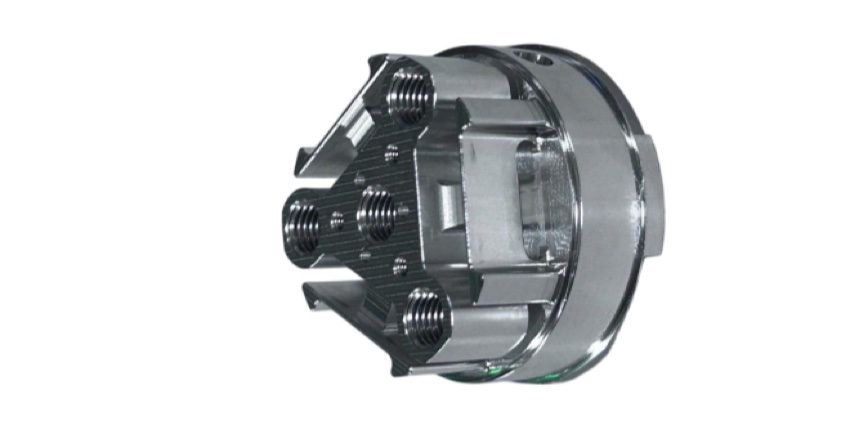
Joint housings have flat faces, angled bores, tapped holes, and thin walls. Re-fixturing between setups risks losing the geometric relationship between features. We machine these parts on 5-axis centers with in-process probing to keep everything aligned to a single coordinate origin.
Typical materials are 7075-T6 aluminum for lightweight links, 6061-T6 for brackets, and Ti-6Al-4V Grade 5 for high-load joints. Hard-coat anodizing is common on aluminum wear surfaces.
Speed and accuracy together
| Metric | Value |
|---|---|
| Multi-axis coaxiality | within 0.01 mm |
| Stable machining tolerance | ±0.005 mm |
| First-pass yield | 99.5% |
| Sampling lead time | Scheduled per program |
| Small-lot batch lead time | 7 days |
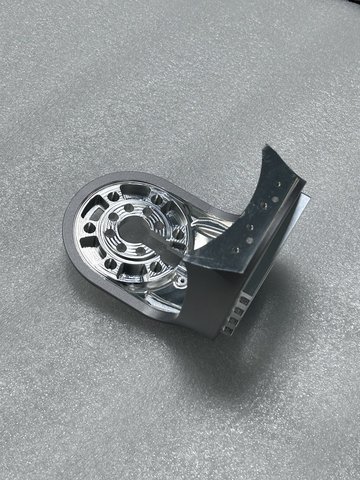
Robot programs iterate quickly, so we built the delivery model around that. Expedited samples leave the shop on the scheduled date and small batches in 7 days. This lets customers test mechanical changes without waiting for a full production cycle. The robot joint case study summarizes the program requirements and how the supply relationship scaled.
Frequently asked questions
How fast can I get joint part samples?
Expedited first articles scheduled per order, small production lots in 7 days. Process planning is done in advance so the flexible cell can switch between programs quickly.
What coaxiality can you hold on bearing bores?
0.01 mm multi-axis coaxiality is the program standard, with stable ±0.005 mm machining tolerance behind it. Where geometry allows a single-setup route, we hold tighter.
Can you keep up with design changes?
Yes. Robot programs iterate quickly and the sampling model is built for that. Each revision gets a DFM review before the first cut.
Robot parts inquiry
If you are developing a collaborative robot, humanoid robot, or industrial robotic arm, send your joint housing or arm drawing to kgl@kglmfc.com. We will review the geometry and return a DFM assessment and quote within 24 hours.
Related Articles
More from the Robotics & AI series.
Have a project in mind?
Send drawings to kgl@kglmfc.com or request a quote. We respond within 24 hours.
Request a Quote