Why Do Medical Device Makers Need ISO 13485 Machining Suppliers?
What ISO 13485 requires from a CNC supplier, where non-certified shops usually fail, which traceability records a medical part needs, and what tolerances and inspection reports buyers should demand in writing.
Medical device parts carry a risk that consumer parts do not. A loose tolerance on an orthopedic screw or a missing traceability record on a surgical housing can turn into a recall. ISO 13485 is the quality management standard that separates machine shops that simply make parts from shops that can prove every cut, inspection and shipment follows medical-grade discipline. At KGL, ISO 13485:2016 (certificate 50526YY00027R000) is the baseline for every medical component we machine, not an optional add-on. Buyers who want the broader capability picture can start from our medical device machining page.
1. What does ISO 13485 actually require from a CNC supplier?
The standard does not specify how to cut metal. It requires a documented system that covers the full lifecycle of a medical part: risk management, traceability, cleanliness, process validation and controlled change management. For a CNC supplier this means material certificates are kept and matched to heat or lot numbers; each operation, inspection and rework step is recorded against a traveler or routing sheet; non-conforming parts are segregated, investigated and dispositioned before any shipment; and calibration records for inspection equipment are current and traceable to national standards. Our 100+ employees follow this system inside a 6,000+ m2 factory, supported by 40+ inspection instruments and a quality team that reports directly to general management.
2. Where do non-certified machine shops usually fail?
The failures are rarely dramatic. They are small gaps that multiply across a batch. A traveler is missing a heat number, so the batch cannot be released. A CMM probe was calibrated last month, but the certificate expired two days before the inspection. A part is reworked outside the approved routing, so the original non-conformance record no longer matches the final part. A shipment leaves without the required device history record because the final inspection step was not closed. ISO 13485 is designed to catch these gaps before they reach the buyer.
3. What traceability records does a medical part need?
A medical CNC part typically needs a device history record, or DHR, that includes the raw material certificate with lot or heat number; in-process inspection data for critical dimensions; a final inspection report, usually from a CMM; any rework or concession records; and cleaning and packaging records, especially for implantable or sterile devices. At KGL we keep these records for the period defined in our quality agreement, and we can release them with the shipment or on request for audits.
4. How does ISO 13485 change day-to-day machining?
The standard changes behavior on the floor, not just paperwork. First-article inspection is mandatory before a production run starts, not optional. Tool lists are locked to the routing; an operator cannot substitute a tool without engineering approval. Critical dimensions are 100% inspected or sampled under an approved AQL plan, depending on risk class. Parts are routed through cleaning and packaging in a controlled sequence to avoid contamination after final inspection. Our 11 five-axis centers, including Mazak VARIAXIS C-600 machines, and 3-axis Mazak VCN 530 centers are all logged into this system.
5. What tolerances and inspection reports should buyers demand?
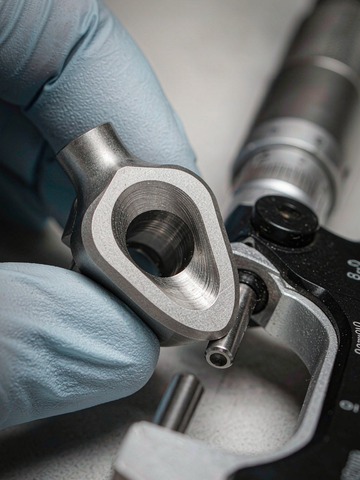
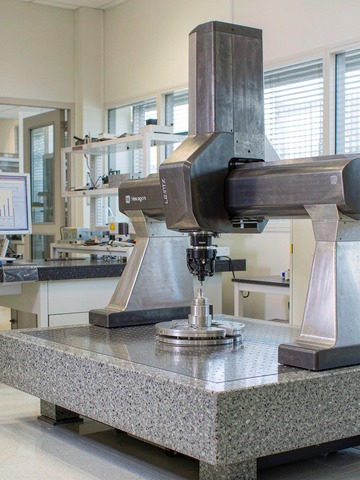
Buyers should ask for three things in writing. First, a guaranteed tolerance band with a note on which dimensions are CMM-verified. Our routine band is ±0.005 mm on machined features; tighter bands are quoted only when geometry and inspection method support them. Second, a list of the CMMs used, including machine accuracy and calibration status. We verify critical dimensions on Hexagon and Zeiss bridge CMMs. Third, a clear statement on lot traceability and record retention. Do not accept a generic high precision claim without these specifics. Our quality page lists the certificates and the inspection equipment behind these claims.
From Our Shop Floor: Device History Records and a CAPA That Closed
The device history record is where an ISO 13485 system proves itself. For a family of orthopedic surgical instrument adapters running at 500 pieces a month, every lot carries a DHR that traces material heat numbers, the CNC program revision, the tool list and the first article report. An internal audit once caught particulate residue above the limit on 1.2 percent of a cleaning batch. The corrective action that followed was concrete rather than administrative: ultrasonic wash time went from 5 minutes to 8, deionized rinsing went to two passes, and the CAPA stayed open until verification confirmed the parts met the cleanliness requirement. Over the past 12 months, customer audits of our medical work have closed with zero nonconformities.
Frequently Asked Questions
Is ISO 13485 the same as ISO 9001?
No. ISO 9001 is a general quality management standard. ISO 13485 adds medical-specific requirements for risk management, traceability, process validation and regulatory documentation. We hold both: ISO 9001:2015 (46524Q10234R0M) and ISO 13485:2016 (50526YY00027R000).
Do you machine implant-grade titanium?
Yes. We machine titanium Grade 5 and Grade 2 for surgical guides, fixators and instrument housings. Every batch is traced to a material certificate and inspected to the drawing plan.
What inspection report comes with a medical device batch?
A typical batch ships with dimensional inspection reports, material certificates and the device history record. Additional reports, such as surface finish or cleanliness tests, are added when the drawing or purchase order requires them.
Can you support first article inspection for a new medical part?
Yes. We treat first article inspection as a separate, gated step. The part is machined, measured on the CMM and compared to the drawing before the production routing is released.
How fast can you quote a medical CNC part?
We return most quotes within 24 hours. Drawings with full GD&T and material specs move faster. We also flag medical-specific requirements, such as sterile handling or special packaging, during quotation at our RFQ page.
This article is general guidance on supplier selection and quality management, not a binding manufacturing guarantee or regulatory legal advice. Specific capabilities are confirmed per drawing. Request a formal quotation for part-specific tolerances, inspection plans and certifications. (c) 2026 KGL. All rights reserved.
Related Articles
More from the Medical series.
Have a project in mind?
Send drawings to kgl@kglmfc.com or request a quote. We respond within 24 hours.
Request a Quote