CNC Machined Parts for Quadruped Robots: Links, Joints, Drive Housings
CNC machining for quadruped robots: lightweight leg links, joint housings and drive components with 0.005 mm bore concentricity and hard-coat anodized aluminum.
A quadruped robot is a set of legs, and every leg is a chain of links, joints, and drive housings. Mass at the end of a leg costs far more than mass at the body, because the joint motors must accelerate it hundreds of times a second. So the structural parts need to be light, but they also need enough torsional stiffness to keep the gait accurate. At KGL we machine quadruped leg links, joint housings, and drive components with bore concentricity within 0.005 mm. This article explains the machining logic behind those parts.
Light weight and stiffness pull against each other
Weight reduction means thin walls and pockets. Stiffness means keeping the material where the load path actually runs. The two goals meet in pocketed structural ribs, where every wall is milled to a uniform thickness and no material is left that does no work.
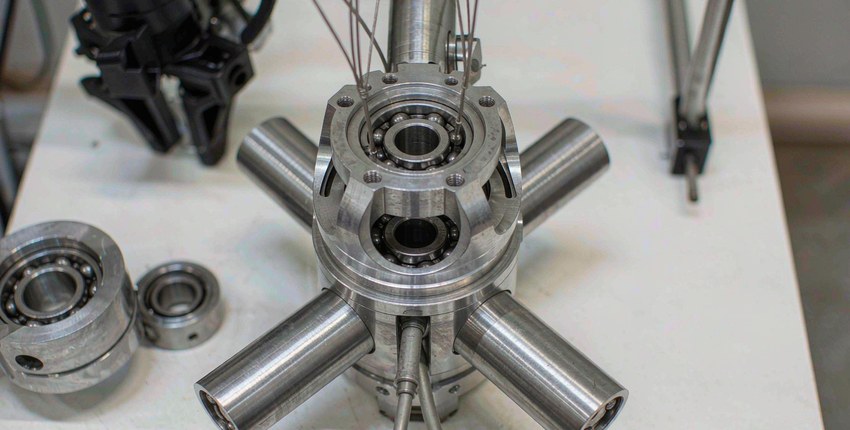
The harder problem is accuracy. Bearing seats must stay coaxial across multiple faces of a leg link. If the bores drift, the joint binds and the gears wear unevenly. Repeated re-fixturing would destroy the geometric relationships that make a leg repeatable under load.
How KGL machines robot components
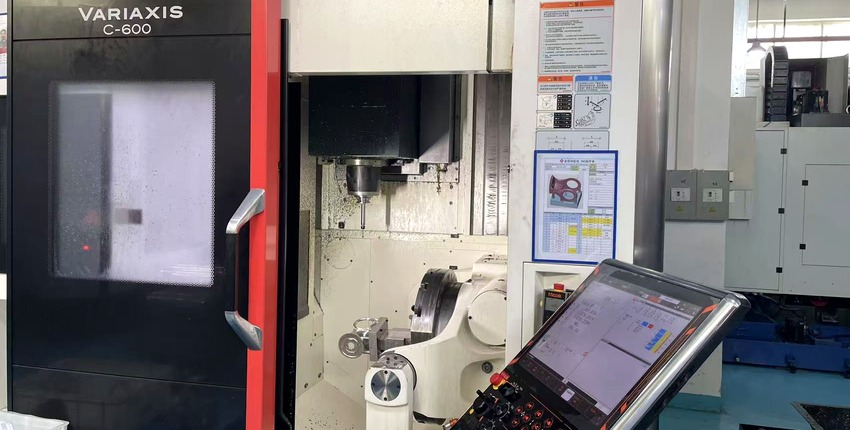
We machine these parts on 5-axis Mazak centers using continuous five-axis motion for the deep pocket recesses, angled weight-reduction pockets, and curved structural ribs. Dynamic tool vectoring keeps the wall thickness uniform, which controls both stiffness and stress distribution.
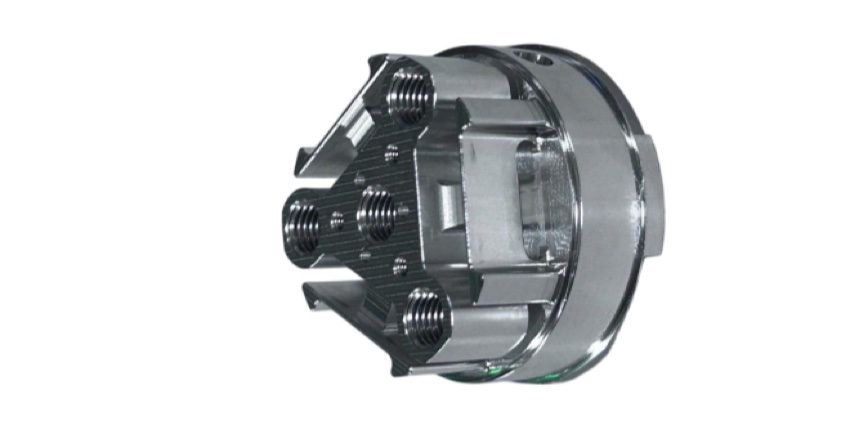
Bearing seats, actuator mounts, and sensor pockets are bored, reamed, faced, and tapped across multi-directional faces with 3+2 axis positioning, so they never leave the setup. High-speed trochoidal milling removes excess material while preserving the ribs, which cuts moving mass without sacrificing impact resistance.
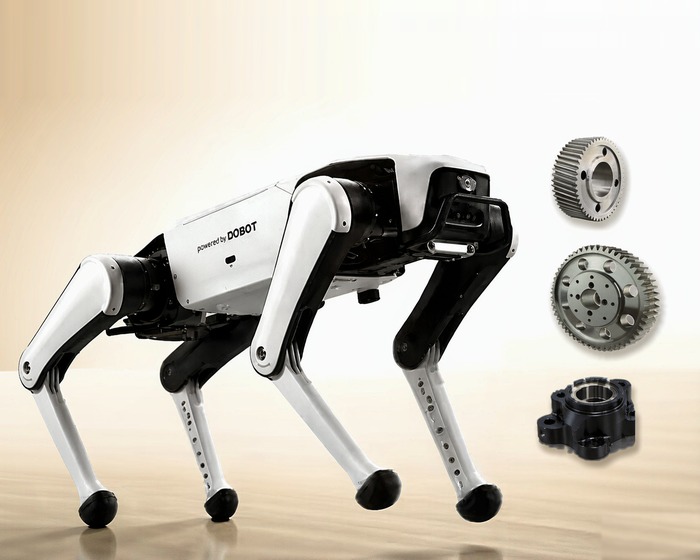
Tolerance grades for robot structural parts
| Attribute | Industry grade | KGL standard | KGL limit |
|---|---|---|---|
| Bore concentricity and alignment | ±0.025 mm | ±0.008 mm | ±0.005 mm |
| Bearing seat position tolerance | ±0.05 mm | ±0.015 mm | ±0.005 mm |
| Parallelism and flatness (flanges) | ±0.05 mm | ±0.01 mm | ±0.005 mm |
| Perpendicularity (joint axes) | ±0.03 mm | ±0.01 mm | ±0.004 mm |
| Surface roughness (Ra) | 1.6 μm | 0.8 μm | 0.4 μm |
Program details, materials, and the inspection route are in the quadruped robot case study. The same part family extends across our robotics machining work for humanoid and industrial arms.
Materials and applications
Most quadruped structure is 7075-T6 or 6061-T6 aerospace aluminum. High-load joints move up to Ti-6Al-4V Grade 5, and wear or insulation parts use 17-4PH, SUS304, SUS316L, or engineering polymers such as PEEK, POM, and Delrin. Aluminum structural parts are hard-coat anodized after machining.
Typical applications include quadruped leg links and hip frames, humanoid shoulder and elbow housings, harmonic drive flexspline mounts, and cobot forearm beams.
How we keep cost down without giving up accuracy
To raise throughput and cut unit cost, we machine most of this part family in nested panels: one setup produces multiple pieces in a single cycle. Roughing runs dynamic milling to remove the pocket volume fast, then a high-precision finishing cutter takes every surface to size in one pass. Quality stays where the drawing puts it and the customer pays less per part, so both sides win.
What the customer program demanded
The buyer for this program is a leading quadruped robot developer, and their requirements were strict across the board: cosmetic surface standards, plus coaxiality, position, and outer-profile tolerances all within 0.015 mm, with the same repeatability expected at production volume, not just on first articles.
We run these parts in the constant-temperature shop with on-machine probing after every critical operation, backed by CMM sampling on each lot. That is how the parts stay controlled from cutting through final shipment.
Frequently asked questions
How thin can you machine a robot leg link wall?
Wall thickness is driven by the load path and the machining envelope. On pocketed links we hold uniform thin walls with trochoidal milling, but the practical minimum depends on the rib layout. Send the model and we will confirm.
Why does bore concentricity matter for gait accuracy?
Bearing bores that share one axis keep the joint running true. If they are offset or tilted, the joint binds, wears faster, and the leg loses positional accuracy under load.
What finish do you apply to quadruped aluminum parts?
Hard-coat anodizing is the common choice for wear surfaces. Clear or black anodize is used where cosmetic finish matters, and we can mask critical bores before treatment.
Robot parts inquiry
If you are developing a quadruped, humanoid, or industrial robot and need leg links or joint housings machined, send your STEP/IGES files to kgl@kglmfc.com. We will review the geometry and return a DFM assessment and quote within 24 hours.
Related Articles
More from the Robotics & AI series.
Have a project in mind?
Send drawings to kgl@kglmfc.com or request a quote. We respond within 24 hours.
Request a Quote