CNC Prototyping: How to Get Functional Prototypes Fast
Why CNC prototypes built from production materials beat resin prints for functional testing, how to prepare DFM-ready files, and the workflow that quotes in 24 hours and samples standard parts on a scheduled window.
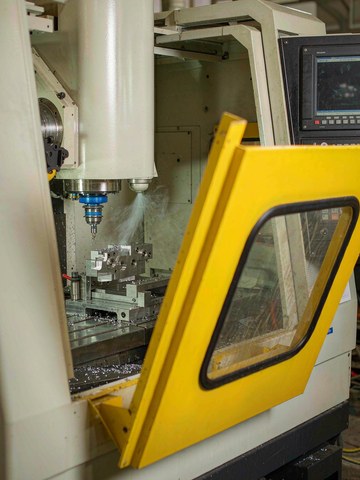
Prototyping is where products are won or lost. A functional prototype lets you test form, fit, and function before committing to tooling and production, catching design flaws when they cost pennies instead of thousands. CNC prototyping stands out because it produces prototypes from production-grade materials with production-equivalent tolerances, so what you test is what you will ship.
1. Why CNC prototyping?
Real materials, real properties
CNC prototypes are machined from the same aluminum, steel, titanium, or engineering plastic as the final part. Mechanical, thermal, and electrical testing on a CNC prototype gives results that a resin print simply cannot match.
Production-equivalent tolerances
Because CNC prototyping uses the same processes and equipment as production, tolerances are realistic. You validate fits, assembly, and performance under conditions that mirror mass production.
Fast iteration without tooling
With no mold or tooling investment, design changes cost only programming time. You can test several design variations in parallel and converge on the best solution without financial penalties.
2. CNC prototyping or 3D printing?
For a quick form and fit check of a polymer part, 3D printing can be the faster first pass, especially for complex internal geometries. When the prototype needs real material properties, tight tolerances, threaded features, or metal, machine it. A CNC prototype can also be finished exactly like production, anodized, plated, or passivated, so appearance and performance are validated early. We put the two routes side by side in detail in our CNC prototyping vs 3D printing guide.
3. How to prepare your design for CNC prototyping
DFM-ready drawings and CAD models
Provide a complete 3D model and drawing with critical tolerances, threads, and finishes called out. The better your file package, the fewer questions and the faster the quote. Our engineers will still review your design for manufacturability at no charge.
Specify materials and tolerances
Choose the final material (for example, aluminum for lightweight structural prototypes) and mark the tolerances that actually matter. Over-specifying every dimension drives cost without adding value.
Plan for finishes and testing
If the prototype will be tested in service, specify the finish (anodizing, passivation, plating) so the test results reflect production; standard options are listed on our surface treatment page. Also confirm whether mating parts, fixtures, or sample quantities are needed for assembly testing.
4. The prototyping workflow
Quote and DFM feedback within 24 hours
Send your drawings and receive a detailed quote with DFM recommendations within 24 hours, including material suggestions, tolerance notes, and cost-saving design tips.
Expedited sampling on standard work
For standard materials and geometries, CNC milling and CNC turning prototypes are sampled on a scheduled window, with express options available for urgent development schedules.
From prototype to production
The prototype validates the design; the same quality system scales it to production. Our prototype to production service takes your parts from first article to medium-batch runs with consistent tolerances, finishes, and documentation.
Send us your drawings today through the RFQ page to get a quote, and put your product development on the fast track.
Related Articles
More from the Design for Manufacturing series.
Have a project in mind?
Send drawings to kgl@kglmfc.com or request a quote. We respond within 24 hours.
Request a Quote