Laser, Waterjet, or CNC Machining? Choose by Thickness, Tolerance and Edge
Laser cutting holds 0.05 to 0.1 mm, waterjet 0.1 to 0.3 mm, CNC machining 0.005 mm. How thickness range, edge condition and heat affect zone decide which process owns your part, and when a cut blank plus machining beats both.
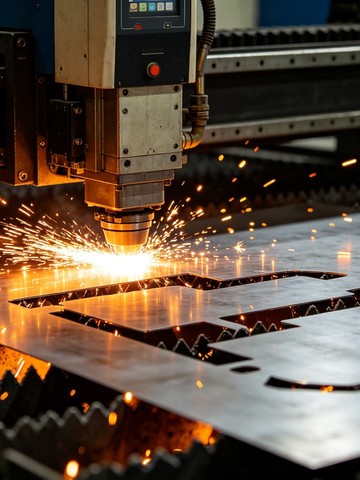
Laser and waterjet cutting answer one question: what shape should this sheet or plate be? CNC machining answers a different one: what should this solid become? Most sourcing mistakes between them come from asking one process to do the other job, paying machining prices for flat blanks, or expecting a laser edge to seat a gasket. This guide compares the three on the numbers that decide: thickness range, achievable tolerance, edge condition, and where the hybrid route of cut blank plus machining beats either process alone.
1. What Does Each Process Actually Do?
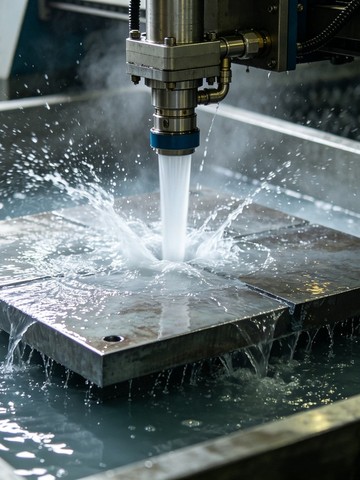
Laser cutting burns, melts or vaporizes a kerf along a two dimensional path, fast and narrow, working best under roughly 20 to 25 mm in steel with fiber sources. Waterjet erodes the kerf with high pressure abrasive slurry, cuts almost any material, and handles plate several hundred millimeters thick without a heat affected zone. Neither makes a pocket, a bore smaller than the kerf width, or a feature on a face perpendicular to the sheet.
CNC machining removes material in three axes or five, from solid, into geometry that cutting cannot reach: internal pockets, precision bores, threads, sealing faces, features on multiple faces. The honest framing is that laser and waterjet are profile processes and machining is a geometry process. The moment a part needs three dimensional features or a tight tolerance, machining enters whether it started there or not.
2. How Do Tolerances Really Compare?
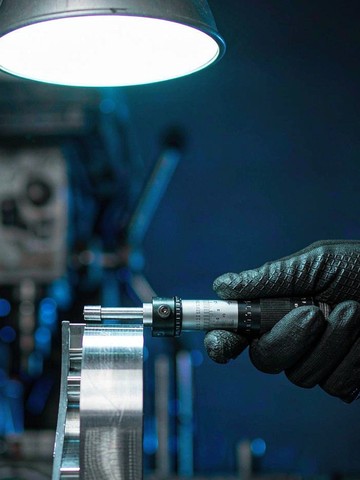
Fiber laser cutting holds about plus or minus 0.05 to 0.1 mm on medium gauge sheet, tightening on thin material. Abrasive waterjet typically holds plus or minus 0.1 to 0.3 mm depending on thickness, with taper increasing as plate gets thicker. Milling and turning hold our shop standard of plus or minus 0.005 mm, tighter feature by feature where the design justifies it. The full breakdown sits in our tolerance guide.
An order of magnitude sits between the cutting processes and machining, and that gap is structural rather than a matter of operator skill: the kerf wanders, the beam and the jet obey physics. So the tolerance hierarchy works as a selection tool. Features that mate, seal or rotate belong to machining; outline profiles belong to cutting. A drawing that demands 0.02 mm on a waterjet edge is asking the wrong process for a favor, and the quote that says yes is the quote to worry about.
3. What About Edge Quality and Heat?
Laser edges carry a heat affected zone and, on thicker plate, a dross line. That is usually fine for structural and cosmetic use and not fine for a sealing face, because the metallurgy near the edge is no longer the metallurgy that was certified. Waterjet edges are cold, sandblasted in texture, with a taper that grows with thickness. No metallurgical damage is what makes waterjet the choice for heat sensitive alloys, pre hardened stock and laminated stacks.
Machined edges are whatever the toolpath makes them: controlled finish, no heat affected zone, burr managed as a process step. Where a cut edge must later seal or seat a bearing, it gets machined, and the sensible plan is to leave stock for that operation rather than to chase the cut quality. This is not a competition between processes, it is a workflow, and saying so out loud saves arguments later.
4. Which Thickness and Material Ranges Govern?
Laser rules thin to medium sheet with excellent speed, and fiber sources push the practical ceiling into the low tens of millimeters in steel. Waterjet owns the thick and the difficult: hardened steel, titanium, stone, glass, composites and stacked sheets, at slower travel but without heat. Machining depth is limited by tool access and rigidity rather than by an energy threshold, and it works every machinable alloy.
Material chemistry matters as much as thickness. Laser struggles with highly reflective alloys and melts sensitive plastics; waterjet cuts nearly everything but leaves a wet, abrasive environment; machining needs the material to be cuttable by definition, which is why our stock spans aluminum, stainless, titanium, brass, carbon steel and engineering plastics with documented parameters for each. Sheet metal fabrication sits alongside all three for parts that fold rather than cut.
5. When Does the Hybrid Workflow Win?
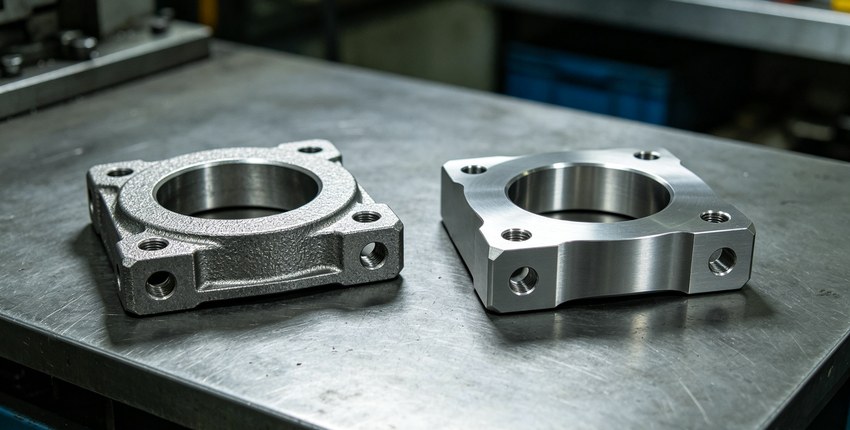
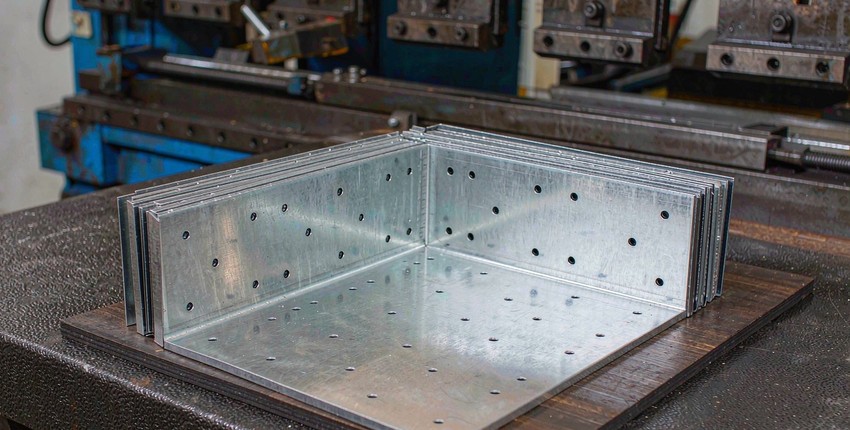
The highest value parts in this comparison are usually hybrids: a laser or waterjet blank, roughly profiled, that then goes to machining for the faces and features that matter. The cutting process removed most of the material cheaply and without heat; the machining process delivered precision only where the drawing pays for it.
Against solid billet machining, the hybrid saves material and roughing hours on parts with a large flat outline and localized precision. Against pure cutting, it adds the tolerance and the features the part actually needs. Our quotations routinely price both routes when a crossover part arrives, because the right answer moves with thickness, outline size and how much of the part is genuinely precision. The same logic appears in our comparison of CNC machining and sheet metal, and in the batch size pricing curve that governs how setup cost spreads.
6. A Decision Table You Can Use on Your Next RFQ
Use thickness, tolerance and edge function as three filters. Flat part, loose tolerance, any material: cutting, with laser for speed on sheet and waterjet for thick or heat sensitive stock. Flat outline with precision features: cut blank plus machining. Mostly three dimensional geometry, tight tolerance, sealing or rotating features: machining from solid or from a cut blank.
If the answer is not obvious from the drawing, that is normal. Send it over and a quote is back within 24 hours, priced on the honest routes with a note on where each one stops being sensible. The decision then arrives with numbers instead of opinions, and comparing the two against additive manufacturing becomes a fair fight.
| Factor | Fiber laser | Abrasive waterjet | CNC machining |
|---|---|---|---|
| Geometry | 2D profile | 2D profile | Full 3D |
| Practical thickness | Sheet to low tens of mm | Plate to hundreds of mm | Tool access limited |
| Typical tolerance | 0.05 to 0.1 mm | 0.1 to 0.3 mm | 0.005 mm standard |
| Edge | HAZ, dross on thick plate | Cold, tapered, sandblasted | Controlled finish, deburred |
| Best role | Fast profiles in sheet | Thick, hard, heat sensitive | Precision faces and 3D features |
Frequently Asked Questions
Should I laser cut parts instead of machining them?
If the part is flat, tolerance tolerant and made of sheet, yes, cutting is faster and cheaper. The moment it needs pockets, threads, sealing faces or better than about 0.1 mm tolerance, machining enters, usually as a cut blank that we finish.
Can waterjet cut hardened steel?
Yes, and it is the preferred route for hardened and heat sensitive stock because nothing heats. The cut edge carries no heat affected zone, and if the part needs precision faces afterwards we machine them from the waterjet blank.
What tolerance can laser cutting hold?
Fiber laser cutting typically holds 0.05 to 0.1 mm on sheet, best on thin material. Features that must land tighter than that should be machined, which is exactly how hybrid parts get specified.
Do you accept cut blanks for finish machining?
Yes. Customer supplied or partner cut blanks are a normal starting point. We verify blank dimensions and datums first, then machine the precision features, so the workflow pays cutting prices for bulk removal and machining prices only where precision lives.
This article is general engineering guidance, not a binding offer. Tolerances, cost and lead time depend on part geometry, material, quantity and the drawing package you release. Request a quotation for part specific terms. (c) 2026 KGL Machining & Electronics, Shenzhen.
Related Articles
More from the Design for Manufacturing series.
Have a project in mind?
Send drawings to kgl@kglmfc.com or request a quote. We respond within 24 hours.
Request a Quote