How to Choose a CNC Supplier in China: a 20 Point Checklist
A 20 point checklist for choosing a CNC machining supplier in China: credentials, equipment, quality system, communication, and logistics, with the questions to ask and the answers to expect.
Most articles about choosing a CNC supplier in China tell you to check certifications and move on. That advice is too thin to protect a program. The difference between a supplier that ships you clean batches for years and one that burns three months of your schedule is visible in the answers to about twenty specific questions. We machine parts for customers in 19 plus countries, and this is the checklist our own customers effectively ran on us before the first order. Use it on us or on anyone else; a real factory answers all twenty without flinching.
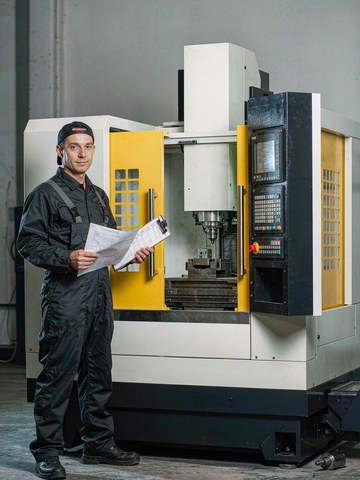
1. Credentials and legal standing (points 1 to 5)
| # | Ask | What a good answer looks like |
|---|---|---|
| 1 | Business license and DUNS number? | A DUNS registered entity with a verifiable legal name, not just a trading name on an invoice |
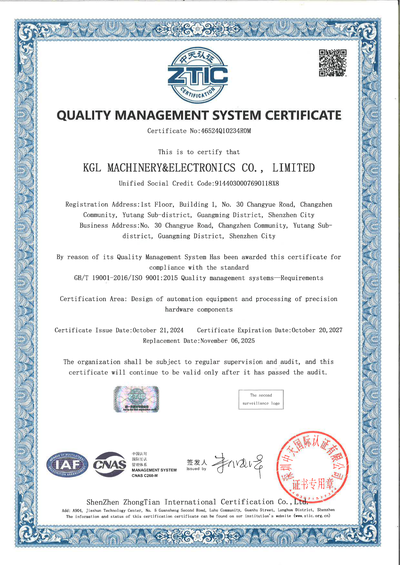
| 2 | ISO 9001 certificate, and does it cover machining? | Current certificate with the actual scope stated; ask for the certificate number and verify it on the registrar's site, as our certification records show |
| 3 | Industry certificates if relevant? | AS9100D for aerospace work, ISO 13485 for medical devices; both take years to build and cannot be faked on a website |
| 4 | Factory or trader? | Ask for a live video walkthrough of the floor, unscripted, with your part geometry discussed on screen |
| 5 | Export experience to your country? | Named reference markets, Incoterms fluency, and documentation habits for customs |
Credentials are cheap to claim and easy to verify. Any supplier that stalls on a certificate number or a video call has answered the question.
2. Equipment and process capability (points 6 to 10)
| # | Ask | What a good answer looks like |
|---|---|---|
| 6 | Machine list, by brand and model? | A real list with counts; ours is published: 100 plus machines including 11 five axis centers |
| 7 | Which process fits my part: 3 axis, 5 axis, turning, mill turn? | A routing opinion with reasoning, not a yes to everything; see our 3, 4, 5 axis comparison |
| 8 | Tolerance capability on my material? | Process specific answers; general metal work in the hundredths of a millimeter, critical features to ±0.005 mm where the process allows |
| 9 | In house surface treatment or managed subcontract? | Either is fine; managed anodizing with inspection before shipment is a complete answer |
| 10 | Material sourcing and traceability? | Mill certificates per lot, and stock grades listed on the material pages, like our material matrix |
Watch for the supplier that claims every process is in house. Real factories know their edges and their subcontract network, and they say which is which.
3. Quality system and inspection (points 11 to 15)
| # | Ask | What a good answer looks like |
|---|---|---|
| 11 | Inspection equipment inventory? | Named CMMs and instruments, not a stock photo; we run 40 plus inspection instruments and publish the list |
| 12 | First article inspection report before the batch? | A standard FAI flow with balloon drawings; here is how ours runs |
| 13 | Dimensional report with every shipment? | Measured values per drawing characteristic, not a pass stamp |
| 14 | How are nonconformances handled? | A written process: quarantine, root cause, corrective action, and a replacement timeline, in that order |
| 15 | Can I audit the factory? | Yes, on site or by video; a supplier that refuses audits has already failed one |
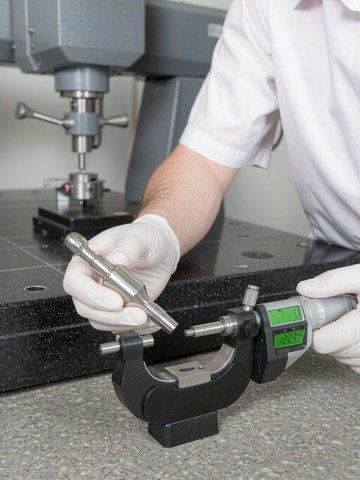
4. Communication and logistics (points 16 to 20)
| # | Ask | What a good answer looks like |
|---|---|---|
| 16 | Quote turnaround and what it includes? | A committed window; we return quotes within 24 hours with the machining plan stated, not just a price |
| 17 | Who is my contact, and what is their English like? | A named engineer or project manager, not a rotating mailbox; test them with a technical question on the first call |
| 18 | Sample and production lead times? | Separate numbers: a scheduled window for standard samples and a realistic batch date, with the difference between them explained |
| 19 | Packaging for international shipping? | VCI or oil film for steel, foam interleaving for finished faces, customs friendly documentation |
| 20 | Payment terms and NDA? | Standard terms stated up front, NDA signed before drawings move, and no resistance to either |
Points 16 to 20 predict your daily working relationship better than any certificate. A supplier that quotes in 24 hours and answers engineering questions in plain English will keep doing so after the purchase order lands.
5. Scoring the answers
Score each point plainly: a written, specific answer earns the point; a vague or evasive one does not. In our experience, factories that clear 16 or more of the 20 will ship what the drawing says. Factories under 12 will win the first order on price and lose money for you on the second. One warning sign outranks the arithmetic: answers that change between the sales call and the engineering call. Ask the same tolerance question to both contacts and compare.
Price sits outside this list on purpose. Get two or three qualifying quotes and compare them on the same drawing, the same tolerances, and the same inspection scope. The cheapest quote among suppliers who cleared the checklist is a fair price. The cheapest quote from a supplier who scored 8 out of 20 is a down payment on a rework bill, and our cost factor guide explains what that quote quietly removed.
6. How we score on our own checklist
Since you may run this list on us: DUNS 54 443 4542, ISO 9001, AS9100D, and ISO 13485 with certificate numbers published on the certifications page; 100 plus machines including 11 five axis centers with the list online; 40 plus inspection instruments; quotes within 24 hours through the RFQ page; and a named engineer on every project from quote to shipment. If any answer above ever stops matching what you experience as a customer, write to kgl@kglmfc.com and we will fix the gap, because the checklist only works if the factory lives by it.
Is a lower price from a supplier who failed some checklist points ever worth it?
Only for parts where failure costs nothing: a bracket with loose tolerances, no safety role, and no schedule sensitivity. For anything with a fit, a finish requirement, or a customer waiting on it, the rework and delay costs exceed the saving quickly.
How do I verify a Chinese certificate number?
Ask for the certificate PDF with the registrar name, then contact the registrar or check their public verification page. For ISO 9001 and AS9100D, accredited registrars maintain searchable databases. A certificate that cannot be verified through the registrar does not count.
Should I start with a small trial order?
Yes, and a good supplier will suggest it themselves. A first order of a few parts lets you test the FAI report quality, the packaging, and the communication rhythm before a production program is at stake.
What is the single most revealing question on the list?
Point 14, nonconformance handling. Every factory makes a bad part eventually. The suppliers worth keeping can describe their quarantine, root cause, and correction process from memory, because they have actually run it.
Running this checklist on us or on any supplier usually takes one call and one email exchange. Start yours through the RFQ page or write to kgl@kglmfc.com, and ask the twenty questions in whatever order matters most to your program.
Related Articles
More from the Certifications & Audits series.
Have a project in mind?
Send drawings to kgl@kglmfc.com or request a quote. We respond within 24 hours.
Request a Quote