CNC Machining Cost Factors: What Actually Drives the Price
The components behind a CNC machining quote: cycle time, setup, material, tolerances, finish, inspection, and quantity, with the buyer-side levers that move each one.
Two quotes for the same part can differ by a factor of two and both be honest, because the price is not one number but a stack of decisions: which machine, how many setups, what stock size, which tolerances get verified and how. Buyers who can read the stack negotiate better drawings, not just better prices. This guide takes the quote apart driver by driver, with the levers each one offers.
The drivers, ranked
| Driver | Typical share of unit cost | What moves it | Buyer-side lever |
|---|---|---|---|
| Cycle time on the machine | 30-50% | Feature count, depths, tool changes, material | Open pockets, standard radii, reachable features |
| Setup and fixturing | 5-25%, falls with quantity | Number of setups, fixture complexity | Features on fewer faces, or accept 5-axis route |
| Raw material | 10-30% | Stock size versus part size, alloy, scrap | Proportions that nest into standard stock |
| Finishing and coating | 5-15% | Finish type, masking count, Ra callouts | Finish only functional faces, state masking |
| Inspection and documentation | 3-10% | Tight tolerances, report scope, cert requirements | Tolerances only where function needs them |
| Programming and engineering | 2-10%, first order | Complexity, multiaxis paths, revisions | Complete drawings, stable revisions |
Read the shares as a production part, not a prototype: on a one-piece order the setup and programming rows swell to dominate, which is why prototypes quote nothing like the unit price at volume. The next sections take the two heaviest drivers apart.
Cycle time: where geometry becomes money
Machine hour rates differ by platform. A 3-axis vertical runs cheapest, a 5-axis center more, a turn-mill more still. The unit price, though, is rate times time, and geometry decides time. A pocket with a 3 mm internal radius needs a 6 mm tool and many more passes than one with an 8 mm radius; a thread milled with a standard tool costs less than a single-point thread; a part that flips twice adds indication time to every setup.
Tool changes are the quiet multiplier. A part with twenty features at five different tool diameters carries far more air time and change time than the same part designed around three tools. None of this shows on the drawing as an error; it shows in the quote as time. Our milling and turning pages describe which feature classes run economically on which platform.
Setup and quantity: the amortization curve
Setup cost divides by quantity, which makes the quantity field on an RFQ a cost input, not an afterthought. A worked example with round numbers: a part needing two setups at one hour of combined setup and first-article time.
| Quantity | Setup cost per part | Share of a nominal 100 unit part price |
|---|---|---|
| 10 pieces | about 60 per part | 37% |
| 50 pieces | about 12 per part | 11% |
| 200 pieces | about 3 per part | 3% |
| 1,000 pieces | about 0.6 per part | under 1% |
Two consequences follow. At tens of pieces, design choices that remove a setup beat almost any other optimization, sometimes by routing the part to the five-axis single-setup route even at a higher hourly rate. At hundreds, setup fades and the levers move to cycle time and material. Batch size also interacts with scheduling; our low-volume machining page explains how we keep small batches moving without dedicated-fixture costs.
Tolerance and finish: pay where function lives
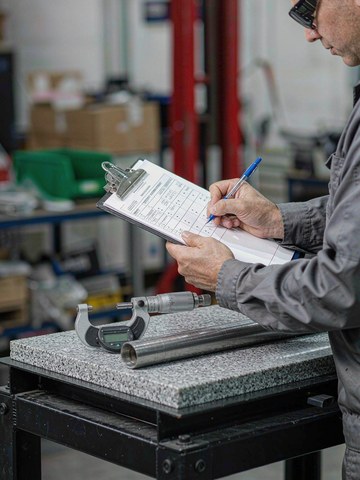
Tolerances cost in steps, not smoothly. Bands from plus or minus 0.1 mm down to plus or minus 0.02 mm ride along with a normal process. Below that, cost climbs: plus or minus 0.01 mm adds temperature discipline and dedicated inspection, and a standard commitment of plus or minus 0.005 mm adds warm-up cycles, thermal soak before measurement, and CMM verification on the features that carry the band. The detail lives in our tolerance reference; the summary for costing is simple, tighter bands on more features means more of the part's cycle spent measuring and adjusting rather than cutting.
Finish behaves the same way. Ra 3.2 on every face is a default note, Ra 0.4 on every face is a finishing job. Costing improves the moment the drawing distinguishes the sealing face from the cosmetic face from the rest, and our Ra chart maps the values to the functions that need them.
Material: stock size is a design decision
Material cost is part mass times alloy price, plus the mass machined away and paid for as chips. A part whose proportions fit standard plate or bar buys less input weight than one that forces an oversized block. Wall thickness matters in the same direction: a 3 mm wall at 100 mm depth is not only slow, it demands stress-relief sequencing and scrap allowance that a 6 mm wall does not. The materials library lists stocked alloys and forms, and stocked sizes quote faster because mill lead time disappears from the path.
What a good RFQ changes
Quotes come back faster and tighter when the RFQ carries quantity bands, material and finish callouts, tolerance intent, and the service environment. Missing quantity is the most common gap: without it, the quote assumes a batch, and the batch may not be yours. When the drawing is still moving, the engineering review in our quote process returns DFM notes with the price, so the cost drivers above get addressed before the purchase order rather than after. The prototype to production path exists precisely to carry those revisions without re-quoting from zero, and industry-specific expectations appear on the industry pages.
Frequently asked questions
Why is the prototype price so much higher than the production unit price?
Setup, programming, and first-article inspection divide by one piece instead of hundreds. The machining hour is the same; the fixed costs are not spread yet.
Which single change cuts machining cost most?
Almost always reducing setups, by grouping features on fewer faces or accepting a five-axis route. Setup time is pure overhead repeated on every batch.
Do tighter tolerances always cost more?
Below roughly plus or minus 0.02 mm, yes, and the step gets steep near plus or minus 0.005 mm where thermal control and full inspection enter. Above that band, a normal process holds the number for free.
Should I quote several quantities at once?
Yes. Quoting 10, 100, and 1,000 pieces shows the amortization curve and often reveals a route change, like moving from vises to a dedicated fixture, that a single-quantity quote would hide.
More Reference Guides
Charts and decision guides from the KGL engineering desk.
CNC Machining Tolerance Chart: IT Grades and What It Takes to Hold 0.005 mm
Read the reference →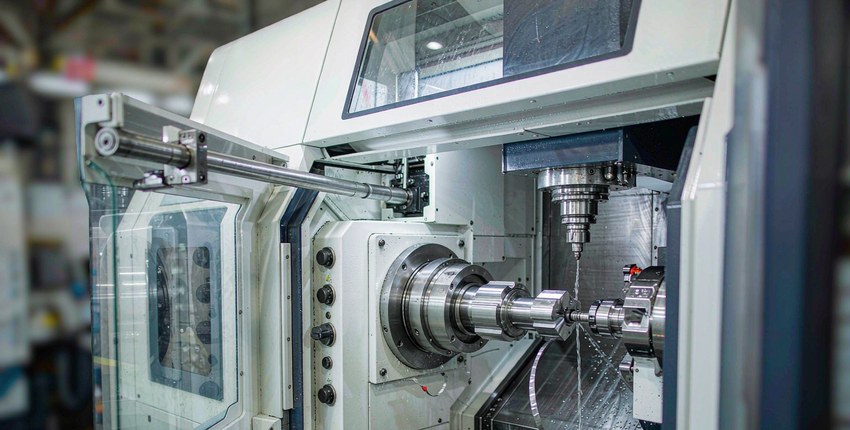
Surface Roughness Ra Chart: What Ra 0.4 to Ra 3.2 Means and What Each Finish Costs
Read the reference →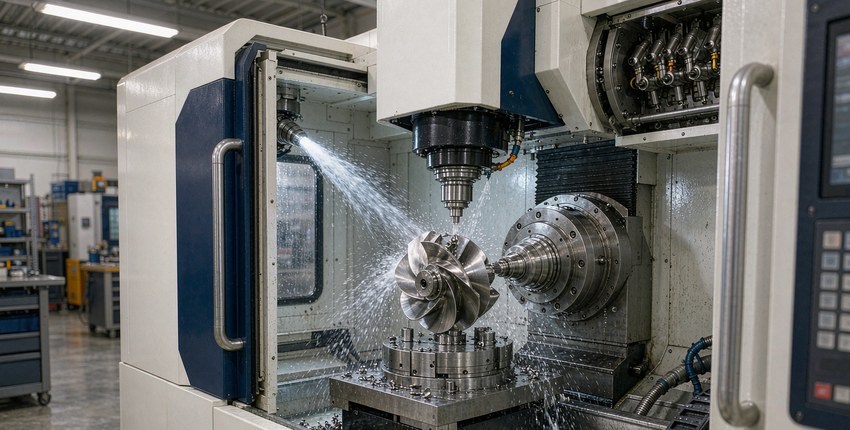
5-Axis vs 3-Axis CNC Machining: Cost, Setups, and When the Upgrade Pays
Read the reference →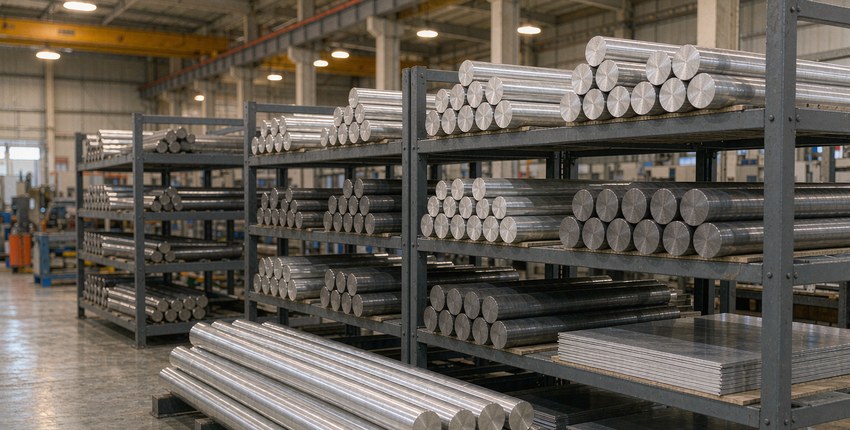
6061 vs 7075 vs Titanium: An Alloy Selection Guide for Machined Parts
Read the reference →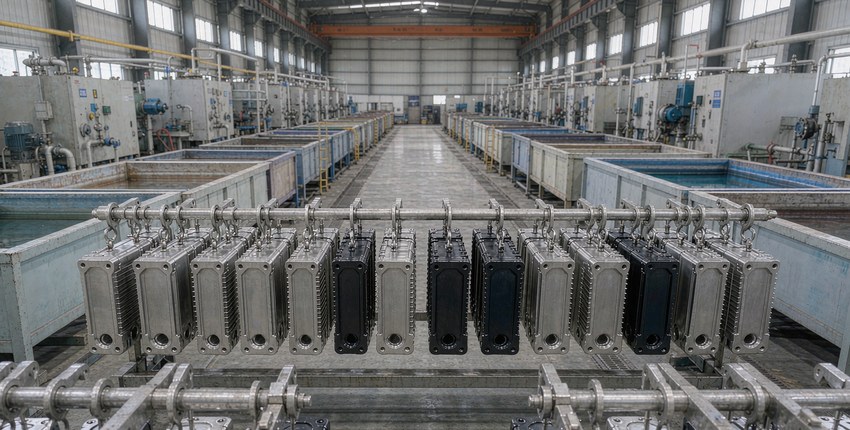
Anodizing vs Chem Film vs Electroless Nickel: Choosing a Finish for Machined Parts
Read the reference →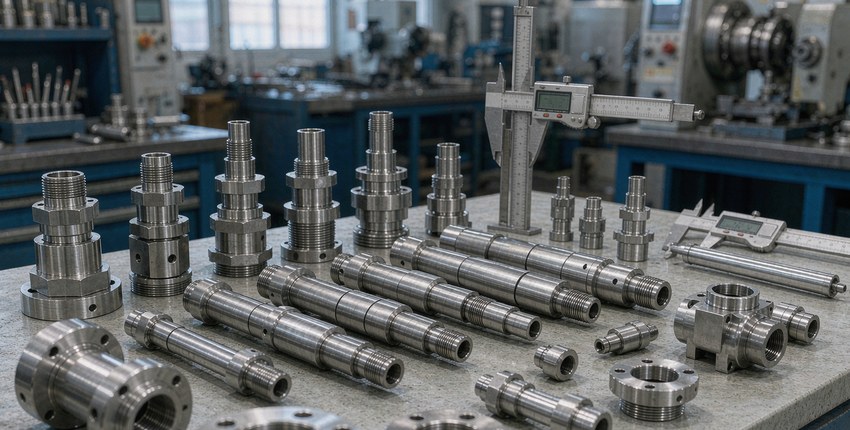
Stainless Steel 304 vs 316 vs 17-4PH: A Machining Perspective
Read the reference →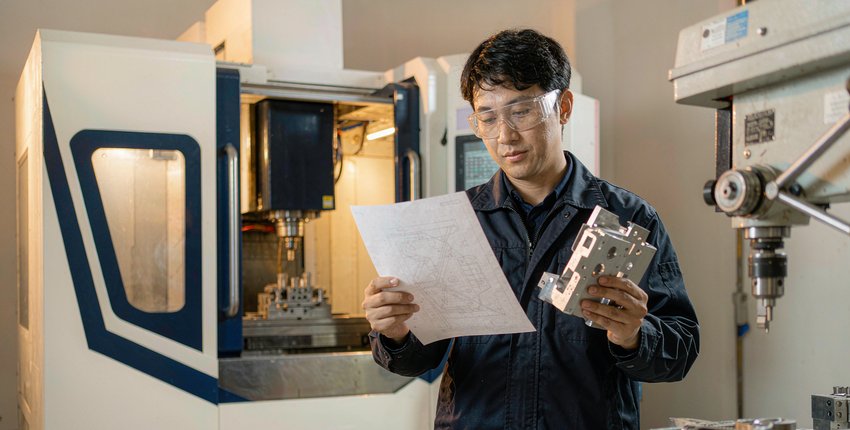
CNC DFM Checklist: 15 Rules to Check Before You Send a Drawing
Read the reference →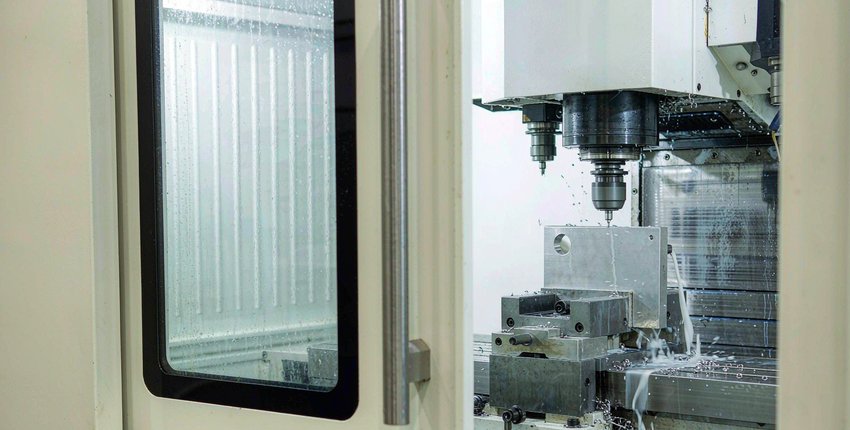
GD&T Basics for Machined Parts: Datums, Position, and What Actually Gets Measured
Read the reference →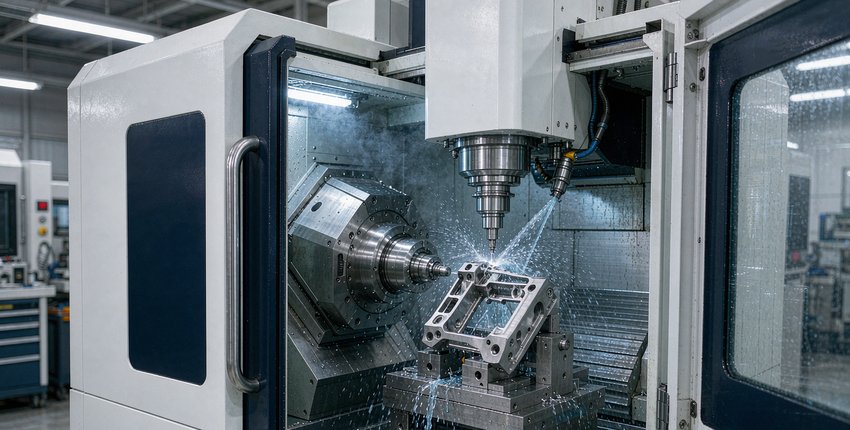
Tight-Tolerance Machining: The Five Steps Behind a 0.005 mm Result
Read the reference →Have a drawing to check?
Send it to kgl@kglmfc.com or request a quote. Engineering review responds within 24 hours.
Request a Quote