Machining PEEK and Engineering Plastics: Where the Rules Differ From Metal
PEEK, PEI and POM behave differently from metal: heat management, clamping force, stress relief, and tolerance control. Practical notes from KGL's polymer machining lines.
Shops that treat plastic like soft metal ruin parts. PEEK and PEI hold tolerances metal shops assume impossible, but only when the cutting plan respects how polymers behave. These are the rules that matter most on our polymer lines. The grade-level details are on the PEEK machining page.
Heat Is the Enemy, Not Force
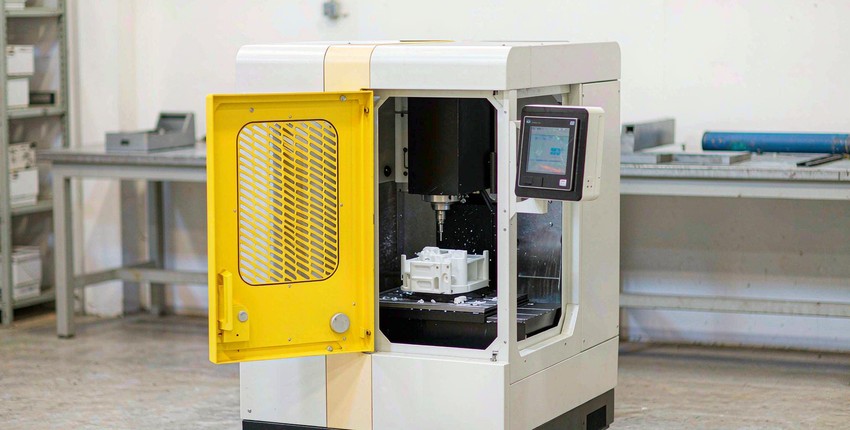
Polymers soften far below metal melting points. Cutting heat that a steel part shrugs off will smear PEEK edges, move a bore oval, or lock internal stress into a wall. Sharp positive-rake tools, higher surface speeds, and air blast instead of heavy coolant keep the cut clean. We monitor part temperature on critical polymer jobs; thermal control is half the tolerance.
Clamp Gently, Support Fully
Vise pressure that would be normal on aluminum crushes or distorts a PEEK part. Soft jaws, full-profile support, and vacuum fixtures spread the force. On a recent impeller family, moving from vise to vacuum clamping took the finished runout from inconsistent to a stable 0.01 mm.
Stress Relief Is a Process Step
Rod and plate stock carries internal stress from extrusion. Rough both sides equally, then anneal, then finish. Skip the step and the part moves days later on your shelf. For PEI (Ultem) structural parts we also watch moisture: wet PEI machines worse and can steam-blister during annealing, so drying before cutting is part of the plan. General polymer design guidance is available from suppliers like Röchling, whose stock we machine regularly.
What Tolerances Are Realistic
Plastics move with temperature roughly ten times more than steel, so the drawing tolerance only means something at a stated temperature. That said, on stable geometry we hold plus or minus 0.02 mm on PEEK routinely, and for semiconductor fixture work, where thermal swings matter most, see semiconductor machining. and plus or minus 0.05 mm on large free-form housings. Demanding metal-class tolerance on a 200 mm polymer plate is a design conversation, not a machining one.
When Plastic Beats Metal (and When It Does Not)
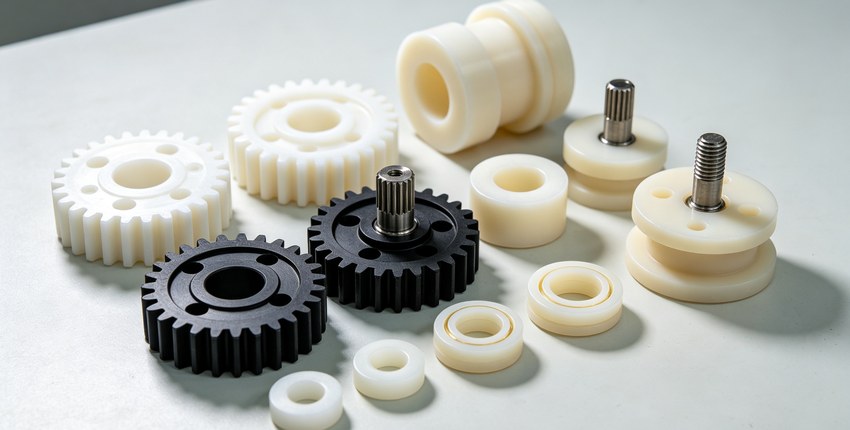
Polymers win on weight, chemical resistance, electrical insulation, and low friction. They lose on stiffness at temperature and on creep under constant load. For wastewater components, insulating spacers, and wearable contact parts, PEEK and PEI often outperform metal at lower total cost. Our comparison post on PEI parts: CNC versus 3D printing covers the make-or-buy math. Material ranges are listed on the engineering plastics page.
Related Articles
More from the Engineering Plastics series.
Have a project in mind?
Send drawings to kgl@kglmfc.com or request a quote. We respond within 24 hours.
Request a Quote