CNC Machining Food-Grade POM Parts: Material Selection, Tolerance Control, and Hygiene Standards
How KGL machines food-grade POM for fluid food automation: FDA/EU compliance, ±0.005 mm machining with full CMM verification, and food-grade cleaning and packaging.
Key Takeaways
- Food-grade POM (natural/blue/red) machines to tight tolerances with excellent dimensional stability in wet, washed-down food automation environments.
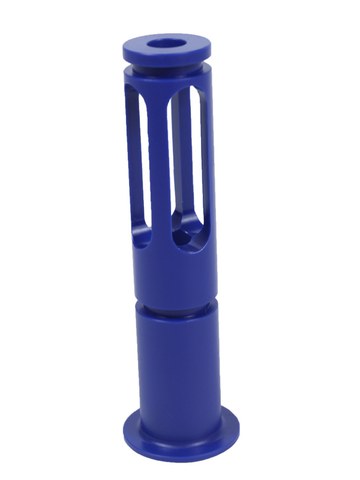
- Single-setup turning on Mazak CNC turning centers holds transmission and fluid-channel features concentric in one clamping.
- Every batch ships with material certification and 100% visual plus CMM verification, packed in food-grade polybags.
- No MOQ: prototypes from 1 piece in 7 to 15 days.
Food-grade POM (Polyoxymethylene) offers a wear resistance of 14 kPa-m/min under PV 0.35 testing, outperforming nylon 66 by 40% in dry-friction conditions. At KGL, we machine food-grade colored POM (Blue/Red) on Mazak turning centers, holding standard tolerances to ±0.005 mm and critical features to ±0.002 mm with full CMM verification. This guide covers material properties, machining parameters, and food-industry compliance for fluid food automation components.
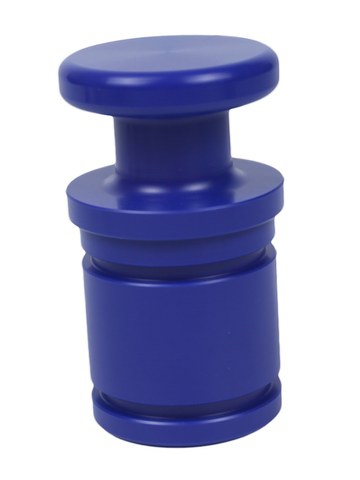
1. Application Context and Functional Requirements
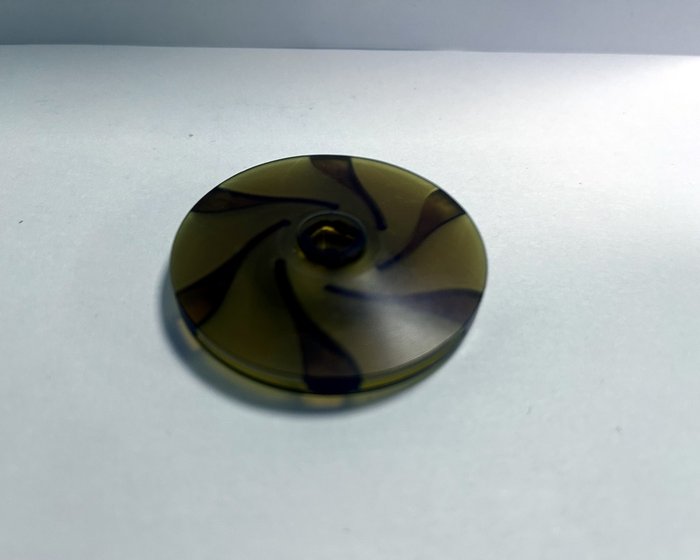
Custom POM fluid food automation parts serve as transmission positioning and fluid channel guidance components in beverage filling machinery, dosing equipment, and food processing systems. The self-lubricating POM material eliminates the need for external grease, removing contamination risk in direct food-contact applications.
These components must meet three core requirements: accurate dimensional tolerance for interchangeability, smooth burr-free surfaces to prevent material retention, and full food-grade cleanliness compliance from machining through packaging.
2. POM Material Properties and Food-Grade Compliance
Food-grade POM (acetal copolymer) combines high wear resistance, low friction coefficient (0.21 dynamic against steel), and excellent dimensional stability. The material does not require external lubrication, making it suitable for direct food-contact surfaces per FDA 21 CFR 177.2470.
| Property | POM Copolymer (Food-Grade) | Test Standard |
|---|---|---|
| Density | 1.41 g/cm3 | ISO 1183-1 |
| Tensile Strength | 60 MPa | ISO 527-2 |
| Flexural Modulus | 2,600 MPa | ISO 178 |
| Notched Izod Impact | 7 kJ/m2 | ISO 180/1A |
| Friction Coefficient (vs steel) | 0.21 | ASTM D3702 |
| Water Absorption (24h) | 0.22% | ISO 62 |
| Service Temperature | -40 to +100 C | Long-term |
| FDA Compliance | 21 CFR 177.2470 | FDA |
| EU Compliance | EU 10/2011 | EC |
KGL sources food-grade POM from certified suppliers, and leading grades such as DuPont Delrin and Celanese Celcon are available on request. Each batch arrives with material certificates and food-contact compliance documentation. Material colors (Blue/Red) are specified per FDA colorant regulations to enable visual detection in food processing environments.
3. CNC Machining Process and Tolerance Control
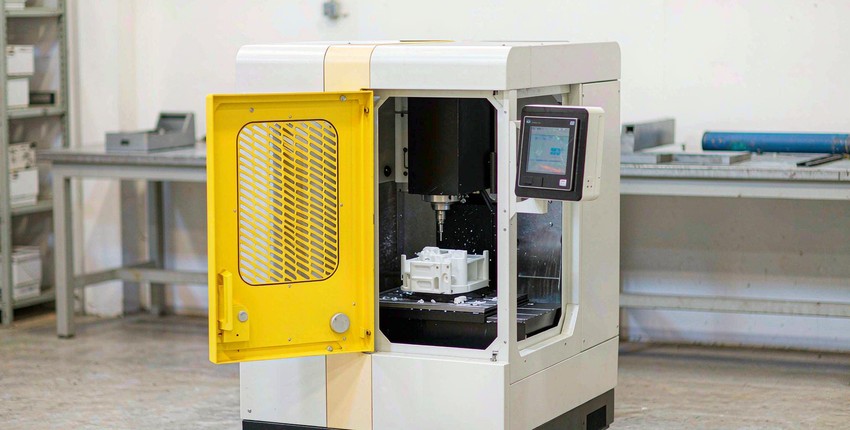
POM is machined on CNC turning centers and FANUC ROBODRILL milling centers. The material machines cleanly with sharp carbide tooling, producing smooth surfaces that meet food-hygiene requirements without post-machining polishing in most cases. Tolerance philosophy follows the same system described in our CNC machining tolerances guide.
| Feature | Tolerance | Machining Method | Inspection |
|---|---|---|---|
| Standard dimensions | ±0.005 mm | CNC turning/milling | Caliper + CMM |
| Critical positioning features | ±0.002 mm | Precision turning + full CMM verify | Zeiss CMM 100% |
| Fluid channel profiles | Per drawing | CNC turning single-setup | CMM + vision |
| Surface roughness | Ra 0.8 um (polished) | Polishing + deburring | Profilometer |
| Threaded features | 6H / 6g | CNC thread milling/turning | Thread gauges |
| Feature position | ±0.01 mm | Single-setup mill-turn | CMM |
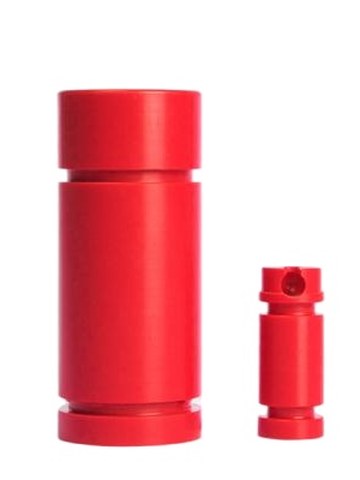
The core process flow: (1) Incoming material inspection with food-grade certificate verification; (2) Single-setup CNC turning of transmission and flow-channel features; (3) Surface polishing and deburring; (4) Food-grade cleaning to remove plastic chips and microscopic particles; (5) 100% visual and dimensional inspection; (6) Cleanroom packaging with food-grade material handling.
4. Food-Grade Cleanliness and Surface Standards
All POM parts comply with food-industry cleanliness standards that far exceed conventional industrial plastic component requirements. KGL maintains a dedicated food-grade cleaning and packaging protocol:
| Cleanliness Stage | Procedure | Standard / Requirement |
|---|---|---|
| Machining | Dedicated tooling, no cross-contamination | ISO 9001:2015 |
| Deburring | Manual + ultrasonic deburring | Ra 0.8 um target |
| Cleaning | Food-grade detergent + ultrasonic | FDA 21 CFR 178.1010 |
| Rinsing | Deionized water rinse | Conductivity < 1 uS/cm |
| Drying | Clean filtered air | ISO Class 8 environment |
| Inspection | 100% visual + dimensional | ISO 13485:2016 procedures |
| Packaging | Food-grade polybag + label | Traceability per batch |
KGL's ISO 13485:2016 (Medical Devices) certification ensures that food-contact components benefit from the same stringent quality management system used for medical device manufacturing. This represents a key differentiation from general machine shops that only hold ISO 9001.
5. Actionable Checklist for Designers
- Specify food-grade POM (acetal copolymer) with FDA 21 CFR 177.2470 compliance on your drawing to ensure material traceability.
- Design fluid channels with radiused corners (R >= 0.5mm) to prevent material retention and facilitate cleaning.
- Avoid sharp internal threads in food-contact zones; use trapezoidal threads or smooth transitions instead.
- Specify surface roughness Ra 0.8 um or better for food-contact surfaces to prevent bacterial adhesion.
- Request material color (Blue or Red) per your HACCP color-coding system for allergen management.
- Share your flow-rate and pressure requirements for DFM review. KGL provides free DFM feedback within 24 hours through the quote form.
6. FAQ
Can you supply complete fluid module assemblies or only individual POM parts?
Both. We supply individual POM parts or complete fluid module assemblies per your BOM. Send your drawing or assembly list for a complete solution and quotation.
What food-grade materials besides POM can you machine?
We also machine food-grade PEEK (ISO 10993 compliant), PTFE/Teflon, and UHMW-PE per your application requirements. Material certificates and food-contact compliance documentation are provided.
How do you ensure food hygiene compliance?
All parts are machined from food-grade POM, undergo surface polishing, deburring, food-grade cleaning (FDA 21 CFR 178.1010), and 100% inspection. KGL holds ISO 13485:2016 certification, applying medical-grade QMS to food-contact components.
What is the minimum order quantity and lead time?
No MOQ. Prototypes start from 1 piece with 5-7 working day lead time. Mass production takes 2-4 weeks depending on quantity.
What tolerance can you hold on POM parts?
Standard tolerance is ±0.005 mm. Critical positioning and sealing features are held to ±0.002 mm, verified 100% with Zeiss CMM (0.0015 mm class uncertainty).
If you have a food-grade POM part to quote, send your 2D/3D files through the RFQ page or write to kgl@kglmfc.com. Our POM machining guide covers more material details.
Related Articles
More from the Engineering Plastics series.
Have a project in mind?
Send drawings to kgl@kglmfc.com or request a quote. We respond within 24 hours.
Request a Quote