CNC Optical Lens Barrels: Cam Grooves and Zoom Helicoil Assembly
KGL produces optical lens barrels with cam grooves, inner helicoil threads, and coaxiality within 0.002 mm.
Optical lens barrels guide lenses along a precise axis during zoom or focus. Spiral cam grooves, inner helicoil threads, and mounting flanges must all share the same optical center. Any runout or tilt distorts the image path. At KGL we machine multi-piece lens barrel assemblies to coaxiality and runout within 0.002 mm. This article explains how.
The optical housing challenge
A lens barrel is a nested cylinder assembly. The outer barrel carries cam grooves. The inner barrel carries lens cells. The two must slide smoothly without binding, which means the guide surfaces need a fine finish and the right surface treatment. Threads, pin holes, and flanges must be concentric with the optical axis, or the lenses decenter.
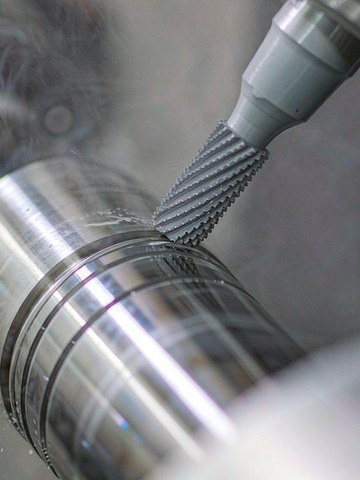
5-axis spiral milling for cam grooves
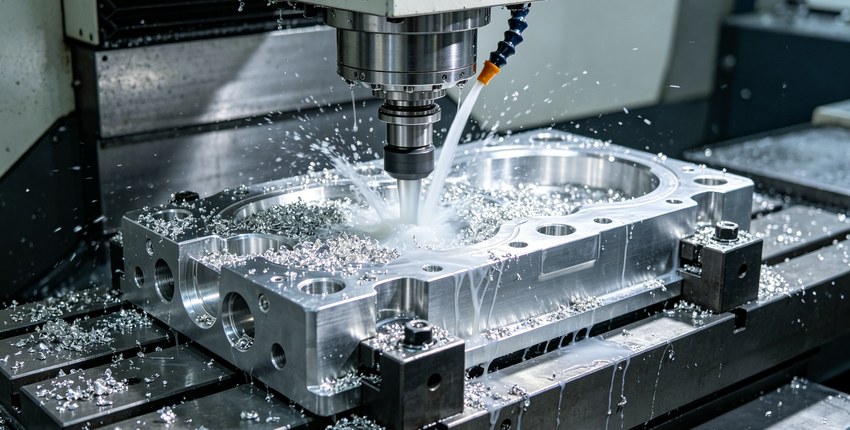
Cam grooves are continuous 3D paths on a cylindrical surface. A 3-axis machine would need multiple setups and would struggle to keep the groove profile consistent. We cut them with simultaneous 5-axis motion, rotating the part and tilting the tool so the cutter stays normal to the groove surface. This gives a smooth, consistent profile around the full 360 degrees.
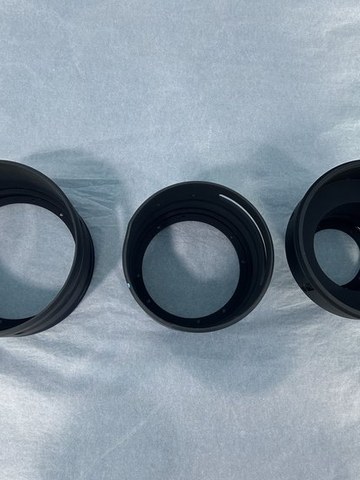
One-setup concentricity
Outer reference diameters, inner optical seating bores, thread pitches, and cam slots are machined in one fixture clamping. Sharing one coordinate origin keeps radial runout, perpendicularity, and coaxiality under control. Final inspection is on a Hexagon CMM with 0.0015 mm accuracy.
Tolerance grades
| Attribute | Industry grade | KGL standard | KGL limit |
|---|---|---|---|
| Bore and diameter tolerance | ±0.05 mm | ±0.010 mm | ±0.005 mm |
| Cam slot profile tolerance | ±0.03 mm | ±0.012 mm | ±0.005 mm |
| Coaxiality and radial runout | ±0.025 mm | ±0.008 mm | ±0.002 mm |
| Angularity and perpendicularity | ±0.03 mm | ±0.010 mm | ±0.004 mm |
| Surface roughness (Ra) | 1.6 μm | 0.8 μm | 0.2 μm |
Materials and surface treatment
We typically machine lens barrels from 6061-T6 or 7075-T6 aluminum. Black anodizing is common for light control and wear resistance. Internal guide rings may be PEEK or POM for low-friction sliding. Some optical housings use SUS304 or 17-4PH stainless steel for structural strength. The lens barrel case study lists the full tolerance ladder from industry grade to KGL limit.
Frequently asked questions
What runout can you hold on lens barrels?
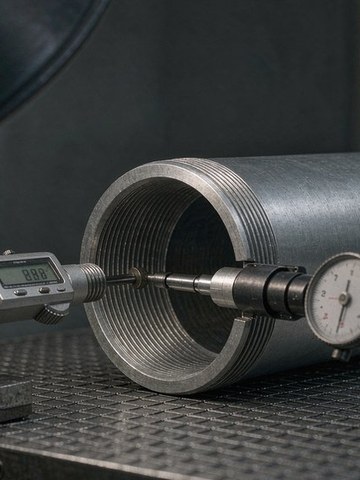
Coaxiality and radial runout within 0.002 mm on critical diameters, verified on a Hexagon CMM with 0.0015 mm accuracy.
Can cam grooves and bores be machined in one setup?
Yes. Cam slots, reference diameters, seating bores, and threads share one coordinate origin in a single clamping, which is what keeps the runout low.
What surface treatments do you apply?
Black anodizing on aluminum barrels for light control and wear resistance. PEEK or POM internal guide rings for low-friction sleeve movement.
Send your optical housing
If you have a lens barrel, zoom helicoil, or optical housing that needs precise concentricity, send your drawing to kgl@kglmfc.com. We will review the geometry and return a quote within 24 hours.
Related Articles
More from the Semiconductor series.
Have a project in mind?
Send drawings to kgl@kglmfc.com or request a quote. We respond within 24 hours.
Request a Quote