Machining Precision Parts for Medical Devices and Robotics
How KGL machines endoscope components, orthopedic fixators, and robot joint parts to micron tolerances in ISO 13485 and AS9100D environments.
Medical and robotic parts look different, but the machining problems overlap. Both need clean surfaces, tight tolerances, and materials that are hard to cut. Both industries also punish inconsistency. A robot joint that chatters will fail in the field, and a medical implant with surface defects can cause infection or rejection. At KGL we machine parts for both sectors under ISO 13485 and AS9100D quality systems. This article describes the practical differences.
Materials we machine for these industries
| Material | Typical application | Tolerance range | Surface finish target |
|---|---|---|---|
| 304 / 316L stainless steel | Endoscope tubes, surgical tools, fasteners | ±0.01 mm | Ra 0.4 - 0.8 μm |
| Ti-6Al-4V ELI | Implants, orthopedic hardware | ±0.005 mm | Ra 0.4 μm |
| 7075-T6 aluminum | Orthopedic fixators, robot brackets | ±0.01 mm | Ra 0.8 μm + anodize |
| PEEK / PEI | Medical housings, aerospace wastewater parts | ±0.02 mm | Ra 0.8 μm |
| POM / Delrin | Gears, bushings, robot wear parts | ±0.02 mm | Ra 0.8 μm |
Endoscope components: small features and clean surfaces
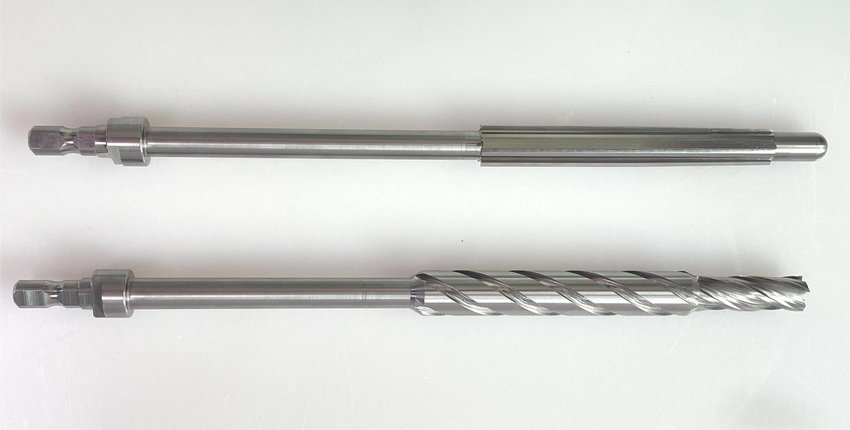
Endoscope parts enter the body, so surface integrity is non-negotiable. The outer tube, instrument channel, and joint structures each need a different approach.
The mirror tube is typically turned on a CNC lathe to establish the outer diameter and the stepped inner cavity. Multi-angle openings and handle contours are then milled with micro-diameter cutters. Because the walls are thin, we use low cutting forces and soft conformal fixtures to avoid distortion.
After machining, the surfaces are electropolished to remove the damaged layer and reduce bacterial adhesion. Passivation forms a dense chromium oxide layer to resist pitting. Some parts receive an antibacterial or lubricating coating. The last step is plasma cleaning to remove organic residue before packaging. Industry-level requirements are collected on the medical machining page.
Orthopedic fixators: light, strong, sterile
External fixators use 7075-T6 aluminum because the strength-to-weight ratio keeps the frame light while the patient heals. The design needs high-precision adjustment joints and modular connections. We hold the bore and thread features tightly so the frame does not loosen under load.
Surface treatment follows machining. Sandblasting creates a matte finish, then black anodizing reduces glare in the operating room and improves wear resistance. The process is certified to ISO 13485 and the parts meet ASTM F1541 requirements for external fixation devices.
These parts are a good example of where a lower-cost material works because the function does not demand implant-grade titanium. The frame stays outside the body, so aluminum's lighter weight is a real benefit.
Robot joints: coaxiality is everything
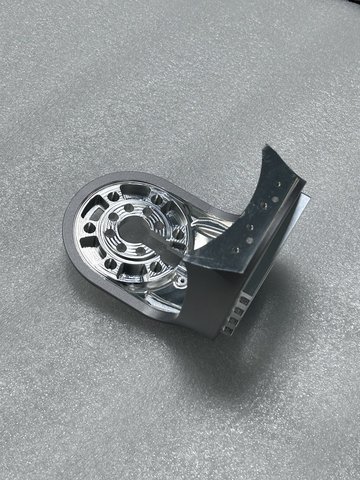
Robot joints rotate under load. If the bores that hold the bearings are not coaxial, the joint binds, overheats, or wears prematurely. We commonly hold coaxiality to 0.01 mm on these parts, and sometimes tighter on collaborative robot arms.
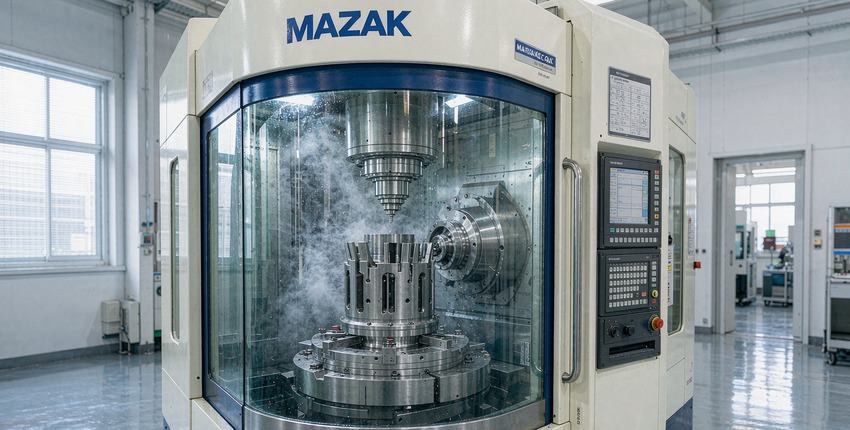
The geometry is also complex. A single joint housing may have flat faces, angled bores, tapped holes, and thin walls. Doing this in multiple setups risks losing the geometric relationship between features. We machine these parts on 5-axis centers with in-process probing to keep everything aligned.
For one collaborative robot program, we delivered first samples on a scheduled window and moved to volume production within 7 days. Final inspection showed 99.5 percent good parts on the first production lot.
Quality systems behind the parts
Medical and aerospace work at KGL runs under three certifications. ISO 9001:2015 is the base quality system. ISO 13485:2016 adds medical device process controls, traceability, and risk management. AS9100D adds aerospace requirements for configuration control and first-article inspection.
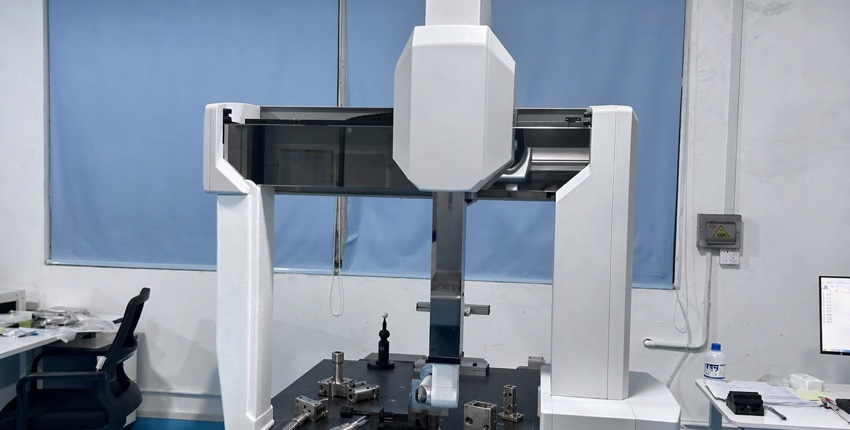
Our quality team has 15 specialists. Inspection equipment includes Hexagon CMMs, Olympus and Keyence microscopes, projectors, and digital micrometers. Every lot gets a dimensional report, and FAI is provided for new parts. Material certificates are kept for full traceability.
Send the drawing
Whether you are developing a surgical instrument or a robot joint, the earlier we see the design, the more we can help. Send files to kgl@kglmfc.com and we will return a DFM review and quote within 24 hours.
Have a project in mind?
Send drawings to kgl@kglmfc.com or request a quote. We respond within 24 hours.
Request a Quote