How to Machine Thin-Wall Stainless Steel Parts Without Distortion
KGL's method for machining SUS304 thin-wall semiconductor parts with 0.3 mm walls, 0.1 mm holes, and 0.01 mm GD&T.
Thin-wall stainless steel parts combine three problems: the material work-hardens under cutting, heat warps the wall, and clamping pressure distorts the part before the first chip forms. At KGL we have developed a repeatable route for parts with walls down to 0.3 mm, micro-holes down to 0.1 mm, and geometric tolerances inside 0.01 mm. This article explains the practical controls.
The three failure modes
Work hardening. SUS304 hardens quickly under the cutter. Once the surface hardens, tool life drops and surface finish deteriorates. The key is to keep the cut aggressive enough to stay below the hardened layer.
Heat distortion. A 0.3 mm wall heats up and warps in seconds. Conventional flood coolant often cannot reach the thin feature before it deforms.
Clamping distortion. Standard vises and clamps squeeze a thin part out of shape. The distortion may not be visible until after machining, when the part springs back.
The KGL process route
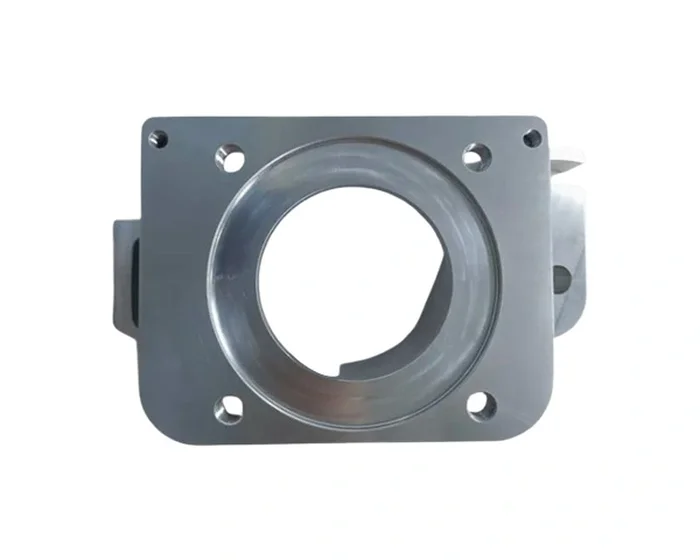
We use a five-step sequence: roughing, natural aging, semi-finishing, stress relief, then finishing. Stress leaves the part between operations, so the final pass cuts a stable surface rather than a loaded one.
Cooling is minimum quantity lubrication kept below 80 C at the cutting zone. The tool geometry and cutting speed are chosen to produce short, manageable chips that do not recut the surface.
Fixturing is the hardest part. A vacuum-assisted conformal fixture distributes pressure evenly. We went through 12 fixture iterations on one semiconductor program before clamping distortion dropped from 0.015 mm to below 0.003 mm.
Resulting specifications
| Attribute | Value |
|---|---|
| Material | SUS304 stainless steel |
| Envelope | 150 x 45 x 6 mm |
| Thinnest wall | 0.3 mm |
| Micro-holes | 0.1 mm diameter |
| Flatness / position / coaxiality | within 0.01 mm |
| Surface finish | Ra 0.4 μm |
These specifications come from a live thin-wall semiconductor case study: a core part delivered to the world's leading lithography equipment maker. Parts in this tolerance family also appear across our semiconductor equipment work, from vacuum chambers to precision motion stages.
Frequently asked questions
What is the thinnest wall you can machine in stainless steel?
On the referenced program, 0.3 mm across a 150 x 45 x 6 mm envelope. What is achievable depends on the envelope, feature layout, and tolerance stack. Send the drawing and we will assess it.
How do you prevent clamping distortion?
Vacuum-assisted conformal fixtures spread the clamping load instead of concentrating it on a few points. On the semiconductor program, 12 fixture iterations brought clamping distortion from 0.015 mm down to below 0.003 mm.
Which stainless grades do you machine?
SUS304, SUS316L, and 17-4 PH are the most common. SUS304 work-hardens fastest, so parameter control matters most there.
Need thin-wall help?
If you have a thin-wall stainless steel part that is distorting, send your drawing to kgl@kglmfc.com. We will review the wall thickness, feature access, and tolerance stack and return a process plan within 24 hours.
Related Articles
More from the Stainless Steel series.
Have a project in mind?
Send drawings to kgl@kglmfc.com or request a quote. We respond within 24 hours.
Request a Quote