Machinable PEEK Grades: PEEK1000, Glass-Filled and ESD PEEK Explained
Which PEEK grade should your part use? PEEK1000 for medical and chemical purity, glass-filled for stiffness and stability, ESD PEEK for semiconductor fixtures, with machining notes for each.
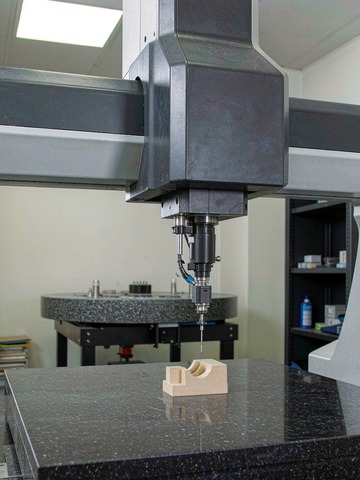
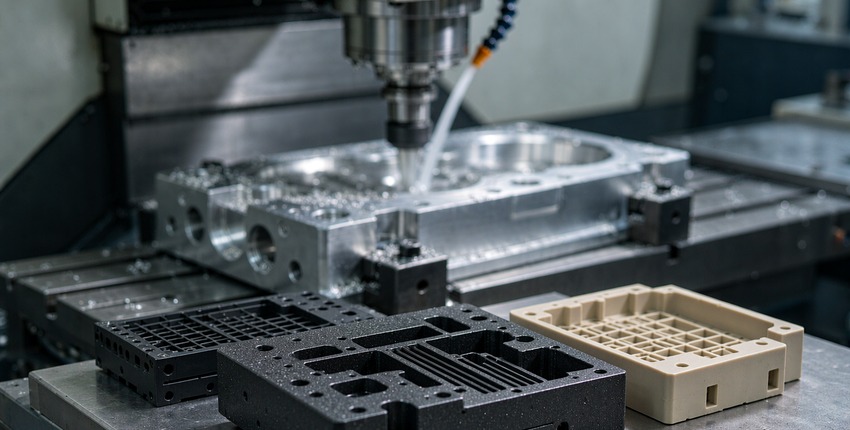
PEEK comes in several machinable grades, and the right choice depends on what the part must do. Unfilled PEEK1000 gives the best elongation and purity, so medical and food-contact parts usually start here. Glass-filled PEEK adds stiffness and cuts thermal expansion, which is why aerospace brackets and pump housings often use it. Carbon-filled grades, including ESD PEEK, bring electrical dissipation and even higher rigidity, making them the go-to for semiconductor fixtures and electronics hardware. At KGL, we machine all three on 5-axis and 3-axis centers, then verify critical dimensions on Hexagon and Zeiss CMMs with 0.0015 mm accuracy. Grade availability and stock sizes are listed on the PEEK machining page.
What Makes PEEK1000 the Default Choice for Medical and Chemical Parts?
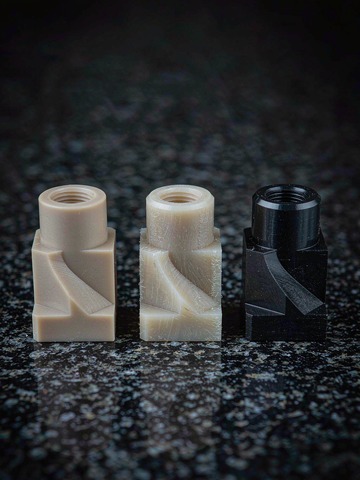
PEEK1000 is the unfilled, virgin grade. It keeps the polymer's natural beige color and offers the highest elongation at break among standard PEEK variants. That ductility matters when a part must survive snap-fit assembly or repeated sterilization cycles. It also carries the cleanest certification profile for FDA and USP Class VI applications, which is why surgical instrument handles, diagnostic housings and chemical-processing seals often specify PEEK1000.
From a machining standpoint, unfilled PEEK is the gentlest on cutters. We run it on our Mazak VCN 530 3-axis centers with standard carbide end mills and moderate feeds. Because there is no glass or carbon to accelerate tool wear, cycle times stay predictable and surface finishes come out smooth. The trade-off is lower stiffness and a higher coefficient of thermal expansion than filled grades, so tight-tolerance parts need careful fixturing and temperature-stable measurement. We typically hold general tolerances to ±0.005 mm on PEEK1000, and push to ±0.002 mm when the geometry justifies 5-axis finishing followed by full CMM inspection.
When Should You Choose Glass-Filled PEEK Over Unfilled?
Glass-filled PEEK, usually 30 percent glass fiber by weight, raises flexural modulus and drops thermal expansion by roughly half compared with unfilled stock. The result is a part that stays dimensionally stable across wider temperature swings. Aerospace duct brackets, valve seats and high-load structural spacers are typical applications.
The downside is abrasiveness. Glass fibers act like sandpaper on cutting edges, so we switch to coated carbide or diamond-coated tools and reduce feed rates to protect tool life. On our Mazak VARIAXIS C-600 5-axis centers, we use trochoidal tool paths and high-pressure coolant to clear chips before they can score the walls. Surface finish is slightly more textured than unfilled PEEK, so mating surfaces that must seal or glide often need a secondary polishing step. We also watch for fiber pull-out at thin walls and sharp corners; radii below 0.5 mm tend to fray, so we recommend 0.8 mm minimum internal corners for glass-filled grades.
What Is ESD PEEK and Where Does It Fit?
ESD PEEK is a carbon-filled or graphite-filled grade engineered for static dissipation. Surface resistivity typically sits in the 104 to 106 ohm range, which is low enough to bleed off charges in clean-room and electronics-assembly environments without creating a conductive short. The carbon fill also raises stiffness beyond even glass-filled levels, so ESD PEEK works well for thin-walled semiconductor wafer handling fixtures, test sockets and automation end-effectors that must be both rigid and electrostatically safe.
Machining ESD PEEK is closer to glass-filled than to unfilled. Carbon fibers are abrasive, and the black color makes it hard to spot surface defects by eye. We rely on in-process inspection with Keyence IM-8010 vision systems and final CMM checks on Hexagon GLOBALS bridges to catch dimensional drift early. Because ESD grades are often specified for tight-pitch electronics, our typical tolerance band is ±0.005 mm, with selected features held to ±0.002 mm after 5-axis finishing and full CMM verification. If your design also needs chemical resistance or biocompatibility, note that carbon-filled PEEK is generally not recommended for implant or food-contact use; in those cases we steer clients back to PEEK1000.
Which Grade Should You Pick for Tight Tolerances and Complex Geometry?
For thin walls, deep pockets and undercuts, unfilled PEEK1000 is usually the safest starting point. It machines cleanly, holds detail well and is less likely to crack during post-machining annealing. If the part must survive higher loads or hotter environments, glass-filled PEEK is the next step, provided you can accept slightly reduced ductility and a rougher surface. ESD PEEK is the right call only when static control is a hard requirement; otherwise the added cost and machining difficulty are hard to justify.
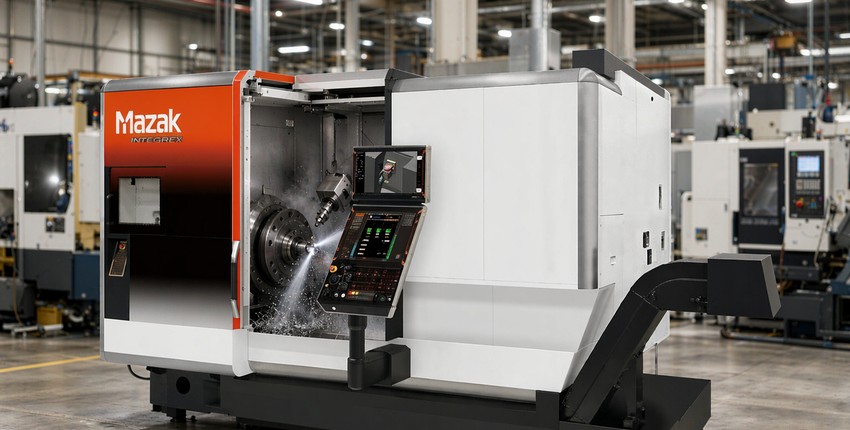
Complex geometry often pushes us toward 5-axis simultaneous machining. Our Mazak VARIAXIS C-600 and j-500/5X centers can reach angles that would require multiple setups on 3-axis equipment, which matters because every re-fixture introduces thermal drift in a material as sensitive as PEEK. We also use our Mazak INTEGREX i-250H turn-mill centers when a part mixes turned and milled features, keeping everything in one clamping. The result is better concentricity and fewer scrapped parts.
From Our Shop Floor: A Medical Housing Quote Review
A quotation review for a medical housing taught us what those flags look like in practice. The competing bid listed "PEEK" with no grade and no reinforcement, so unfilled PEEK 450G and carbon filled CFR-30 were left interchangeable on paper. It asked zero questions about the 0.01 mm alignment tolerance on the bore, and quoted delivery as "ASAP." Our reply went back within 24 hours with the material pinned down: SABIC ULTEM 1000 with its datasheet attached, a family choice the other bid never surfaced. It also proposed a five-axis strategy on the Mazak VARIAXIS C-600, ultrasonic welding for the closure, and a phased delivery plan with CMM reports per lot. The buyer paid 15 percent more and moved the work. Grade clarity beats price every time.
Frequently Asked Questions
Can PEEK be machined to the same tolerances as metal?
PEEK can be held to ±0.005 mm routinely, and selected features to ±0.002 mm on 5-axis equipment with full CMM verification. That is close to aluminum capability, but the polymer's thermal sensitivity means fixturing and measurement conditions matter more than they do for metal.
Does glass-filled PEEK cost more than unfilled PEEK?
Yes, the raw material price is higher, and machining takes longer because of tool-wear management and slower feeds. The total part cost can rise 20 to 40 percent depending on geometry, but the gain in stiffness and dimensional stability often pays for itself in reduced assembly stress or longer service life.
Is ESD PEEK safe for medical implants?
No. Carbon or graphite fillers can leach or create localized conductivity that is incompatible with long-term implantation. For medical or food-contact parts, unfilled PEEK1000 is the standard choice because it offers the cleanest material certification.
How do you prevent PEEK from warping during machining?
Annealing before machining is the first step. We also use low cutting forces, sharp carbide tools and coolant strategies that keep the part below its glass-transition temperature. For a deeper explanation of warp prevention, see our article on why PEEK warps after machining.
What is the smallest feature you can machine in PEEK?
We have machined PEEK ribs down to 0.3 mm thick and holes to 0.5 mm diameter, but those are edge cases. For reliable production, we recommend 0.5 mm minimum wall thickness and 0.8 mm internal radii for unfilled grades, with slightly larger values for glass-filled or carbon-filled stock.
This article is for informational purposes only. Material properties and machining recommendations are based on industry standards and KGL's internal process data. Always validate grade selection, tolerances and finishing requirements against your specific application and relevant regulatory standards before production. (c) 2026 KGL. All rights reserved.
Have a project in mind?
Send drawings to kgl@kglmfc.com or request a quote. We respond within 24 hours.
Request a Quote