Why Titanium Is Hard to Machine, and What We Change to Cut It Well
Why titanium is hard to machine: low thermal conductivity, work hardening, springback and reactivity explained, plus the speeds, tools, coolant and fixturing a shop actually changes for Ti-6Al-4V.
Titanium asks for respect. The same properties that make it valuable in the air and inside the body, strength at low weight and calm behavior against corrosion, are exactly what make it difficult on a cutting tool. Shops that quote titanium like aluminum lose money or parts, usually both. This is the explanation I give customers who wonder why titanium machining costs what it costs, and what we change so their parts come out right. Three facts drive everything: low thermal conductivity, work hardening plus springback, and chemical reactivity at high temperature. Address those three and titanium becomes predictable.
1. What makes titanium different from aluminum on the tool
Aluminum machines easily because it conducts heat. Steel sits near 50 W per meter kelvin, and titanium alloys sit around 7 W per meter kelvin. When the cut generates heat, steel and aluminum carry a large share of it away inside the chip. Titanium carries almost none. The heat piles into a small zone at the cutting edge, temperatures climb past 700 degrees Celsius, and the insert fails chemically before it wears mechanically. That is why a titanium job asks for slower surface speeds, sharper edges, and high pressure coolant aimed at the cut zone. Treat the parameters like steel and you burn through tooling before the first operation is done.
For the alloy family itself, including where Grade 2 and Grade 5 are used, see our titanium CNC machining guide.
2. Why work hardening and springback both bite
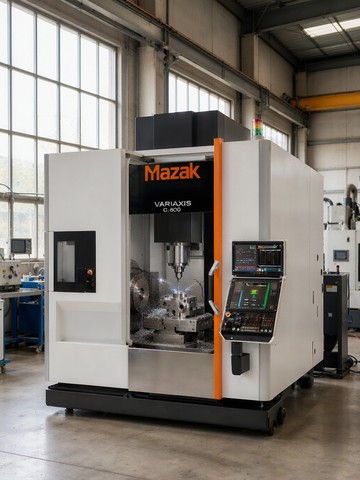
Titanium work hardens the way stainless does, with two extra problems. First, if the tool rubs instead of cutting, even briefly, the surface hardens and the next pass meets something harder than the drawing called for. Second, titanium modulus is low, around 110 GPa against roughly 200 GPa for steel, so the part flexes away from the tool and springs back after the pass. Thin walls in titanium are a springback problem before they are a chatter problem.
The countermeasures are mechanical rather than heroic: rigid fixtures close to the cut, sharp edges, constant chip load, and never letting the tool dwell on a surface. We set torque controlled clamps for thin wall housings and add backup supports where springback would distort the bore.
3. Why titanium fights the tool at temperature
Above about 500 degrees Celsius, titanium turns chemically hungry. It reacts with tool materials, and crater wear on the rake face grows quickly. Depth of cut and feed have to be pushed while surface speed stays low. For Ti-6Al-4V Grade 5, the workhorse alloy, our carbide turning speeds sit in a band most shops will recognize: roughly 30 to 60 meters per minute with coated carbide, sometimes lower on interrupted cuts. Feed and depth carry the productivity so the edge temperature does not climb. Fresh inserts on a clock, not on a hunch, keep the edge chemistry stable across a long run.
4. What we change versus a steel habit
Below is the working table our setters use when a titanium job lands. Steel habits cost titanium jobs the first time. The deltas look small until you run them.
| Factor | Steel habit | Titanium habit |
|---|---|---|
| Surface speed | 100 to 250 m/min | 30 to 60 m/min, lower on interruptions |
| Tool edge | Standard preparation | Sharp, polished rake, fresh edges on a clock |
| Coolant | Flood is fine | High pressure, aimed at the cut zone |
| Engagement | Forgiving of light passes | Constant chip load, climb milling, no dwell |
| Fixturing | Standard vises | Short overhang, torque controlled clamps, backup supports |
Grade matters as much as the table. Grade 2, commercially pure titanium, cuts noticeably easier than Grade 5 and is common in chemical and medical equipment. Grade 5 trades easy cutting for roughly double the strength, and heat treated lots punish dull edges fastest. We confirm the grade and condition before quoting, because the same drawing can be two different jobs depending on that letter and number. The same logic applies on our five axis machining work, where a titanium housing often needs fewer setups to stay rigid.
5. How we verify titanium parts
Titanium parts usually carry flight or implant duty, so verification belongs in the price. Chemistry is checked by spectrometer against the mill certificate, hardness on every heat treated lot, and geometry on Hexagon and Zeiss bridge style CMMs under our ISO 9001:2015 and AS9100D systems. For medical work, the ISO 13485:2016 scope covers the documentation a customer auditor expects. Surface roughness on bearing or sealing faces is measured, not assumed, with Ra 0.4 micrometers achievable on turned and milled faces when the process is held. Standard tolerance on machined features sits at ±0.005 mm across both grades. Tighter bands on specific features go with full CMM reporting under our ±0.002 mm internal limit on five axis work. Tolerance figures come from process capability, not laboratory numbers, and travel with every shipment.
Our shop runs 100+ CNC machines including 11 five axis centers, plus 40+ inspection instruments, and our 100+ employees in Shenzhen cover two shifts of titanium work most weeks. The shop floor has been doing this since 2013, so the holders, coolant pressures, and cutter paths on a real job come from that history.
6. Where titanium earns its cost
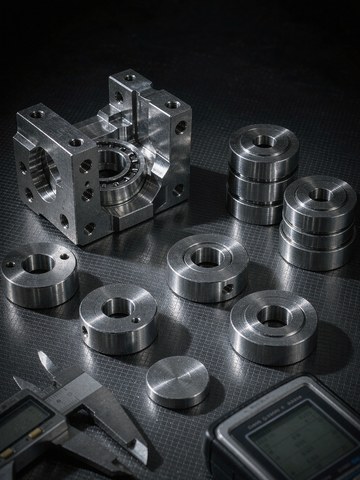
Where weight, corrosion resistance, or the body's tolerance matters, titanium pays back. A titanium part often replaces a heavier steel part plus a coating plus a maintenance cycle. The machining premium buys performance the assembly cannot get otherwise. That is the trade we walk customers through. We return a process assessment and a quote within 24 hours, and our 177 customer records in our CRM include titanium jobs across aerospace, medical, chemical processing, and humanoid robotics, so the comparison points already exist on our floor. For related grades, our titanium alloy machining notes cover the wider family.
From Our Shop Floor: A TC4 Titanium Valve Body
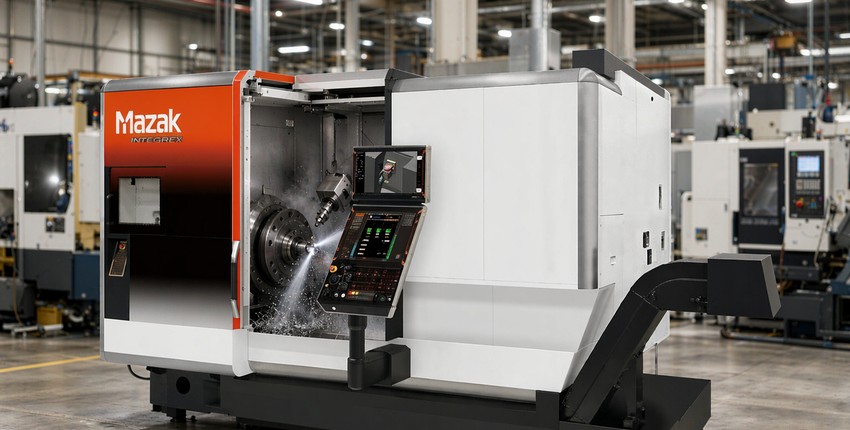
One recent job carries most of the lessons in this article. The part was a TC4 (Ti-6Al-4V) valve body for an oil and gas exploration equipment maker, machined complete in a single setup on a Mazak INTEGREX i-250H turn-mill center. Titanium conducts heat at about 7.9 W/(m.K), so cutting heat has nowhere to escape except into the tool edge, and an edge that overheats fails fast. We ran Sandvik GC1105 coated inserts with 70 bar high-pressure through-coolant aimed directly at the cut zone to break that heat cycle. Rough turning ran at 45 m/min surface speed and 1.5 mm depth of cut. The finishing pass left only 0.15 mm of stock, which keeps thermal movement small enough to stay inside the callouts. Recorded from that run: 85 minutes cycle time per part, 40 minutes of tool life per edge, and eight consecutive parts holding within ±0.01 mm.
7. FAQ
Is titanium worth the machining cost?
Where weight, corrosion resistance, or the body's tolerance matters, yes. A titanium part often replaces a heavier steel part plus a coating plus a maintenance cycle, so the machining premium buys performance the assembly cannot get otherwise.
Can you hold tight tolerance in titanium?
Yes. Our standard is ±0.005 mm on machined features. Tighter bands, down to ±0.002 mm, are achievable on specific features when the part is verified with full CMM inspection on our Hexagon and Zeiss CMMs.
Which titanium grade should I start with?
Grade 2 for corrosion and medical equipment where extreme strength is not required. Grade 5 for aerospace and structural parts. Send the drawing and the duty environment and we will confirm the grade before quoting.
How do you keep titanium part costs down?
Machine away the least material possible, batch heat treatment with grinding, and keep tool paths constant. Near net blanks and honest tolerances save more than any cutting trick.
Do you machine titanium for medical and aerospace?
Yes. Our ISO 13485:2016 scope covers medical components, and our AS9100D scope covers aerospace precision parts. Material certificates and first article reports travel with every shipment under our ISO 9001:2015 system.
If you have a titanium part that needs reliable tolerances, send your STEP or IGES models and 2D drawings to kgl@kglmfc.com or request a quote on our RFQ page. We will review the geometry, material grade, and surface treatment requirements, and return a process assessment and quote within 24 hours.
Have a project in mind?
Send drawings to kgl@kglmfc.com or request a quote. We respond within 24 hours.
Request a Quote