China vs Local CNC Machining: Total Cost of Ownership Compared
Why the quoted piece price is the wrong number to compare, the eight cost lines that decide whether overseas CNC machining beats a local shop, when local wins, when an overseas partner wins, and how to run the comparison so both quotes are actually comparable.
Key Takeaways
- Piece price is one line of the total. Freight, duty, tooling, inventory carried in transit, payment terms, engineering hours and rework risk decide whether an overseas part is actually cheaper than a local one.
- Overseas machining wins its largest advantage on stable, repeat parts in production quantities, where the per-order overhead of distance is spread over many pieces and designs do not change between orders.
- Local machining wins on urgent low-volume work, parts that need you at the machine, and programs where drawings cannot leave the country or the design is still moving week to week.
- A fair comparison puts both quotes on the same definitions: same drawing package, same inspection and reporting requirement, same delivery term, and the same allowance for engineering back and forth.
- The lowest quote and the lowest total cost are different things. Ask what the price excludes: inspection reports, material certificates, packaging, and who pays when a part is out of tolerance.
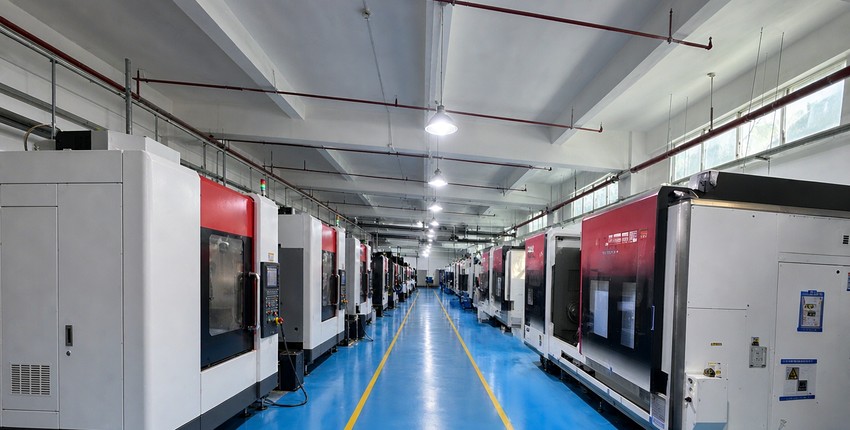
Every sourcing team runs this comparison at some point. A local machine shop quotes a bracket at one number, a supplier in China quotes the same drawing at a fraction of it, and the decision looks obvious in both directions depending on who you ask. The reason the decision keeps being revisited is that the two numbers are not measuring the same thing. A quote is a price for a part. What you actually pay is the total cost of getting that part, accepted and in production, for as long as you buy it. This article lays out the full cost sheet for CNC machining sourced overseas versus locally, explains where each side genuinely wins, and gives you a worksheet for running the comparison so both quotes land on the same page. For the factors that shape the piece price itself, start with our breakdown of CNC machining cost drivers.
1. What actually sits inside total cost of ownership?
Total cost of ownership for a machined part is the piece price plus everything you spend to get that part accepted and keep it flowing. The lines below cover the great majority of real programs. None of them is exotic; the discipline is simply writing them down before the comparison, not after the first shipment goes wrong.
| Cost line | What it covers | Who typically carries more of it |
|---|---|---|
| Piece price | The quoted unit price at your quantity | Usually the overseas quote |
| Tooling and NRE | Fixtures, soft jaws, first article engineering | Varies; quote both sides itemized |
| Freight | Air or sea transport, insurance, fuel surcharges | Overseas (absent from local quotes) |
| Duty and clearance | Import duty, brokerage, handling at entry | Overseas |
| Inventory and cash | Safety stock, capital tied up in transit and payment terms | Overseas |
| Communication | Time zone offset, DFM rounds, visits, calls | Overseas |
| Quality and rework | Incoming inspection, rejection handling, line-stop risk | Depends on the supplier, not the map |
| Program overhead | Supplier management, audits, documentation | Comparable if both are professional |
The honest summary of that table: the overseas quote carries three cost lines a local quote never shows, and the local quote carries a piece price the overseas quote usually beats. Everything else is closer to a tie than either side's marketing admits.
2. Why is the quoted piece price lower overseas?
The gap has structure, and knowing the structure tells you how durable the advantage is. Labor is part of it, but not the largest part for CNC work, where machine time dominates. The larger drivers are scale and cluster effects: a machining region with thousands of shops shares tooling distributors, material stockists, surface treatment houses and inspection services within a short drive, so every step costs less and moves faster. Machine utilization matters too: a shop running three shifts keeps its machine-hour rate competitive. Finally, the domestic supply base for aluminum, stainless and engineering plastics runs deep, which shows up in material pricing at production quantities. None of this is a secret; it is the same reason electronics concentrated where it did. The practical implication is that the advantage is strongest for parts with significant machine time and stable designs, and weakest for parts where a local shop's five minutes down the road actually solves your problem.
3. What do freight, duty and terms actually add?
These three lines are where comparisons get sloppy, because the quote itself does not show them. Start with the delivery term, because it decides which costs are inside the price. A quote on EXW Shenzhen includes nothing but the part at the factory gate. FOB adds loading onto the vessel. DDP puts freight, duty and clearance inside the quoted number, which makes comparison easiest, though it also means the supplier is carrying risk they will price somewhere. Ask for the same term from both sides or you are comparing different products.
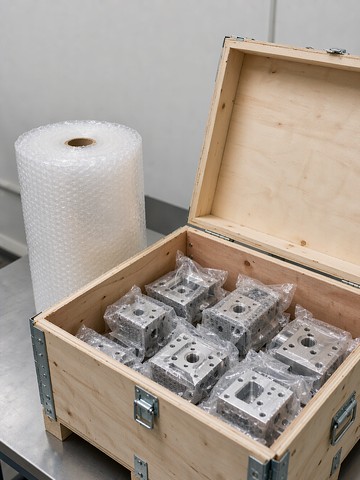
Freight scales with weight and urgency. Air freight rescues a schedule and destroys a cost advantage; sea freight is economical but adds weeks of inventory in transit. Duty is a mechanism rather than a number you can generalize: the rate depends on the product classification of your part and the destination country's schedule, and it applies to the declared value, so it is a fixed percentage relationship rather than a negotiable line. Clearance and brokerage are small but per-shipment, which is why they matter more across twenty small shipments than four consolidated ones. The structural point is that all three lines are per-shipment, which means they punish frequent small orders hardest. On a stable part bought monthly in production quantities they dilute into the piece price; on ten-off prototype runs they can double the effective cost.
4. The hidden lines: inventory, cash and engineering hours
Inventory in transit is real cost. Parts on the ocean for five weeks are capital your finance team has spent and cannot use, and the practical response, holding safety stock, ties up more. Payment terms move in the opposite direction to freight: an overseas supplier asking a deposit and balance before shipment carries your cash earlier than a local shop on net 30. Neither is fatal; both belong on the sheet.
Engineering hours are the line buyers most often forget. Working across time zones does not prevent anything, it shifts it: a question asked your afternoon gets answered your morning, so a design clarification that costs one phone call locally costs one day, and a five-round DFM conversation costs five days. Good suppliers compress this by answering complete RFQs fast and by putting engineering judgment into the first reply rather than spreading it over a week. Plan for visits as well. A first-article run you attend in person builds confidence faster than any report, and the trip cost is real but amortizes across the life of the program. For what a disciplined first article should contain, see our first article inspection guide.
5. When local machining is genuinely the better decision
Honesty here is what makes the rest of this article worth trusting. Local machining wins, outright and not as a consolation prize, in these situations:
- The design is still moving. If the part changes every week during development, the iteration loop dominates everything. Being able to drive to the shop, mark up the issue and hold the revised part the same week beats any piece price advantage.
- You need to stand at the machine. Some first-of-kind parts, large tooling and fixture work go better with your engineer present at setup and proveout.
- The volume is small and the deadline is short. A ten-piece rush with a two-week fuse is local work. Freight and clearance alone can eat the schedule, and the piece premium on ten parts is small in absolute terms.
- The program restricts where drawings can go. Defense, some aerospace programs and some public contracts require work performed in-country. This is a boundary, not a preference, and no piece price moves it.
- The part is genuinely simple and cheap to begin with. If the local quote is modest because the part is quick work, the overseas delta in absolute money may not justify a second supply chain.
6. When an overseas partner is genuinely the better decision
The mirror image has just as much structure. Overseas machining wins when the part is stable and the volume is real:
- Production quantities of a frozen design. This is where the piece price advantage compounds month after month while the per-shipment overhead dilutes to noise. Our guide to how batch size changes unit price shows the mechanics.
- Family parts on one platform. Ten variants that share fixtures and CAM amortize the program overhead across all of them.
- Capacity flexibility. A local shop at capacity quotes your urgent order at pain pricing or turns it away. A supplier with the bench depth to absorb a demand spike is carrying insurance you do not have to stock.
- Material breadth. If your part family spans aluminum, stainless and engineering plastics, a shop cluster that stocks all three beats three local specialists.
- Audited quality at distance. The legitimate historical objection to offshore machining, finding out at goods-in, is exactly what first article workflows, CMM reporting and certification were built to close. What cannot be closed is a supplier who will not show you their process; for that, see our list of supplier red flags.
7. How to run the comparison fairly
The comparison fails when the two quotes answer different questions. Run it as a worksheet instead. Down the left column, list the cost lines from section 1. Across the top, local and overseas. Then fill it with these rules:
| Rule | Why it matters |
|---|---|
| Same drawing package to both | A quote from a 3D model alone prices optimism, not the part |
| Same quantity and repeat pattern | Piece price is a curve, not a point; quote the real program |
| Same inspection and reporting demand | If you want CMM reports and material certificates, ask both sides; see our CMM and first article workflow |
| Same delivery term | EXW versus DDP differ by the entire logistics chain |
| Convert the soft lines to money | Your hourly engineering rate times estimated DFM rounds; your inventory carrying rate times weeks in transit |
| Price the failure mode | What a rejected shipment costs: rework locally, or a replacement cycle across the ocean, weighted by how much you trust the incoming inspection |
Worked as a method rather than a guess, this sheet usually shows the overseas advantage shrinking from the headline percentage to something smaller but still real on production parts, and sometimes reversing on low-volume work. Both outcomes are useful knowledge. The point is not that one answer is always right; it is that you will know which cost lines actually drive your decision instead of arguing about the piece price. When the sheet points overseas, our guide on choosing a CNC supplier in China covers the selection discipline, and evaluating suppliers by factor turns it into a scorecard.

8. What to send so the quote comes back comparable
Whichever side of the map wins your sheet, the quote is only as good as the input. Send the 2D drawing with tolerances and critical features marked, the 3D model, material and temper, annual and per-order quantities, the inspection and documentation requirement, the delivery term you want quoted, and your target first article date. State what the price must include: reports, certificates, packaging, and the treatment route. With complete files we return quotes within 24 hours, and our NDA and IP protection note covers how drawing confidentiality is handled before anything is quoted. The RFQ page lists the attachment checklist, and our 24 hour quote process note explains what happens to your files in that window.
Frequently Asked Questions
Is CNC machining in China actually cheaper after shipping and duties?
On stable parts in production quantities, usually yes, because the piece price gap is large relative to per-shipment costs that dilute with volume. On small urgent orders, often no, because freight, clearance and expedited handling are per-shipment lines that do not dilute. Run the worksheet in section 7 with your real quantities and the answer is usually unambiguous.
How do I compare a local quote and an overseas quote fairly?
Give both the same drawing package, quantity, inspection requirement and delivery term, then add the lines neither quote shows: freight, duty, in-transit inventory, payment terms and your engineering time for DFM rounds. Compare totals, not piece prices.
What about protecting my drawings when sourcing overseas?
Sign an NDA before sending anything, watermark or tier your drawings so the manufacturing package matches the order stage, and check that the supplier treats IP in writing the way they treat tolerance in practice. Our article on NDA and IP protection in sourcing covers the mechanics.
What order size makes sense to source overseas?
There is no universal number, but the pattern is consistent: the larger and more repeatable the order, the more the fixed overheads of distance dilute. Many buyers start with a modest pilot order against a production forecast, qualify the supplier with a first article, then move volume.
How long is the real lead time including shipping?
Manufacturing lead time for most machined parts runs one to three weeks depending on complexity and finishing. Sea freight adds weeks depending on the lane; air freight adds days at a much higher cost. Ask the supplier to quote manufacturing and shipping separately so you can trade speed against cost per order.
What happens if parts arrive out of tolerance?
This is a supplier selection question more than a geography question. A professional supplier supports claims with inspection data, remakes or credits, and tells you their nonconformance process before you order. Ask each candidate, local or overseas, to describe it in writing, and weight the answer heavily.
This article is general sourcing guidance, not a binding offer. Landed cost outcomes depend on part geometry, quantities, destination, duty classification and the terms both parties agree. Request a formal quotation for part-specific terms. (c) 2026 KGL. All rights reserved.
Related Articles
More from the Design for Manufacturing series.
Have a project in mind?
Send drawings to kgl@kglmfc.com or request a quote. We respond within 24 hours.
Request a Quote