5-Axis vs 3-Axis CNC Machining: Cost, Setups, and When the Upgrade Pays
A buyer's comparison of 5-axis and 3-axis CNC machining: where the cost really goes, setup stacking, accuracy effects, and the geometry classes that justify each machine.
The most common quoting question we hear is not about price but about fear: if the shop puts this part on a five-axis machine, will the hourly rate sink the project? The honest answer is that machine choice follows geometry, and for a large share of parts the cheaper route wins. This comparison comes from running 100+ machines, including 11 five-axis centers, and from the job records that show where each platform actually pays for itself.
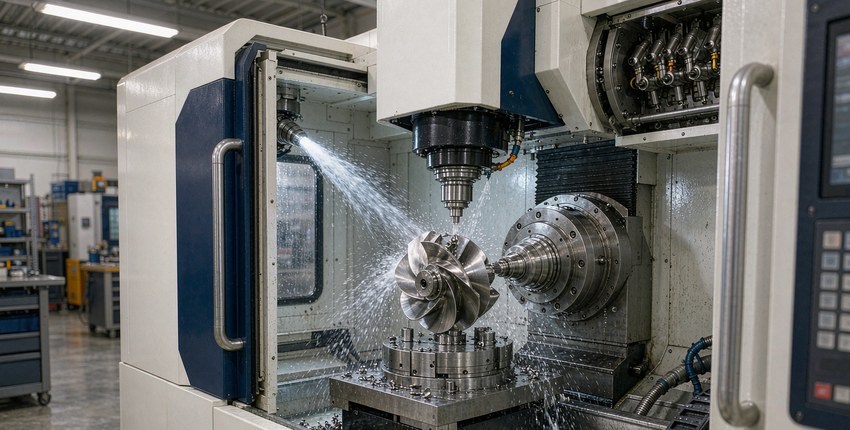
Where the cost actually lives
Hourly rate is the number everyone compares and the one that misleads most often. A five-axis hour costs more than a three-axis hour, but the part bill is rate multiplied by time plus setups plus fixturing plus risk. The table below breaks the comparison into the components that decide a quote.
| Cost component | 3-axis route | 5-axis route | Who benefits |
|---|---|---|---|
| Machine rate per hour | lower | higher | 3-axis |
| Setups per part | 2-5 typical | 1-2 typical | 5-axis, and the gap grows with complexity |
| Fixture cost | simple vises, low | trunnion or dedicated fixture, higher first cost, reusable | 5-axis at volume |
| Programming time | low | higher, collision-checked multiaxis paths | 3-axis |
| Operator attention | reload and re-indicate each setup | supervised unattended spans possible | 5-axis |
| Scrap risk from refixturing | accumulates with each setup | near zero once fixtured | 5-axis on thin or precise parts |
Read the last two rows together. On a simple bracket, setups are cheap and the 3-axis route wins outright. On a thin-wall housing with features on five faces and a flatness callout across them, every reload risks the datum, and the five-axis route often finishes cheaper despite the higher rate because it removes the refixturing risk instead of pricing it.
Accuracy: fewer setups, fewer stacked errors
Positional accuracy between features machined in different setups is never free. Each re-clamping re-introduces indication error, and tolerances that cross setup boundaries stack. A part with drilled features on four faces at plus or minus 0.02 mm to each other is a straightforward five-axis job and a genuinely hard 3-axis job. Conversely, a part whose critical features all sit on one face never needed the fifth axis at all.
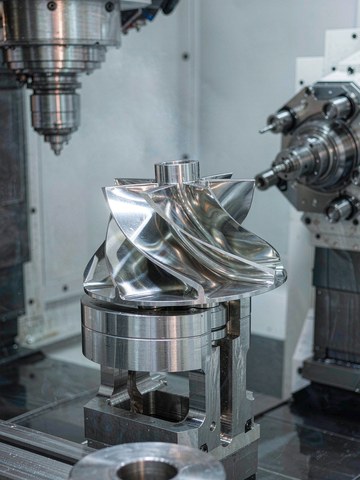
Short tools are the quieter advantage. Five-axis head articulation keeps the cutter normal to the surface, so a 12 mm tool can reach a deep pocket that would need a 150 mm extended tool on a 3-axis machine. Shorter tools deflect less, chatter less, and hold finish. This is why impellers, blisks, and deep structural pockets end up on five-axis platforms regardless of quantity.
A decision chart by geometry class
The following chart summarizes what our schedulers apply when routing jobs. It is not absolute, but it is right often enough to print.
| Part geometry | Typical quantity | Recommended route | Reason |
|---|---|---|---|
| Features on one or two faces, prismatic | any | 3-axis | Setups are cheap; rate dominates |
| Features on 3+ faces, modest tolerance | 1-50 | 3-axis with careful datums, or 5-axis | Crossover zone; quote both |
| Features on 3+ faces, tight tolerance across faces | any | 5-axis | Removes stacked setup error |
| Thin-wall, distortion-sensitive | any | 5-axis, single setup | No re-clamping of a stressed part |
| Impellers, blisks, ported manifolds | any | 5-axis | Geometry requires simultaneous motion |
| Deep pockets with small tools | any | 5-axis | Short-tool rigidity |
| Round parts, mostly diameters | any | turning or turn-mill | Neither milling platform is the right question |
Quantity bends the crossover point. A five-axis fixture amortizes across the batch, so the same part that quotes 3-axis at ten pieces can flip to five-axis at five hundred, where fixture cost per unit drops below the setup time it saves. Our quotes state the route and the reason, so the crossover is visible rather than buried in a unit price.
What we run on each platform
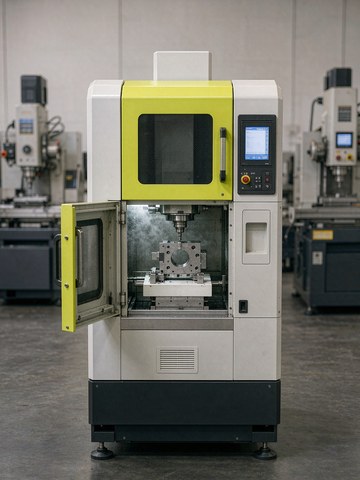
Our five-axis cells center on Mazak VARIAXIS class machines with trunnion fixtures for single-setup work, paired with CAM programmers who collision-check every multiaxis path before it reaches the floor. The 3-axis fleet runs the prismatic and bracket work that keeps unit costs down, including compact FANUC ROBODRILL class machines for small parts and second operations. Turn-mill centers handle round parts with milled features, which is why the routing chart lists turning separately: many parts that look like five-axis work are really lathe work.
If you want the decision made for you, send the drawing through the quote form and the review will return the route with its reasoning. The process pages for five-axis machining, 3-axis milling, and turn-mill describe each platform in detail, the product catalog shows the part families we produce on them, and the tolerance standards reference explains how setup count affects achievable bands.
Frequently asked questions
Is a 5-axis machine always more accurate?
No. For a feature machined in one setup, a good 3-axis machine is just as accurate. Five-axis improves accuracy only where features across multiple faces must relate to each other, by removing the re-clamping steps that stack error.
Why did my quote come back on 3-axis when I expected 5-axis?
Probably because the features sit on one or two faces. Quoting the route the geometry needs, rather than the most impressive machine, is how the unit price stays honest.
Does 5-axis mean the part is cut in one pass with no flipping?
Usually one or two setups, sometimes still two when a feature is physically unreachable even with articulation. The gain is that the count drops from five to one, not that it always reaches zero flips.
How does quantity change the machine choice?
Fixture and programming cost amortize over the batch. Low quantities favor the 3-axis route on simple parts; at volume, saved setup time per piece can flip the economics toward 5-axis even where 3-axis was viable.
More Reference Guides
Charts and decision guides from the KGL engineering desk.
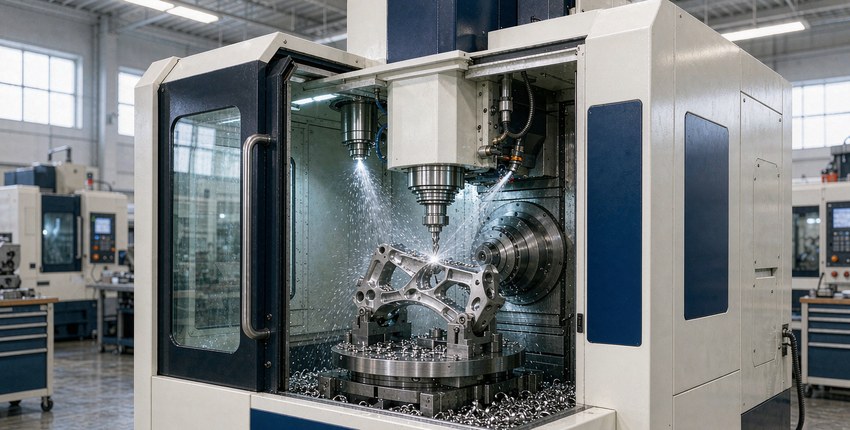
CNC Machining Tolerance Chart: IT Grades and What It Takes to Hold 0.005 mm
Read the reference →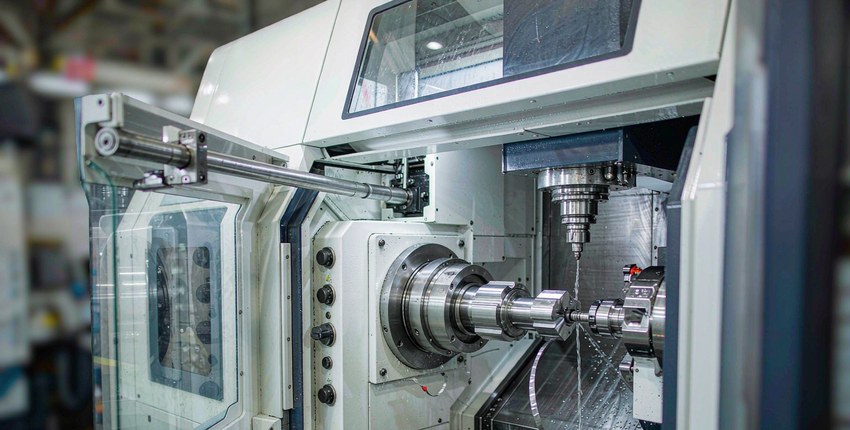
Surface Roughness Ra Chart: What Ra 0.4 to Ra 3.2 Means and What Each Finish Costs
Read the reference →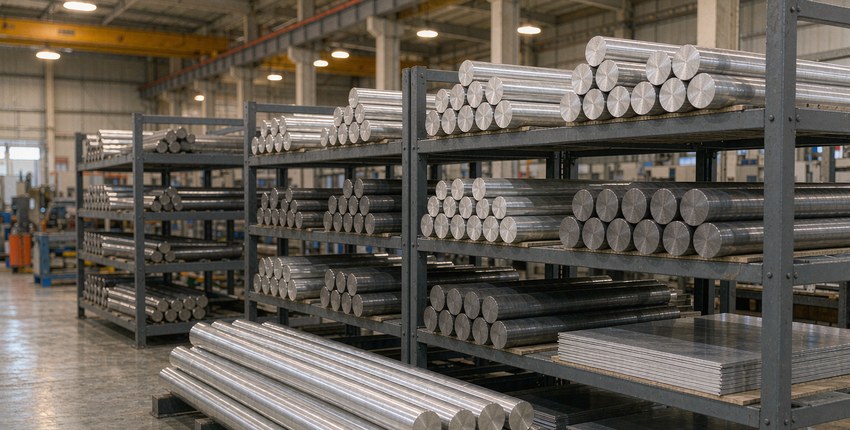
6061 vs 7075 vs Titanium: An Alloy Selection Guide for Machined Parts
Read the reference →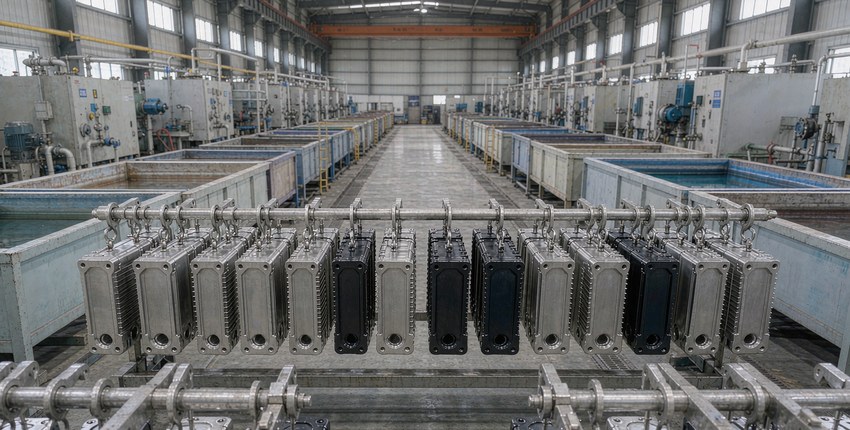
Anodizing vs Chem Film vs Electroless Nickel: Choosing a Finish for Machined Parts
Read the reference →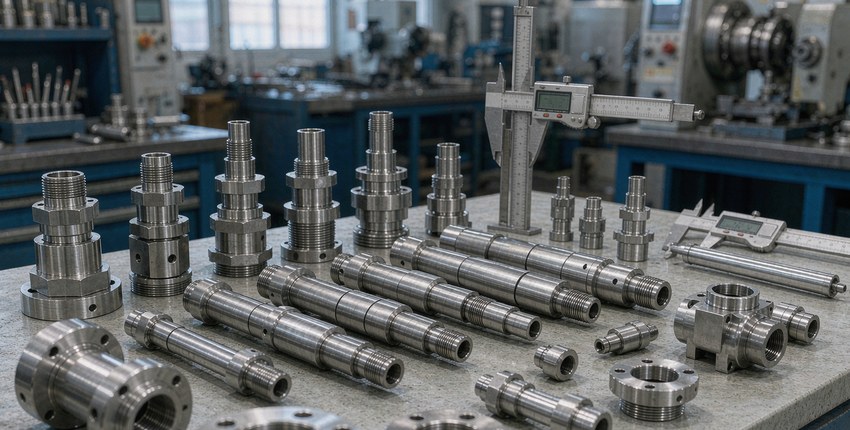
Stainless Steel 304 vs 316 vs 17-4PH: A Machining Perspective
Read the reference →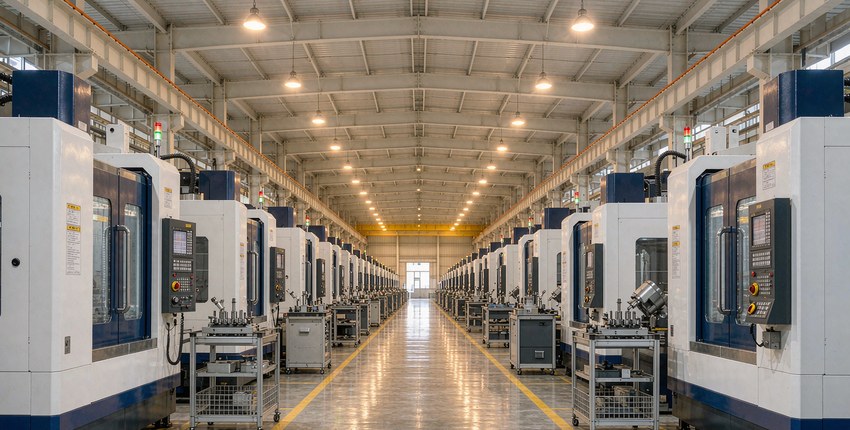
CNC Machining Cost Factors: What Actually Drives the Price
Read the reference →
CNC DFM Checklist: 15 Rules to Check Before You Send a Drawing
Read the reference →
GD&T Basics for Machined Parts: Datums, Position, and What Actually Gets Measured
Read the reference →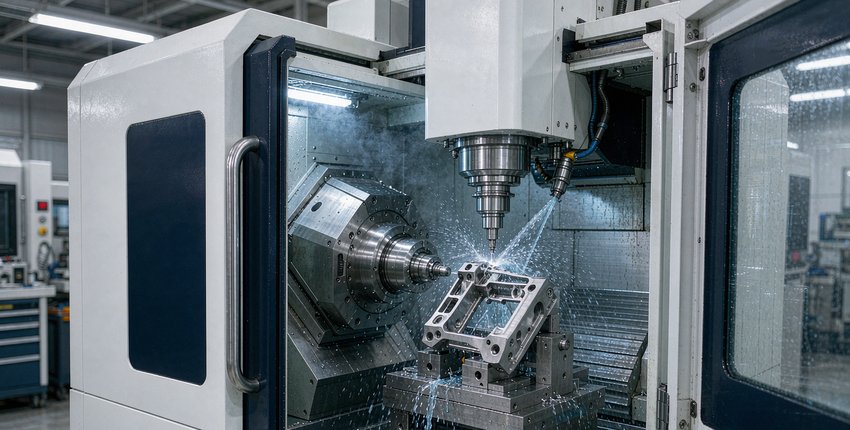
Tight-Tolerance Machining: The Five Steps Behind a 0.005 mm Result
Read the reference →Have a drawing to check?
Send it to kgl@kglmfc.com or request a quote. Engineering review responds within 24 hours.
Request a Quote