Stainless Steel 304 vs 316 vs 17-4PH: A Machining Perspective
A shop-side comparison of 304, 316, and 17-4PH stainless steel for CNC machined parts: composition, corrosion behavior, machinability, and where each grade belongs.
Stainless callouts arrive on drawings in three grades more than any others: 304 for general corrosion service, 316 when chlorides enter the picture, and 17-4PH when strength joins the requirement. Buyers choose them for good reasons, but the choice lands differently at the cutting edge than it reads in a brochure. This comparison covers what each grade does in the machine and in service, from a shop that runs all three daily.
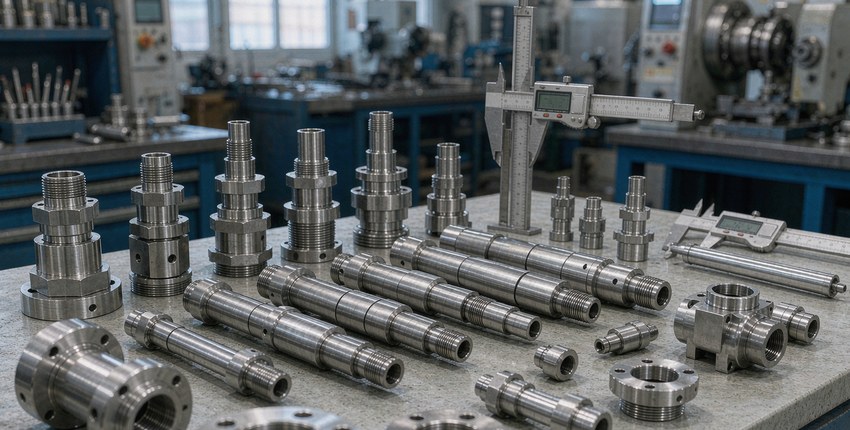
Composition and what it buys you
| Property | 304 | 316 | 17-4PH (H900) |
|---|---|---|---|
| Key composition | 18 Cr, 8 Ni | 16 Cr, 10 Ni, 2 Mo | 17 Cr, 4 Ni, Cu, precipitation hardening |
| Tensile strength, typical | 515 MPa min | 515 MPa min | 1310 MPa min |
| Yield strength, typical | 205 MPa min | 205 MPa min | 1170 MPa min |
| Hardness | about 150 HB | about 150 HB | 40-44 HRC aged |
| Chloride resistance | moderate | good, molybdenum added | moderate, below 316 |
| Magnetism | slight when worked | slight when worked | magnetic |
| Relative machinability | moderate | moderate, gummier | good in condition A |
| Relative material cost | 1x | 1.2-1.4x | 2-3x |
The numbers read quickly: 316 trades a little cost for molybdenum and chloride resistance, and 17-4PH leaves the austenitic family entirely, trading corrosion breadth for strength more than six times the yield of 304. What the table cannot show is how differently the three behave under a cutting tool.
Work hardening: the process defines the part
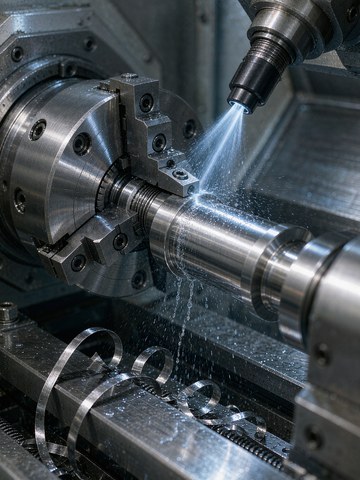
304 and 316 are austenitic and work harden aggressively. Every pass that rubs instead of cuts hardens the surface beneath it, and the next tool meets a skin harder than the bulk material. The countermeasures are boringly consistent: sharp positive-rake tooling, feeds firm enough to keep the edge under the hardened layer, and no dwelling. A drill that lingers at the bottom of a hole work hardens the spot and the next drill snaps. An interrupted finish pass that chatters leaves a hardened wave the finishing tool cannot clean up.
316 adds gumminess to the hardening. Its chips string and pack, so the process leans on chip-breaker geometries and high-pressure coolant. Neither grade is difficult for a shop that runs stainless as a diet rather than an exception; both are punishing for one that treats them as slow carbon steel.
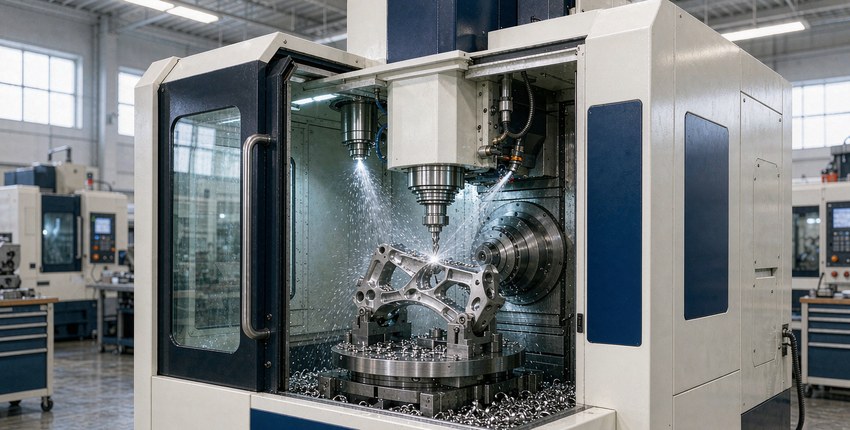
17-4PH inverts the problem. In the solution-treated condition A it machines respectably, close to a medium-carbon alloy steel. The strength arrives afterward, with aging to the H900 or H1025 condition, so the honest sequence roughs and finishes the part soft, then ages it, then finishes only what distortion demands. A shop that receives 17-4 already aged and tries to cut it to plus or minus 0.005 mm pays for that sequencing mistake in tooling and time.
Choosing by service environment
| Environment or requirement | First choice | Why |
|---|---|---|
| Food, beverage, general industrial | 304 | Corrosion adequate, cost lowest, widely stocked |
| Marine, salt spray, chlorinated washdown | 316 | Molybdenum resists pitting in chlorides |
| Pharmaceutical and medical contact surfaces | 316L | Low carbon for welding, polishable to low Ra |
| High-strength fittings, valve stems, fasteners | 17-4PH H900 | Yield near 1170 MPa with moderate corrosion |
| Aerospace structural pins and lugs | 17-4PH | Strength-to-weight and fatigue behavior |
| Parts welded after machining | 304L or 316L | Low carbon grades resist sensitization |
One cross-check prevents most misselection: 17-4PH is often specified for strength in environments that 316 was designed for. It survives many industrial atmospheres well, but in standing chloride service 316 holds up where 17-4 pits. If the drawing asks for both maximum strength and marine service, the answer is usually a coating discussion rather than a grade argument.
What each grade does to the quote
Material price is the smallest of the three differences. Cycle time separates the grades more: expect 304 and 316 to run a step slower than carbon steel with more tool changes, and 17-4PH in condition A to nearly match carbon steel until heat treatment enters the sequence. Heat treatment adds a cycle, a distortion check, and sometimes a finishing pass on bearing seats, which is why a 17-4 quote carries more lines than a 304 quote even at the same size.
Our stainless steel machining page lists the grades in stock with plate and bar sizes, and the grade comparison table extends the numbers above. For application context, the medical and new energy pages show where each grade tends to land. Send the drawing with its service environment noted through the quote form, and the review confirms the grade before the process is planned around it.
Frequently asked questions
Is 316 always worth the premium over 304?
Only where chlorides or aggressive media are present. In dry indoor service the molybdenum buys nothing visible, and 304 frees budget for tolerances or finish where they show up in the product.
Why is my 17-4PH part machined before aging instead of after?
Condition A machines at roughly a quarter of the aged hardness, and cutting the aged material risks burns, short tool life, and residual stress that distorts the part. Machine soft, age, then finish the seats that distortion touches.
Which stainless holds the tightest tolerances?
17-4PH holds geometry best after aging thanks to high stiffness, provided the shop sequences roughing, aging, and finishing correctly. 304 and 316 need attention to work hardening and clamping pressure on thin walls.
Do material certificates come with the parts?
Yes. Mill certificates for every heat travel with the batch from incoming inspection, and the heat numbers appear on the inspection report alongside dimensional results.
More Reference Guides
Charts and decision guides from the KGL engineering desk.
CNC Machining Tolerance Chart: IT Grades and What It Takes to Hold 0.005 mm
Read the reference →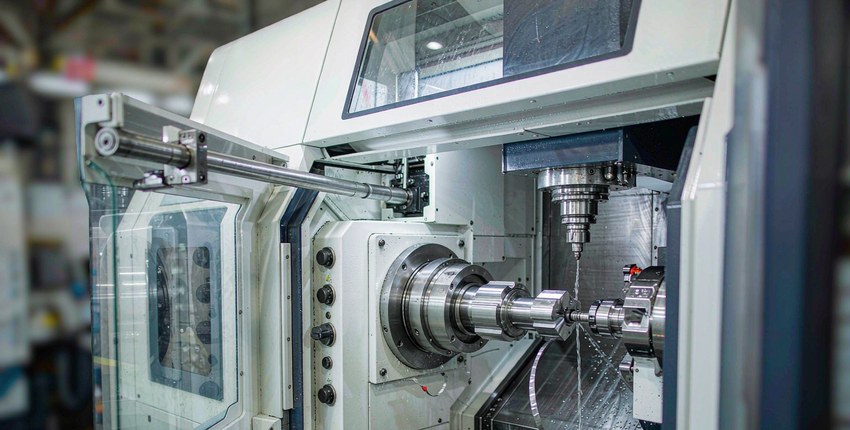
Surface Roughness Ra Chart: What Ra 0.4 to Ra 3.2 Means and What Each Finish Costs
Read the reference →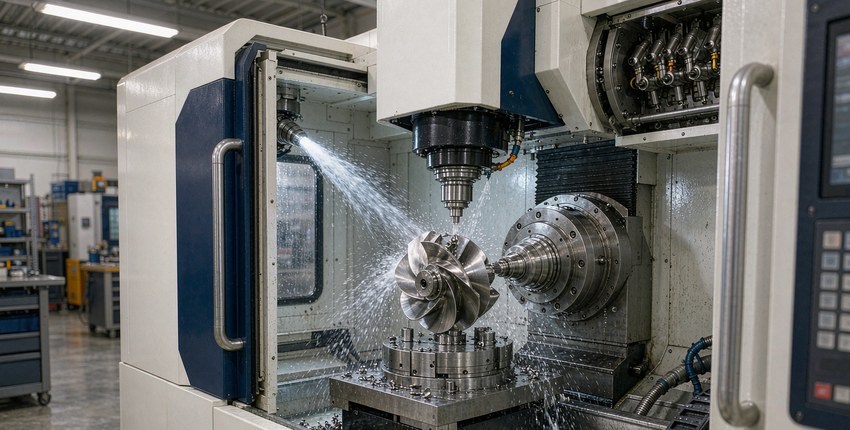
5-Axis vs 3-Axis CNC Machining: Cost, Setups, and When the Upgrade Pays
Read the reference →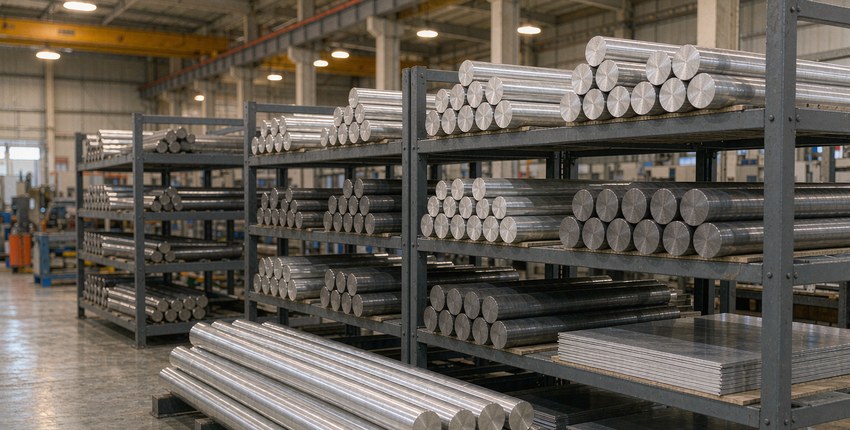
6061 vs 7075 vs Titanium: An Alloy Selection Guide for Machined Parts
Read the reference →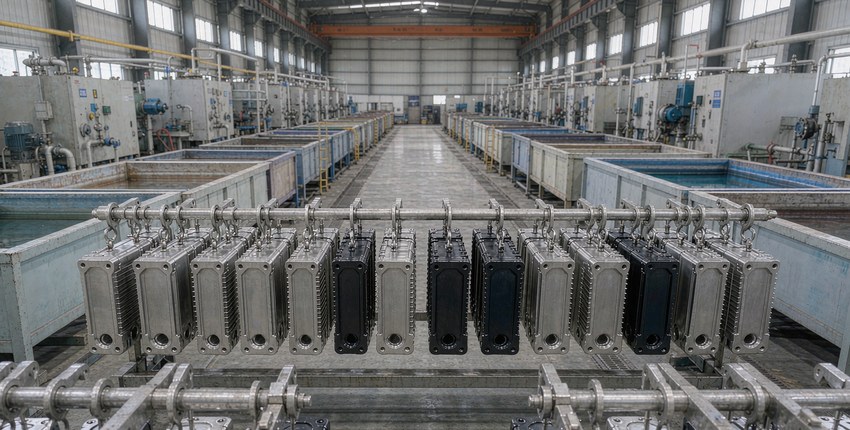
Anodizing vs Chem Film vs Electroless Nickel: Choosing a Finish for Machined Parts
Read the reference →
CNC Machining Cost Factors: What Actually Drives the Price
Read the reference →
CNC DFM Checklist: 15 Rules to Check Before You Send a Drawing
Read the reference →
GD&T Basics for Machined Parts: Datums, Position, and What Actually Gets Measured
Read the reference →
Tight-Tolerance Machining: The Five Steps Behind a 0.005 mm Result
Read the reference →Have a drawing to check?
Send it to kgl@kglmfc.com or request a quote. Engineering review responds within 24 hours.
Request a Quote